

In Cambodia, citizens, businesses, and the government have been rapidly adapting to the digital age. With vast opportunities available, foreign technology investments continue to ramp up, but the real power lies in homegrown innovation. Local startups and entrepreneurs solving local challenges play an integral role in shaping the digital future of the country.
With the support of the Ministry of Post and Telecommunications, B2B Asia News is proud to showcase some of the emerging innovators and visionaries driving change in the country's digital landscape.
Under our landmark "Powered by Cambodia" campaign, we examine how local digital enterprises are building sustainable solutions custom-made for the domestic market. In Part 1 of this special feature, we speak with the Founders and CEOs of four enterprises: WORKINGNA, MeetDoctor, Polymer Invoice, and Solar Green Energy (SOGE) Cambodia.
Responding to Domestic Demand
The primary catalyst for homegrown innovation is a deep-rooted understanding of the local socioeconomic landscape. Unlike multinational conglomerates that deploy standardised global systems, Cambodian entrepreneurs have the unique advantage of building platforms designed from day one around local operational realities.
For Khun Pisey, CEO of WORKINGNA, leveraging pre-existing industry knowledge allowed her team to build a highly targeted artificial intelligence (AI) platform without relying on external assets:
“The core of our technology was developed entirely for the Cambodian context,” said Pisey. “We built it with a fully local team without any help from foreign talent – this is how it was built from day 1. Before our team started WORKINGNA, we were already running a traditional recruitment agency, so we already had existing knowledge on recruitment. When we built WORKINGNA's AI platform, we knew what problems we had to address internally, and we also had direct talks with our customers."
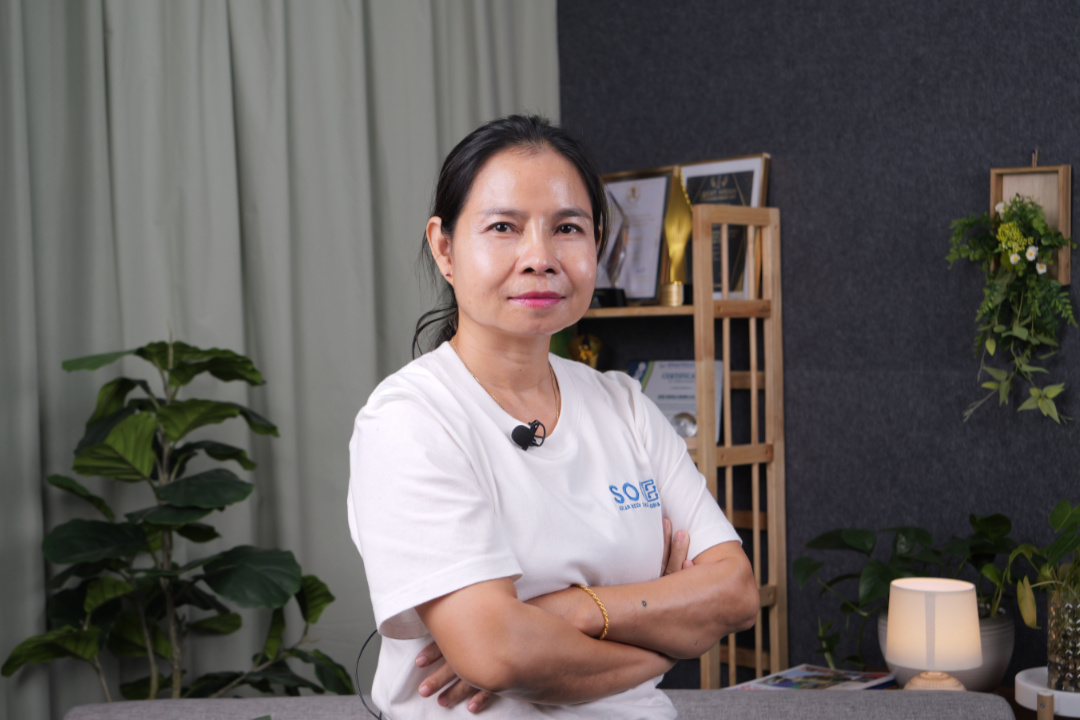
In the renewable energy sector, Kheav Thida, Founder and CEO of SOGE Cambodia, recognised that addressing domestic demand meant overcoming significant perceptual barriers regarding cost and reliability, particularly within the agricultural sector, which serves as a cornerstone of the Cambodian economy.
“In Cambodia, if we talk about solar energy, people worry that it is too expensive and might not be durable. Another problem is the irrigation pumps used by farmers can be very costly," shared Thida. “We at SOGE believe renewable energy, especially solar, is very important for the livelihoods and needs of citizens, as well as to save the environment.”

The Homegrown Advantage: Why Local Tech Beats Foreign Alternatives
When local companies face the choice between importing foreign software or adopting local alternatives, the temptation is often to lean toward international brands. However, leaders in Cambodia’s digital startup scene argue that foreign platforms frequently fail to align with specific domestic practices.
Dr Nit Buntongyi, Founder and CEO of MeetDoctor, suggested that sheer technological maturity does not always automatically equate to functional utility in the Cambodian context.
“If we compare local technological innovations with foreign innovations, we can conclude that they are far ahead of us, but this doesn’t mean that what we have created isn't of considerable quality,” said Dr Buntongyi. “We know our own people, we know what we have to create to meet Khmer people's needs. For example, I made a clinic management system for Khmer doctors. As a doctor myself, when I use a foreign management system, I can see that I can definitely do a lot with it, but all the features available are not necessarily what I need. That's why I made a local system that meets the needs of local doctors.”
This perspective was heavily reinforced by Khun Pisey, who noted that local recruitment models possess unique cultural and operational nuances that foreign software developers simply cannot anticipate.
“Some foreign systems cannot be tailored to the specific needs of our country. The recruiting process in our country is definitely different from how others do it. Only we clearly understand what our clients need,” said Pisey.
She added that choosing local technology can generate substantial long-term benefits for Cambodia’s broader labour pool, acting as an incubator for professional technical skills:
Creating and using our own technological innovations can help the next generation of Cambodians. It doesn’t matter if they’re developers or have other professions, we have the ability to help them build their skills and knowledge to improve and make better innovations.

Addressing the Capital and Market Gap for Digital Tech SMEs
Scaling a digital tech startup in Cambodia requires robust structural support. Innovators highlight two critical pillars necessary for sustainable growth: targeted financial frameworks and active market adoption.
Yi Pisoth, Founder and CEO of Polymer Invoice, stressed the importance of programmes that enable small and medium-sized enterprises (SMEs) to overcome the initial financial hurdles of digital transformation.
“If possible, [it would be great to have] a fund in place from the government, or even from a private company, that can provide funding for business owners to afford technical software so that they can spend six months or a year learning about the process of using technology to develop their business,” said Pisoth.
Financial capital represents only one side of the coin. For Dr Nit Buntongyi, the ultimate driver of growth is market adoption. He urged Cambodian enterprises and individual consumers to actively patronise local products and services, reminding stakeholders that innovation without customer support is fundamentally unsustainable:
If you see a new technological innovation or product in the market, I would urge our citizens to show their support. Before, it was more about getting support from the government, investors, and organisations to be able to create something new. But now, we have new innovations in the market, the question is whether anyone is willing to use them. Is there anyone who needs this innovation? If the innovation or product is really needed, but the people who need it don’t show their support, it won’t be able to grow any further.
Economic Growth, Data Sovereignty, and Global Ambition
The decision to build and support local tech innovations carries economic significance for Cambodia. Over-reliance on foreign technology can result in economic leakages, whereas supporting local firms strengthens internal liquidity and protects vital national assets.
Yi Pisoth highlighted this clear fiscal reality, asserting that the country already possesses the baseline talent required to remain competitive without exporting capital:
I think that if businesses started using local technologies, it would help our country develop faster. With local support, companies can grow and improve a lot, which would increase liquidity within the country. If we rely only on foreign technology, our money will keep flowing outside. Currently, Cambodia's technology isn’t that bad compared to the technology of other countries. We have a lot of tech talent in the country.
Kheav Thida also asserted that an absence of domestic support for local innovations threatens the long-term survival of local enterprises and halts further technological advancement, while also restricting future export potential.
“I really want to see more support for local products. In any case, we as SMEs are trying to create products or tools that respond to Cambodian needs. Even if the first version of a product might not be the best, all SMEs, like mine, are trying very hard to deliver a good quality product and at a fair price so that people can afford it,” said Thida.
She added:
We also want to be able to create quality products that can be exported to other countries. Whether we're talking about SOGE or other SMEs, if we get no support from our own people, then we can’t develop more products. This will push us out of business and make us lose the chance to improve our innovations and deliver a higher quality product.
Another concern in the business environment is data sovereignty. As data becomes the lifeblood of commerce, Dr Nit Buntongyi warned that foreign software presents intrinsic risks regarding data control, tech support access, and secondary data usage.
“I think that Cambodia should build more trust in the new local digital sector, because, first, we must consider data,” he said. “When discussing technology, data is a key component. If we create the technology ourselves, it’s much easier to control the corresponding data, but if we use foreign technology, even when they tell us that we can keep the data to ourselves, it is still hard to contact them when there are technical problems, and they can also use our data without our knowledge.”
He further noted that establishing stability at home provides a solid launchpad for Cambodian talent to export services and compete effectively across ASEAN and the global stage:
A second point is about improving ourselves to be better and to spread our talent globally. If we can see that we have the capacity to provide a service or technological innovation for the people of Cambodia, that means we have stability, and when you have this stability, we can grow further. This is the type of talent that can generate more economic growth in Cambodia and allow us to compete with neighbouring countries, as well as on the global stage.

The entrepreneurial journey within a frontier market like Cambodia is inevitably fraught with structural hurdles. However, Khun Pisey concluded that the institutional knowledge and experiential resilience forged through these challenges are precisely what will empower Cambodian founders to invent even more robust solutions moving forward.
“I believe that the technology we have created and built locally is really good and also very important for our economy, because we face our own specific problems, so we know where the opportunities lie, no one knows better than us,” said Pisey.
We face numerous ups and downs during the startup process, but I still think this process has helped me continue and survive and we still experience these problems until today. I think it doesn’t matter how things might turn out in the future, at least we went through these experiences, and if we reflect on the challenges we went through, the experiences add up and help us innovate newer and even better solutions.
The digital future of the nation is being written today, and it is firmly Powered by Cambodia.