
In Cambodia, citizens, businesses, and the government have been rapidly adapting to the digital age. With vast opportunities available, foreign technology investments continue to ramp up – but the real power lies in homegrown innovation. Local startups and entrepreneurs solving local challenges play an integral role in shaping the digital future of the country.
With the support of the Ministry of Post and Telecommunications, B2B Asia News is proud to showcase some of the emerging innovators and visionaries driving change in the country's digital landscape.
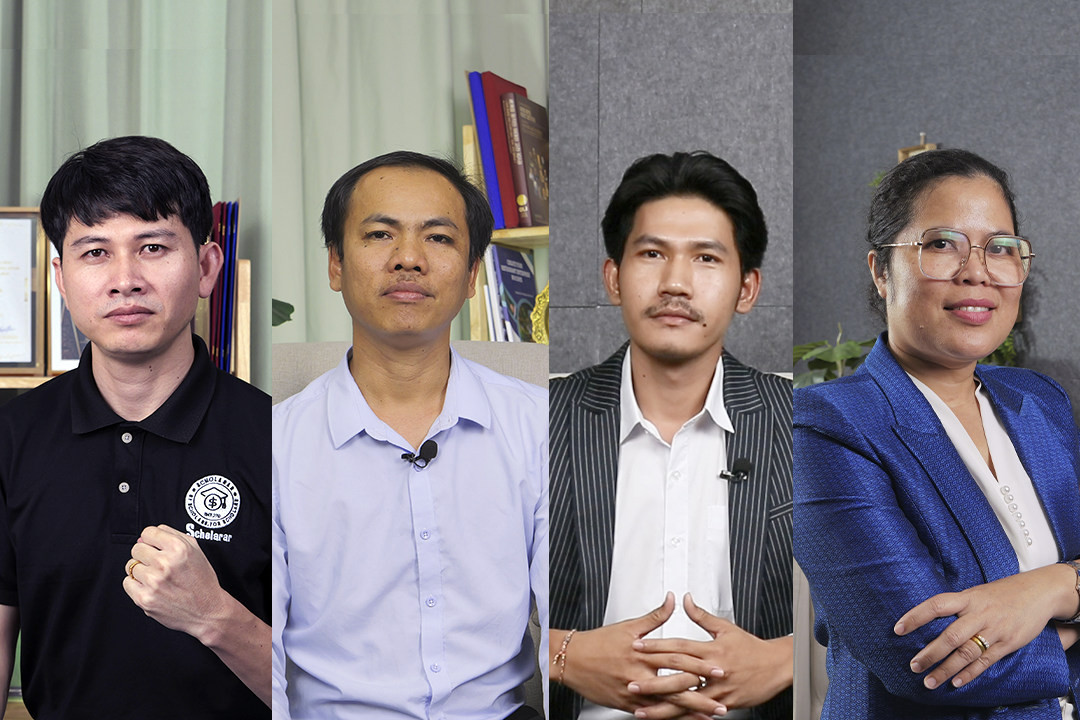
Under our landmark "Powered by Cambodia" campaign, we examine how local digital enterprises are building sustainable solutions custom-made for the domestic market. In Part 2 of this special feature, we speak with the Founders and CEOs of four enterprises: Scholarar, Jobify, MUCH Mobile Healthcare and SPAI.
WATCH: Part 1 of Tech Innovators Shaping the Kingdom's Digital Frontier
Solving Domestic Challenges Through Local Innovation
Rather than copying foreign templates, local founders are designing technological frameworks around pressing structural gaps in education, agriculture, workforce development, and community healthcare.
For Scholarar, the shift from a conventional advisory firm to a technology-first solution was essential to democratise access to international education. Phoura Y, CEO & Founder of Scholarar, shared that his company initially started as a normal consultancy, but then incorporated technology to transform their capacity to serve a wider scope of Cambodian students.
“We realised that it was only through technology that we could help more students, so we grew past being a regular consultancy by incorporating technology and creating an app,” shared Phoura. “Students can fill in their relevant information and the app will determine which scholarships fit them, connecting students to suitable scholarship opportunities using AI.”

In the agricultural sector, Hel Chanthan, Founder & CEO of SPAI, highlighted how locally developed smart farming systems address critical operational pain points for Cambodian farmers, from water conservation to livestock health.
“Our technology is a smart agriculture system for farming, and we use this system to help farmers grow vegetables, fruits and raise animals,” he said. “Our system helps them control the amount of water used, reduces labour, sets the right temperatures, and reduces incidence of animal illness.”
He added that SPAI was able to create this solution through funding received from from the Institute of Technology of Cambodia (ITC) and the Ministry of Education to first create a prototype.
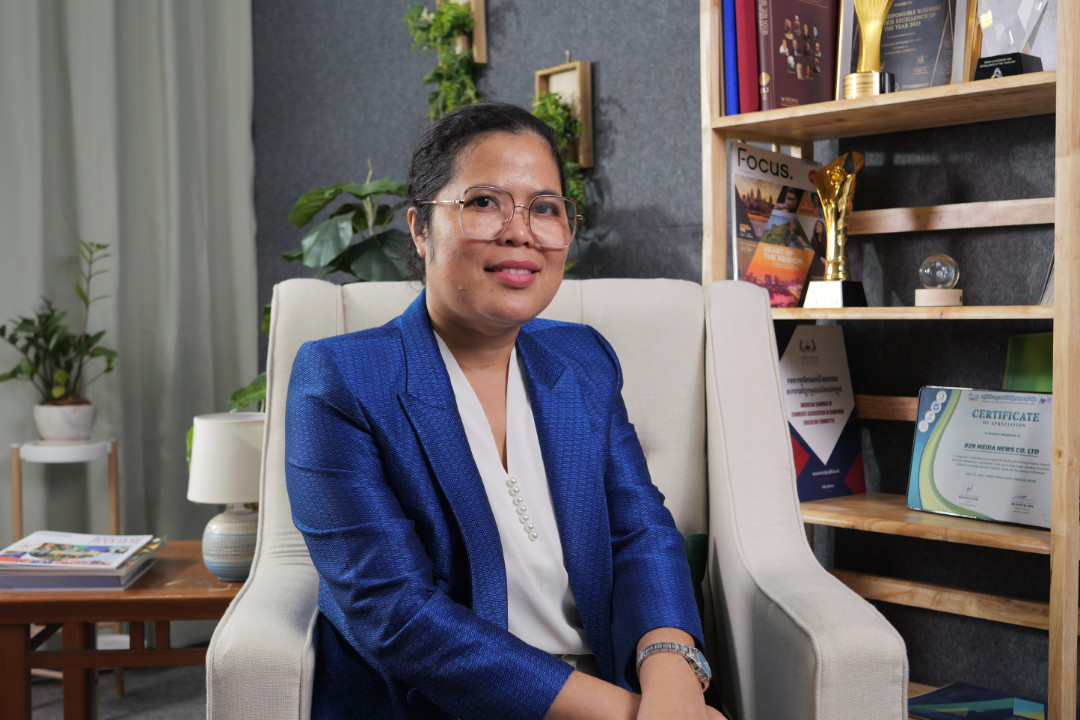
Phirum Dyphan, Founder & CEO of MUCH Mobile Healthcare, said that innovations are often understood as high-tech equipment or software code. However, she stressed that operational and service model innovations like MUCH Mobile Healthcare are also new innovative solutions for the market beginning to earn trust in the market.
“Being a nurse myself, I am able to understand patients' needs. I have learned a lot from my 20 years of experience in nursing, which has allowed me to share my knowledge with my colleagues and team members, who are also healthcare providers,” she shared. “This is how we've managed to build customer trust, every one of our customers has expressed their trust in MUCH Mobile Healthcare, even if they have no idea whether we're a Cambodian or foreign company, they have given us their trust.”

Building the Ecosystem: Critical Support Required for SME Scaling
While technological creativity is abundant, scaling a startup into a sustainable enterprise requires a mature, supportive business environment. The Cambodian founders identified several institutional areas requiring urgent policy attention, including a knowledge gap regarding intellectual property (IP) protection, early-stage financing, and talent retention.
Sopha Sum, Founder & CEO of Jobify Cambodia, emphasised that establishing clear startup policies and facilitating IP registration are essential steps to protect local IP and earn international credibility.
“If you're asking what kind of support we need, I would say there is a lot,” he said. “We certainly need a clear policy for startups, policies that include different kinds of support provision. For example, a startup could have a great innovative idea, but on the subject of intellectual property (IP), many don't know how to navigate registration, or they don't know what the benefits of registering IP are in terms of being recognised both internationally and locally, even local IP recognition is good.”
Hel Chanthan underscored that early-stage ventures require a holistic convergence of multi-sectoral support – spanning operational budgets, R&D funding, and strategic marketing – to bring commercial concepts to fruition:
Normally, when we first start out, we always need support from all sectors – the government, private sector, different partnerships in marketing, technology development, research development, and also budget support for daily operations. These types of support should come together to make people's business models work. Only if we have all of the resources can we move our business forward.
Furthermore, Phoura Y stressed the importance of an integrated national ecosystem that connects founders, investors, and talent under unified governmental encouragement:
What we need is collaboration between all startups and investors, and also the whole ecosystem, which can only be created with the help of the government. This can be help provided for the process of registration, help in finding talent. If we had these two forms of support, it could really help us, but we also need an ecosystem that helps startups with training, a place where they can seek investment and showcase their innovations.

Macroeconomic Independence, Youth Inspiration, and the Vision for a Cambodian Unicorn
Beyond immediate business outcomes, developing homegrown technology carries profound implications for Cambodia’s economic identity, national self-reliance, and long-term capability building.
Phirum Dyphan encouraged stakeholders to rethink the concept of local tech innovation, viewing systemic service delivery platforms as vital components of a self-determined national economy.
“I think that new technology developed in Cambodia is really important – for Khmer people and Khmer companies to collaborate and create something that is purely Khmer.” she said.
Looking toward the macroeconomic horizons of South East Asia, Sopha Sum highlighted the transformative psychological and financial impact that producing a tech "unicorn" would have on the nation's business landscape
“We want to see a unicorn in our country, to be a good example for the future,” he said. “We need to invest, I believe we can make it happen. Whether in the future or in the current context, this would be a good example in our country, or even in the South East Asian region.”
Ultimately, for Hel Chanthan, creating homegrown technology is about ending external dependency, fostering domestic knowledge creation, and setting a powerful blueprint for future generations of Cambodian innovators.
“Overall, we cannot rely entirely on foreign products, especially when it comes to technology,” he said. “It’s the same everywhere – every country should have its own thing.”
He added:
First, this means we reduce our dependence on others. If we have our own technology, we can produce our own products. Second, what's important is knowledge. If we don't build anything locally, then we won't be able to learn anything new regarding technology. Our students won't be able to get involved in this sector because there would be no companies producing anything related to tech in the country. We can build this culture for the next generation. When local businesses use and develop homegrown technologies, they can become role models. Young people will see that the previous generation built something successfully, which can inspire them moving forward, so that we can reach new levels in developing technology without depending on others.
Local digital innovators in Cambodia are constructing the structural foundations of a resilient, self-reliant digital economy. Platforms like WORKINGNA, MeetDoctor, Polymer Invoice, Solar Green Energy (SOGE) Cambodia, MUCH Mobile Healthcare, Scholarar, SPAI, and Jobify demonstrate the immense promise of Cambodian talent.
For private investors, corporate leaders, and policy-makers, supporting these homegrown innovations is a commercial opportunity, as well as a strategic commitment to a prosperous, technologically empowered Kingdom.