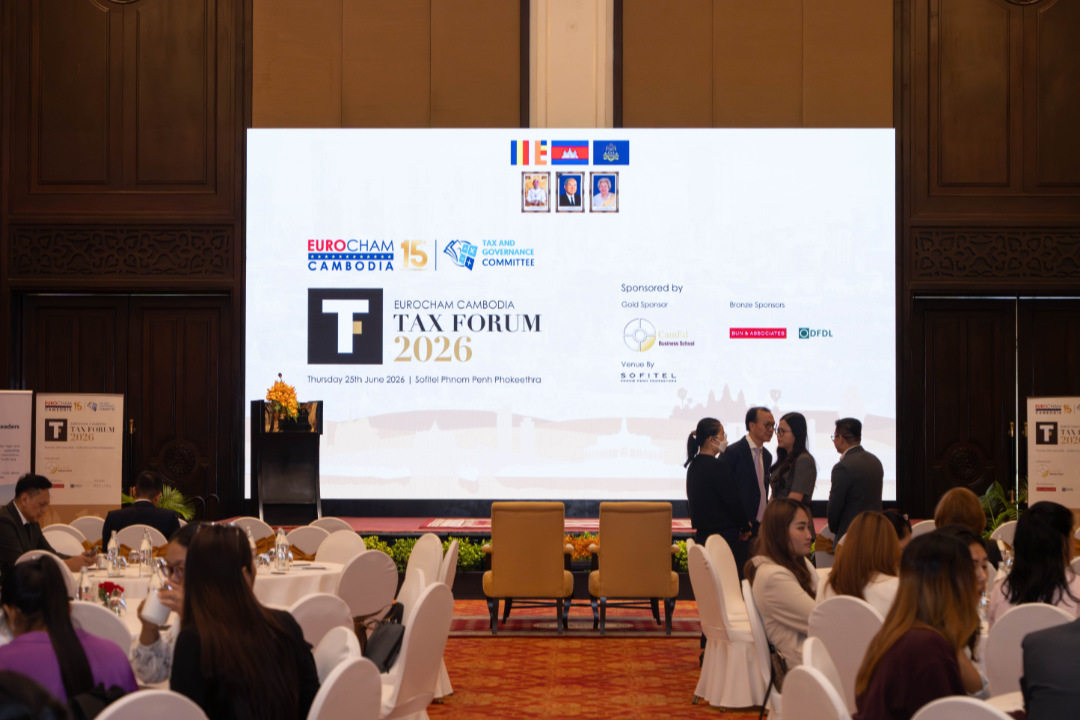
EuroCham Cambodia Hosts Tax Forum 2026, Spotlighting Economy Formalisation and Key Regulatory Developments
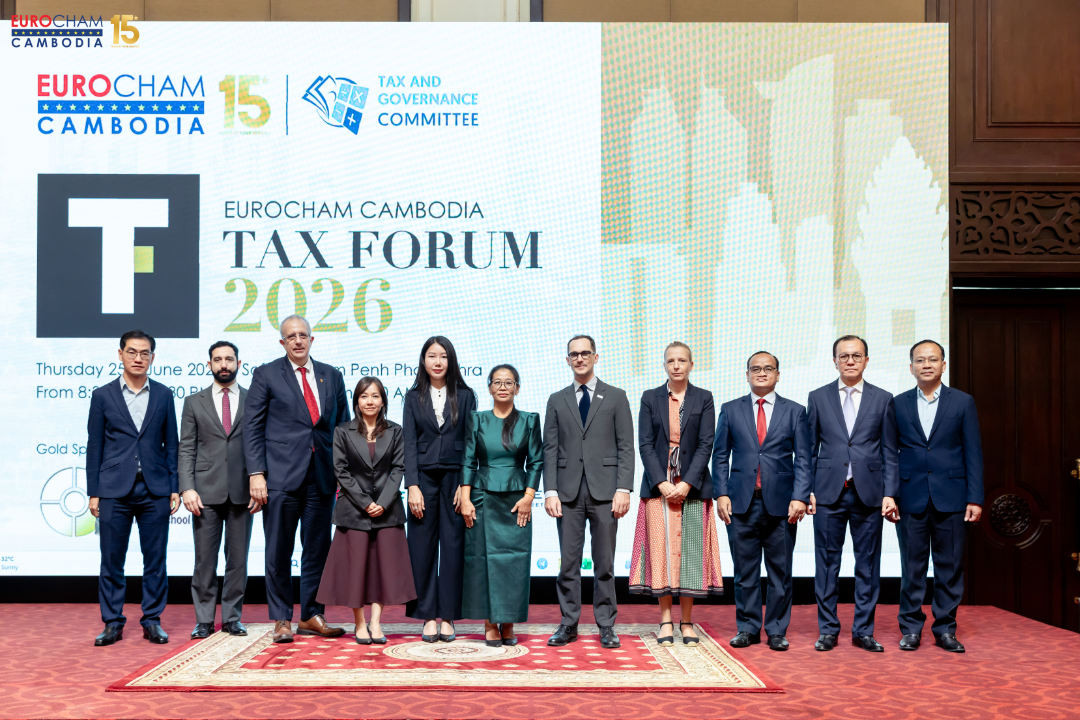
EuroCham Cambodia convened the Tax Forum 2026 at Sofitel Phnom Penh Phokeethra on June 25, bringing together more than 150 tax professionals, senior executives, government officials, and legal advisors for a full day of expert-led sessions on Cambodia's evolving tax landscape. Organised with EuroCham's Tax Committee, the forum featured a plenary session on economy formalisation, four breakout discussions on the most requested taxation topics of the year, and the formal handover of the EuroCham White Book 2027.
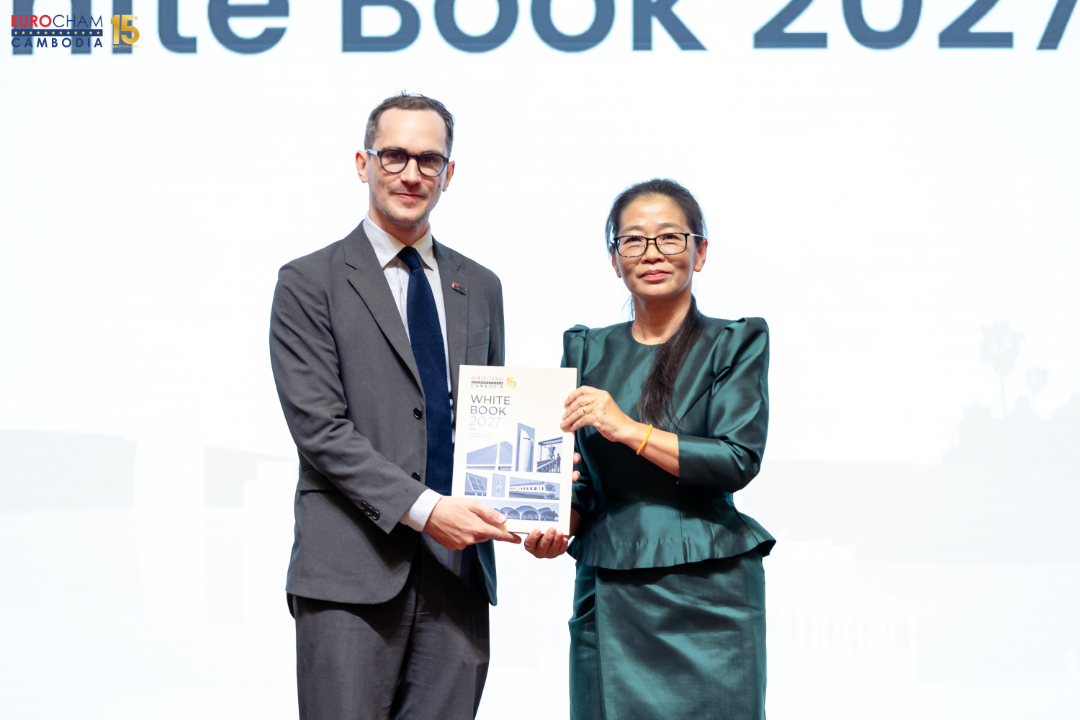
Welcome remarks were delivered by Martin Brisson, Executive Director of EuroCham Cambodia, followed by Linda Oum, Vice-Chairperson of the EuroCham Tax Committee and Tax Manager at Heineken Cambodia, who presented the taxation chapter of the White Book 2027. Opening remarks were delivered by H.E. Bun Neary, Deputy Director General of the General Department of Taxation (GDT), before EuroCham formally handed over the White Book 2027 to the GDT.
The morning plenary centred on economy formalisation, one of Cambodia's most pressing fiscal challenges. An opening presentation examined the scale of Cambodia's informal economy and the potential policy levers available to bring more businesses into the formal tax base, a challenge with direct implications for government revenue, investor confidence, and the long-term competitiveness of compliant businesses operating within the system.
The presentation set the stage for a panel bringing together H.E. Bun Neary, Bunna Oudom of the Ministry of Economy and Finance, Panayiotis Nicolaides of the World Bank, and Martin Brisson. Discussions examined the policy priorities, structural barriers, and practical pathways for broadening Cambodia's tax base — including the role of digitalisation, simplified compliance mechanisms, and stronger public-private collaboration in accelerating the transition toward a more formalised economy.
“One point that particularly resonated with me during this morning’s discussion on informality was the recognition that we should not expect the informal sector to simply become formal overnight,” said Brisson. “The real challenge is to create the conditions for formal businesses to grow, invest, and create quality jobs. As the formal economy expands, it can gradually absorb workers and entrepreneurs who currently operate informally. In that sense, strengthening the competitiveness of the formal sector is not separate from addressing informality—it is one of the most effective ways of doing so."
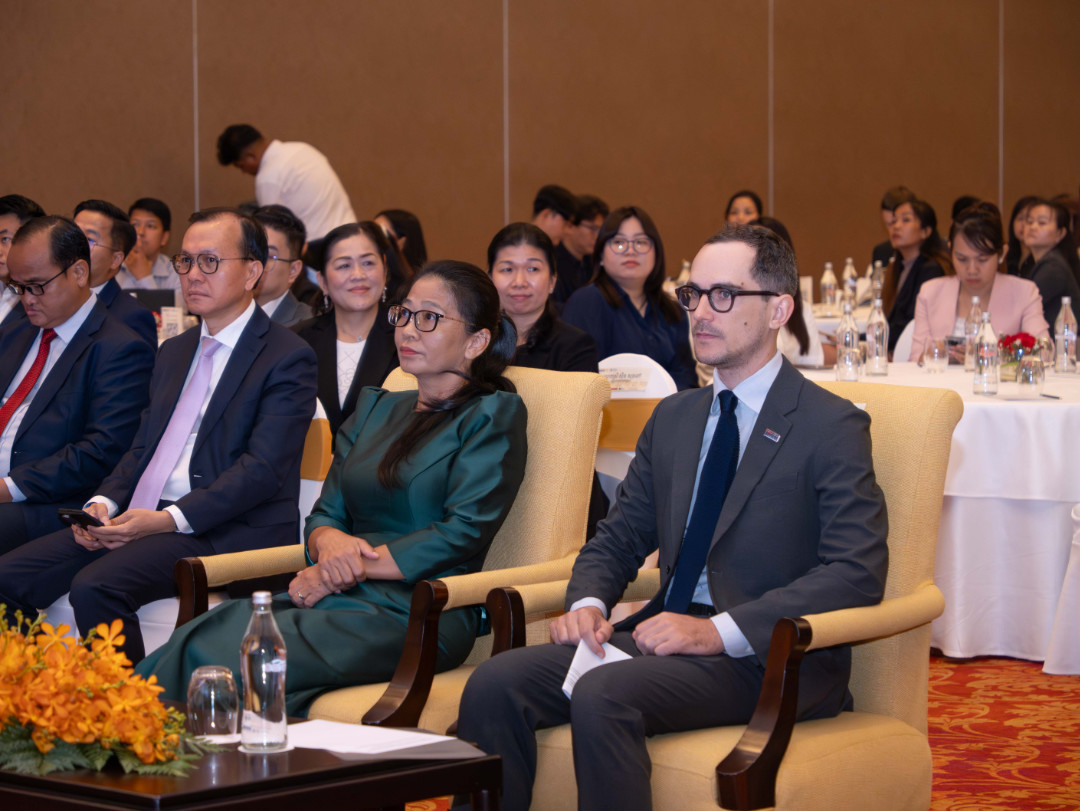
The afternoon shifted to two parallel breakout streams running across two sessions, covering the four topics most requested by forum participants ahead of the event.
In the first stream, Breakout Room I examined Cambodia's Capital Gains Tax, with a presentation by Borapyn Py of Bun & Associates followed by a panel moderated by Sin Sokanha, Partner at Bun & Associates and FMCG Committee Vice-Chairperson, and featuring H.E. Te Jeudi of the GDT, Linda Oum, Diberjohn Balinas of DFDL, and Ross Wheble Vice-Chaiperson of EuroCham's Real & Estate and Construction Committee and Country Head of Knight Frank Cambodia — giving both tax practitioners and the real estate sector a platform to explore the practical implications of the framework.
Breakout Room II addressed Double Taxation Agreements (DTA), with Dr. Antoine Fontaine, Secretary General of EuroCham Cambodia and Partner at ANANT Law Firm, presenting and moderating a fireside chat with Tiv Dina of Compliance Partner on the current state and strategic importance of Cambodia's DTA network for international investors.
“A Double Taxation Agreement is not just a treaty, but a bridge that connects countries, encourages investment, and provides certainty for business operations across borders,” said Tiv Dina.
The second afternoon stream saw Breakout Room I take up Gold Taxpayer Status, with a presentation by Yin Sothearith of the GDT's Special Tax Audit Unit — a session notable for featuring the government as the primary presenter, offering participants direct regulatory clarity on a status increasingly sought by compliant international businesses. Breakout Room II tackled the treatment of Director Salaries and Shareholder Premiums, a topic of particular relevance for multinational investors, with presentations by Chum Socheat of Rajah & Tann Sok & Heng Law Office, contributions from Kawahara Ryo of the Japanese Business Association of Cambodia (JBAC), and a panel moderated by Chamnan Vajiravann, Tax Partner at DFDL.
The forum closed with remarks reflecting on the day's discussions and the role of platforms like the Tax Forum in building the mutual understanding between government and the private sector that underpins a more predictable and investor-friendly tax environment.
“I’m proud to see the strong engagement at this year’s EuroCham Tax Forum, which reflects EuroCham’s continued commitment to fostering constructive public–private dialogue and supporting progress in Cambodia’s tax system,” concluded Linda Oum.
This press release was supplied.