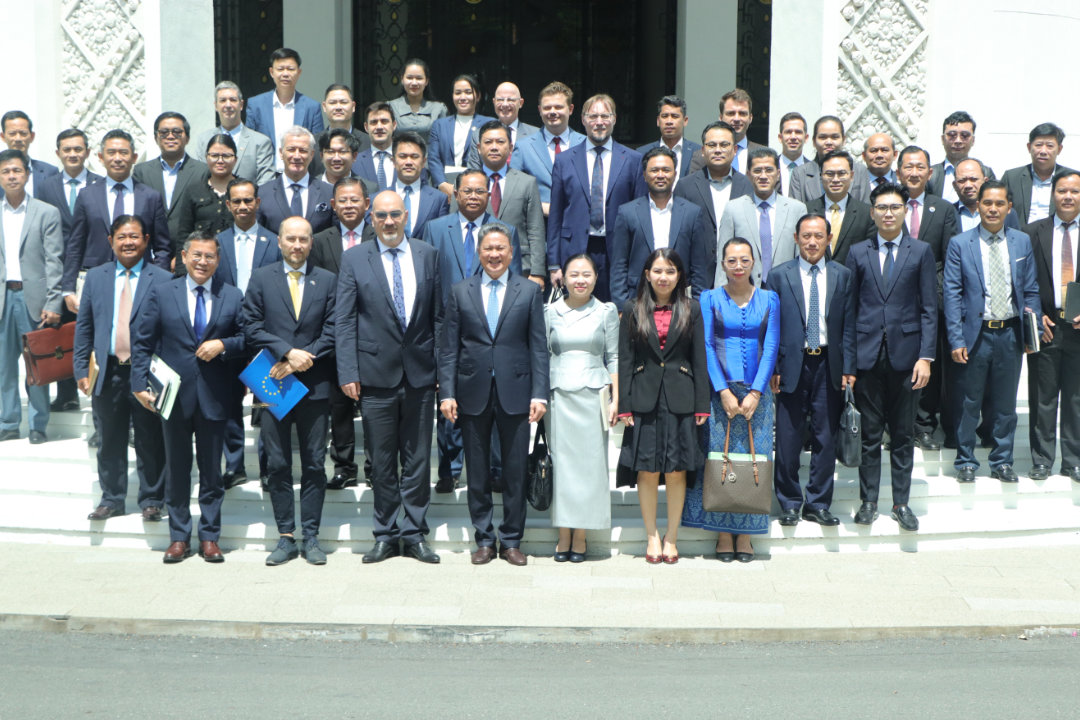
EuroCham Cambodia and Government Advance Reform Agenda at 4th Cambodia-Europe Public-Private Sector Dialogue
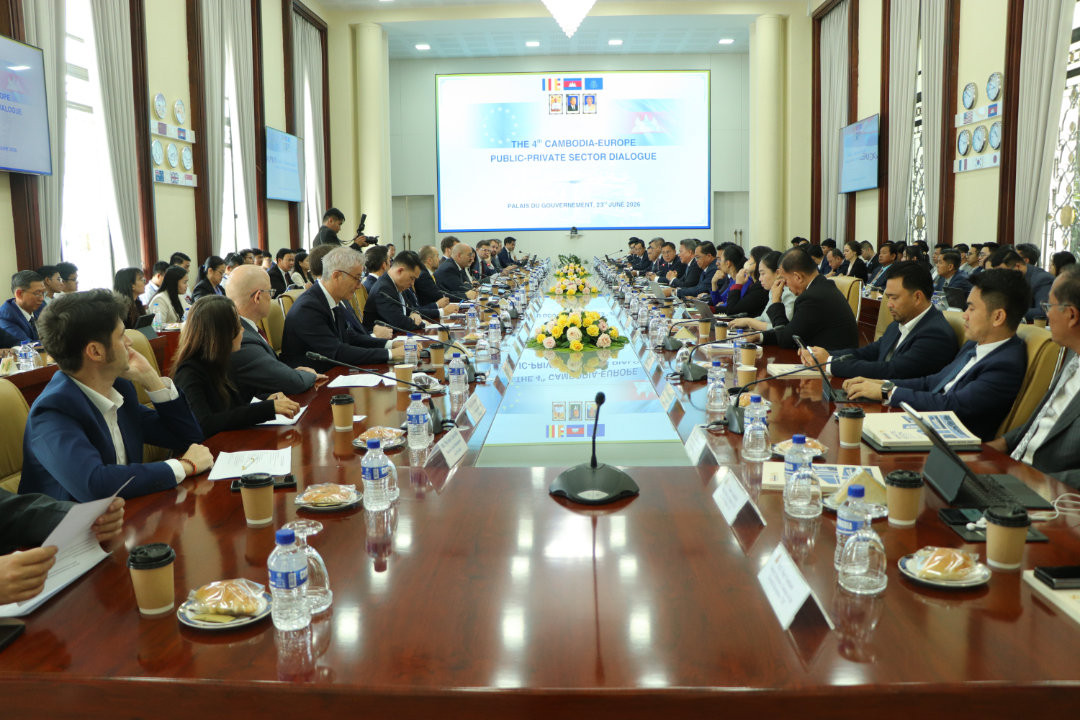
EuroCham Cambodia and the Council for the Development of Cambodia (CDC), convened the 4th Cambodia-Europe Public-Private Sector Dialogue on June 23, 2026, bringing together committee members, senior government officials, European diplomats, and private sector leaders to advance a concrete reform agenda spanning taxation, trade facilitation, green supply chains, healthcare, and regulatory simplification.
The session was opened by H.E. Sun Chanthol, Deputy Prime Minister and First Vice-Chairperson of the CDC; Tassilo Brinzer, Chairperson of EuroCham Cambodia; and Andreas Berg, Deputy Head of Mission of the European Union Delegation to Cambodia.
“This 4th Cambodia-EU Public Private Sector Dialogue was probably the strongest in content, discussion, and decision yet,” said Brinzer. “The CDC team, under the leadership of DPM H.E. Sun Chanthol and H.E. Keo Rottanak, was very efficient and clear in their responses. We were able to discuss a large list of topics that can be worked on together so that they can be moved out of the way of Cambodia's path of economic and structural reform. Some issues will be clarified by the EuroCham team in the coming months, and some can be developed further with line ministries. Overall, we are very happy with the format of the discussion, and the depth of its results."
Resolved: Two Long-Standing Issues Closed
The dialogue opened with the announcement of two successfully resolved items. The long-running dispute over the definition of “new car”, which had enabled grey importers to take advantage of legal ambiguity and undercut authorised distributors, has been resolved through technical alignment between the General Department of Customs and Excise (GDCE) and the Ministry of Commerce (MOC).
The second resolved item concerns open-lid prize promotions for alcoholic and non-alcoholic beverages. Following sustained EuroCham advocacy, including a formal letter to the Prime Minister in March 2025, Cambodia will officially prohibit such promotions effective October 1, 2026, under Prakas 4528 issued by the Ministry of Economy and Finance. European breweries, which had faced systematic unfair competition from promotions incompatible with their responsible consumption policies, welcomed the announcement.
Partially Resolved: Renewable Energy Certificates
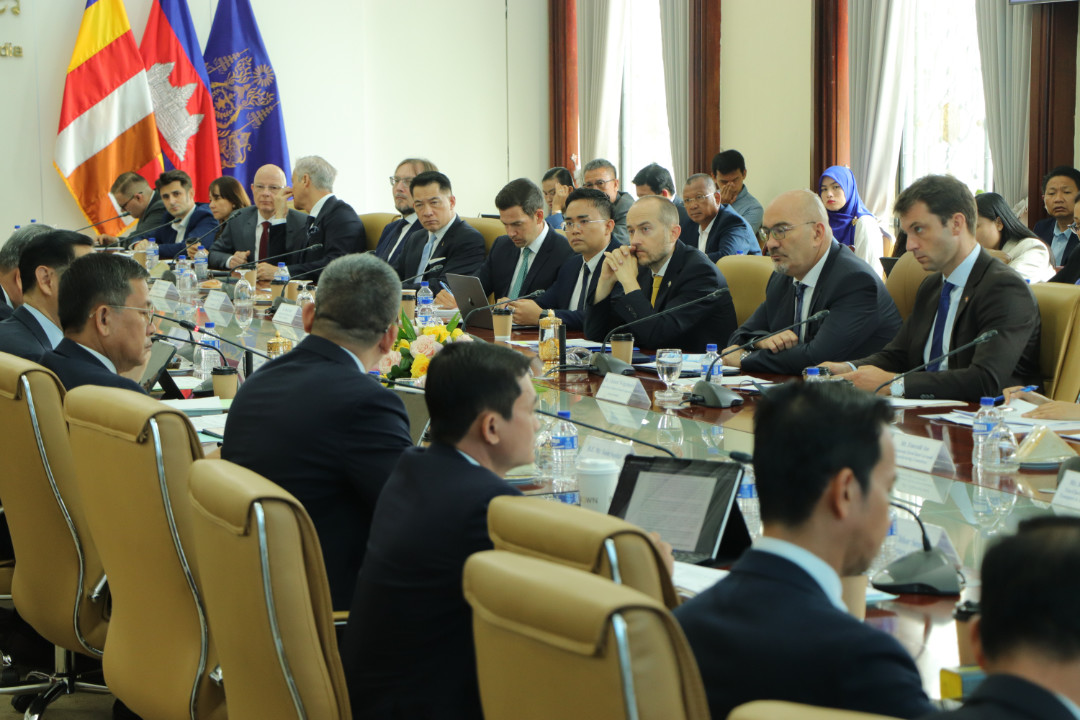
Progress was reported on Renewable Energy Certificates (RECs), which have been unavailable in Cambodia since 2025, preventing European businesses from formally reporting on supply chain decarbonisation, the Ministry of Mines and Energy has committed to continued conversations on details of pricing, availability, and transitional arrangements for the ongoing development of an internationally recognised REC framework due later this year. The item is considered partially resolved pending further consultations.
Ongoing: Red Tape Reduction and Trade Facilitation
EuroCham reported progress on its red tape reduction initiative, launched with CDC support following PPSD-3. Technical discussions have identified five actionable areas — Qualified Investment Projects and Online Business Registration, Sectoral Licences, Certificates of Origin, Commercial Exhibition Permits, and the solved 'Company Secretary' requirements.
For example, EuroCham found that 59 per cent of documents required for QIP and business registration are currently requested more than once by different entities. The CDC confirmed its commitment to collaboration with EuroCham to ease the process of doing business by improving data sharing through digital portals and reducing duplicated document requests.
On trade facilitation, EuroCham's Transport and Logistics Committee raised specific questions on the interoperability of customs platforms and the integration of Line Ministries into the Cambodia National Single Window (CNSW), calling for continued dialogue on digital implementation progress. Port efficiency at the Autonomous Port of Sihanoukville remained on the agenda, with follow-up questions raised on 24-hour customs operations, gate booking system integration, rail incentives, and expressway access.
On textile recycling, EuroCham reported that Cambodia's garment sector generates 200,000 tonnes of textile waste annually, but VAT and import duty obligations currently make transferring this material to formal recycling facilities commercially unattractive. EuroCham identified a potential solution within the CDC's existing Law of Investment and requested an initial meeting with the relevant QIP department to explore a transfer-of- material mechanism, a reform that could play a role in unlocking a USD 126 million textile recycling market.
“I was pleased to participate in the 4th Cambodia-EU Public-Private Sector Dialogue at the Council for the Development of Cambodia on behalf of EuroCham’s Garment & Manufacturing Committee. Our discussions highlighted the importance of advancing textile waste recycling and exploring practical solutions for QIP-to-QIP transfers of recyclable materials following a joint assessment with the General Department of Taxation, the General Department of Customs and Excise, GIZ, and the EuroCham team," said Emerald Am, Chairperson of EuroCham's Garment & Manufacturing Committee. “As Cambodia continues to strengthen its position as a responsible sourcing destination, sustainability and circular economy initiatives will be increasingly important to meeting the expectations of European brands and retailers toward 2030.”
Four new items were introduced at this edition. EuroCham's Tax and Governance Committee raised the 1 per cent Prepayment Tax on Income, which is calculated on gross turnover rather than actual profitability. EuroCham called for a shift in the tax base from turnover to profit before tax to better reflect business realities and reduce pressures on the formal economy, especially those in low profit margin sectors.
EuroCham also raised the absence of a Commercial Arbitration Court accessible to international businesses, welcoming the Ministry of Justice's initial development of such a mechanism and offering expertise to help shape it.
The Healthcare Committee encouraged the Ministry of Health to formally recognise technical evaluations from Stringent Regulatory Authorities such as the European Medicines Agency (EMA) when registering medicines in Cambodia — a reform that could reduce approval timelines from the current 22–26 months to an estimated 14–16 months, improving patient access and reducing costs for pharmaceutical companies.
“Cambodia has a clear opportunity to make pharmaceutical registration smarter, not weaker. When a medicine has already undergone rigorous scientific review by the EMA, US FDA or Japan’s PMDA, Cambodia should be able to rely on that trusted assessment while still safeguarding patient safety," said Dr. Elias Engelking, Co-Chairperson of EuroCham’s Healthcare Committee. “This is not about lowering standards. It is about using global regulatory excellence to strengthen Cambodia’s own system and focus scarce regulatory capacity where it matters most.”
Finally, the Fast-Moving Consumer Goods Committee called for the introduction of a minimum legal purchasing age for alcohol, noting that Cambodia remains the only ASEAN member state without such legislation. The Ministry of Commerce indicated it is reviewing the possibility of a Sub-Decree to formalise a minimum age of 18, in line with international standards.
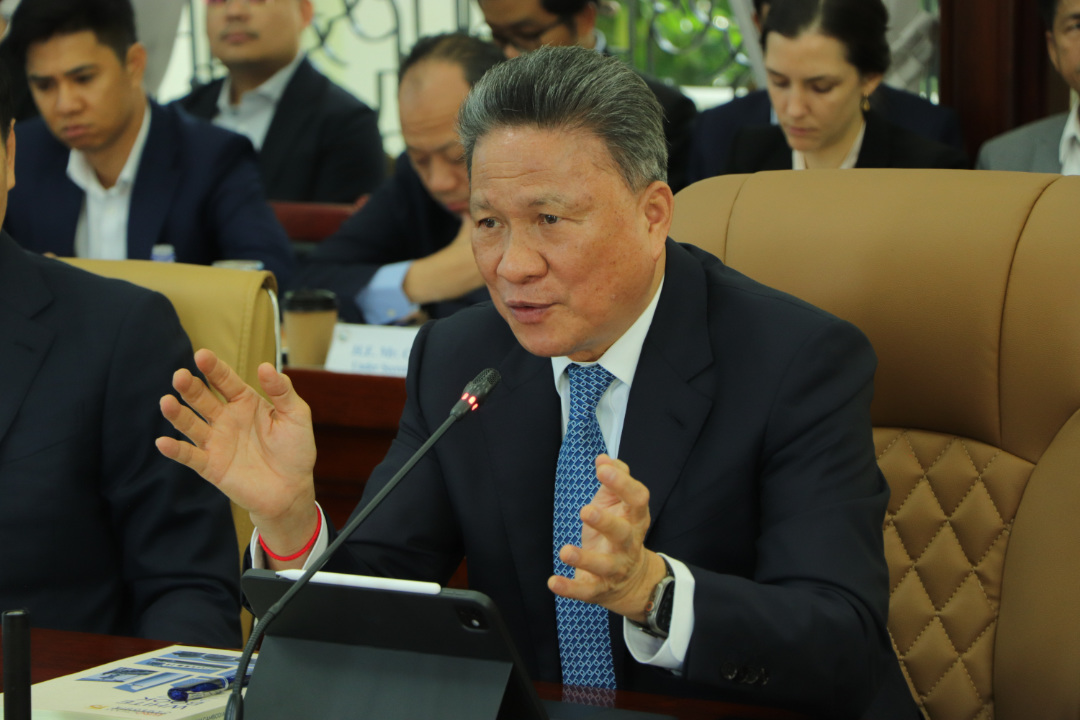
“We are committed to this sincere dialogue and welcome recommendations from the European business community. Some issues can be addressed immediately, others will take time, and others will benefit from EuroCham's expertise on international best practices," said H.E. Sun Chanthol. “EuroCham is a strong goodwill ambassador for Cambodia in attracting foreign direct investment, and we will continue working together to strengthen Cambodia's position as a destination for international investment.”
The 4th Cambodia-Europe PPSD concluded with a commitment from both sides to maintain technical-level engagement on all open items ahead of PPSD-5.
This press release was supplied.