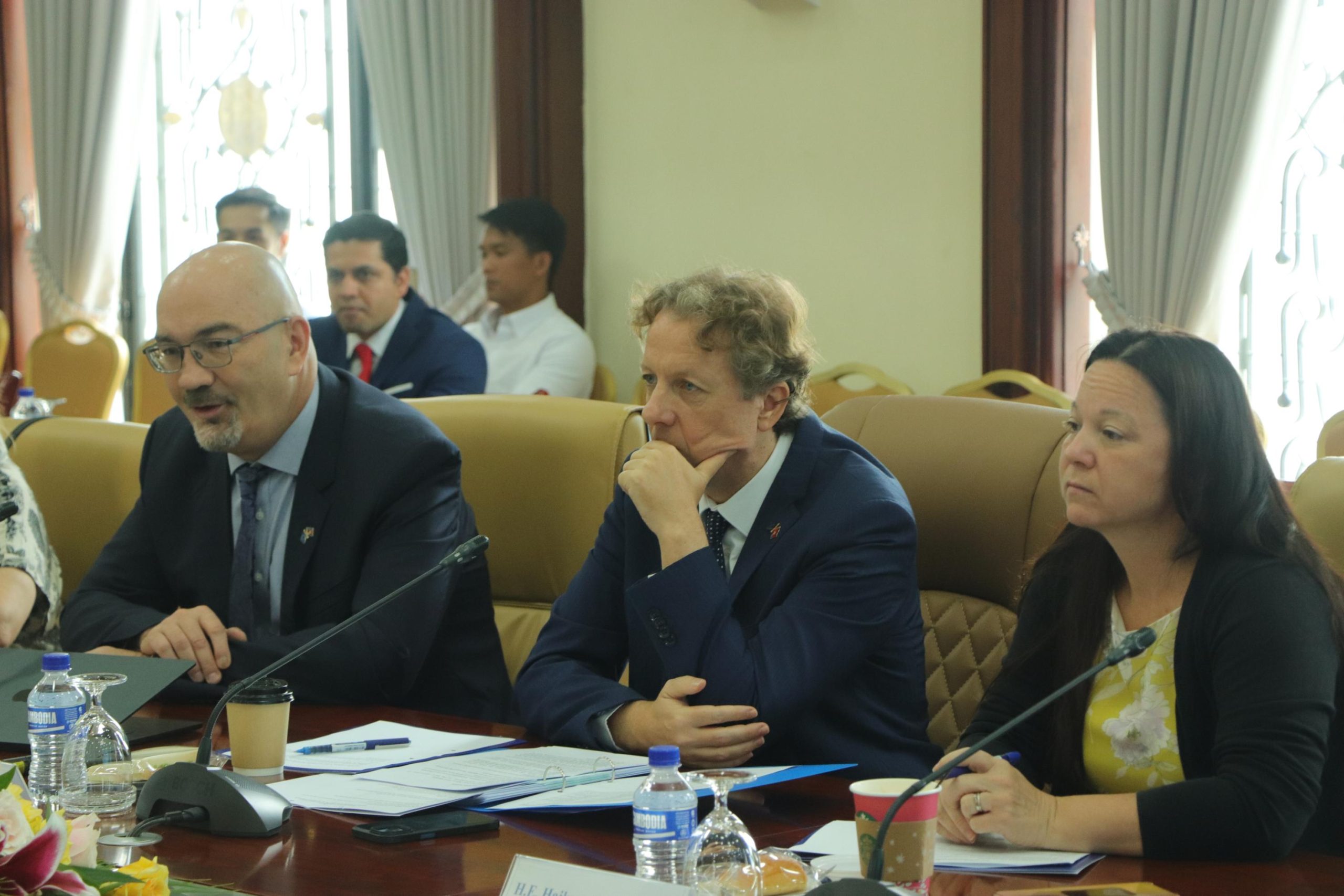
EuroCham and Cambodian Government Advance Investment and Regulatory Reforms at 5th Cambodia-Europe Public-Private Sector Dialogue
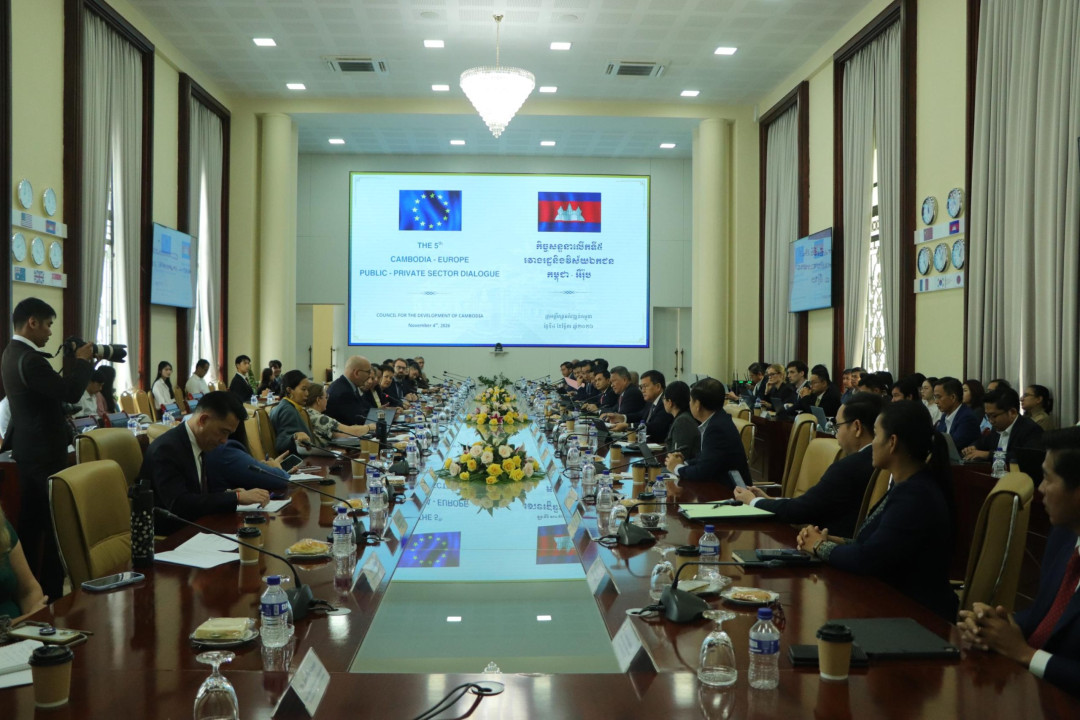
EuroCham Cambodia and the Council for the Development of Cambodia (CDC) convened the 5th Cambodia-Europe Public-Private Sector Dialogue (PPSD), bringing together senior government officials, the European Union Delegation to Cambodia, representatives from EuroCham member companies, and the EuroCham board to advance cooperation on investment, trade facilitation, and regulatory reform.
The discussions covered a range of issues affecting the business environment, including incentives for green investment, textile recycling, administrative procedures, pharmaceutical registration, customs operations, and vehicle imports under trade agreements and tariff rates on automobiles. Several developments were reported, with progress on existing initiatives and new steps towards addressing longstanding barriers faced by businesses in Cambodia.
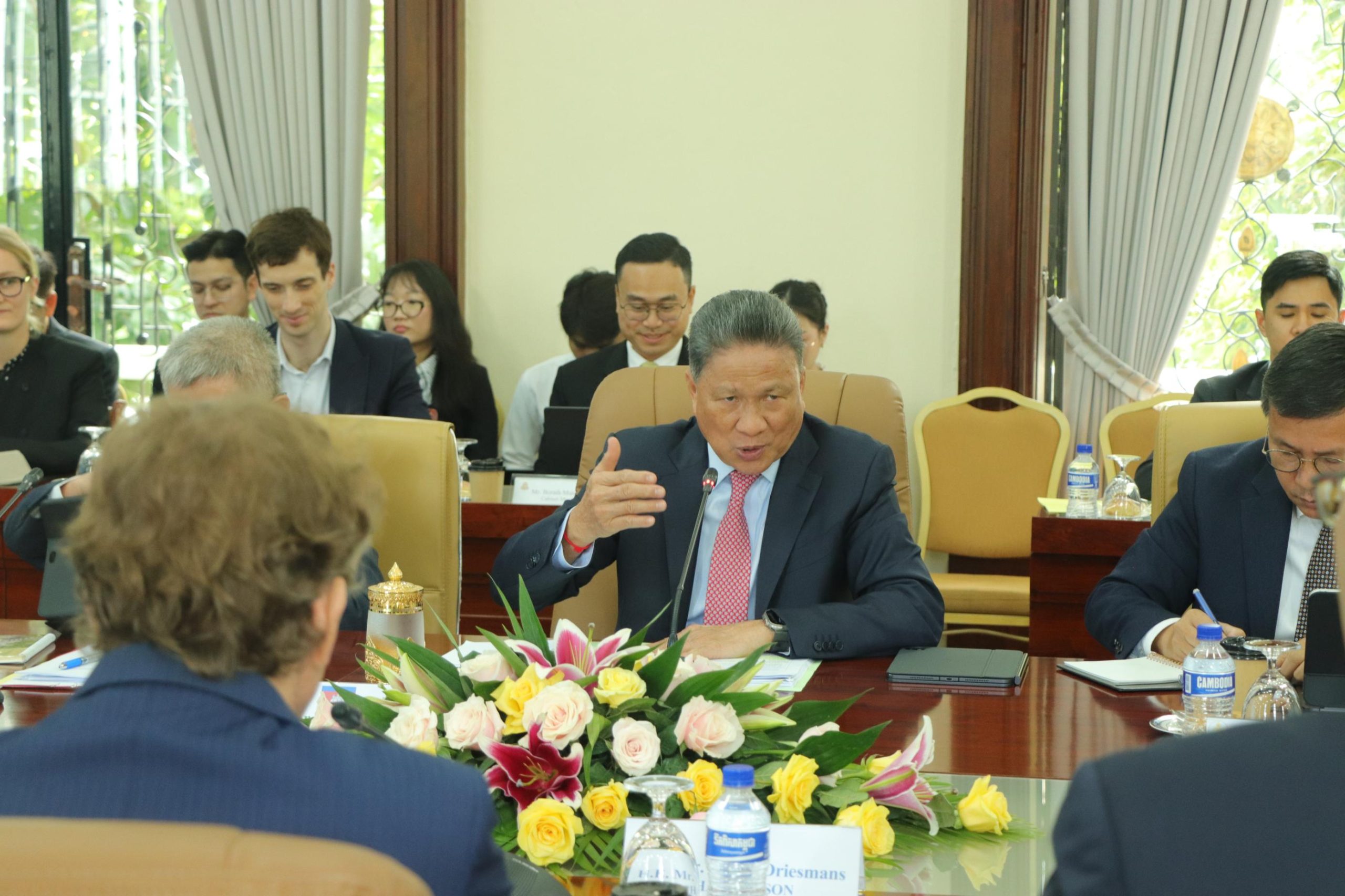
“Public-private dialogue is most effective when it leads to practical improvements, and the PPSD platform continues to work as a tool to achieve this progress," said H.E. Sun Chantol, Deputy Prime Minister, First Vice-Chairman of the Council for the Development of Cambodia. “We welcome the recommendations raised by EuroCham and will continue working with the relevant ministries and institutions to address regulatory challenges, improve coordination, and make it easier for businesses to operate in Cambodia.”
Progress on Textile Recycling and Circularity
EuroCham reported progress towards a practical mechanism for transferring textile waste from garment factories to recycling facilities without additional fiscal barriers. Under the current regulations, transferring waste cuttings from factories to recycling facilities triggers VAT and import duties, creating significant barriers to circularity in the sector.
Following the previous PPSD, the CDC has confirmed that a transfer-of-material mechanism can be used to facilitate the movement of textile waste cuttings from factories to recyclers. Working with GIZ and the Textile, Apparel, Footwear and Travel Goods Association in Cambodia (TAFTAC), EuroCham developed a proposed pilot program and recommendations for a digital reporting process to formally adopt such a procedure. The CDC also reported that the issue had been submitted to the Prime Minister for consideration.
“Today’s dialogue at CDC shows what public-private cooperation can achieve," said Massimileano Tropeano, Chairperson of EuroCham’s Garment & Textile Committee. "Together with TAFTAC and GIZ, we are working with the Government on clear and practical solutions for textile waste, so that Cambodia’s garment industry is ready for the sustainability requirements of its key export markets, including the EU."
Advancing Regulatory and Administrative Reforms
Progress was also reported on several regulatory issues affecting specific industries.
On alcohol regulation – Cambodia remains the only ASEAN member without age-requirement sales regulations – the Draft Sub-Decree on Minimum Requirements for the Sale, Purchase and Supply of Alcoholic Beverage was reportedly submitted to the Office of the Council of Ministers for legal review. An internal meeting is expected towards the end of November, marking a further step towards addressing a longstanding gap in consumer protection legislation.
In healthcare, EuroCham renewed its recommendation that Cambodia recognise technical evaluations from Stringent Regulatory Authorities, including the European Medicines Agency (EMA), besides Japanese or US’ agencies, when registering medicines. It also called for an urgent registration pathway for medicines already assessed by recognised authorities to be incorporated into the forthcoming Health Service Registration System (HSRS) in 2027. Following the previous dialogue, EuroCham reviewed the Cambodia-US Agreement on Reciprocal Trade, which provides for the acceptance of US Food and Drug Administration certificates and prior marketing authorisations. EuroCham is advocating for similar recognition to be extended to the EMA. The Deputy Prime Minister committed to raising the matter with the Ministry of Health.
EuroCham presented findings on customs broker costs, which indicate that official public service fees account for only a part of the total charges, with the remainder determined by private-sector brokers, leading to doubled cost compared to regional average rates. The General Department of Customs and Excise (GDCE) has a portal intended to give businesses greater oversight of export documentation and is pushing for its adoption. EuroCham will communicate further developments on customs procedures to the private sector.
The Automotive Committee raised concerns about preferential tariff treatment for vehicles imported under the ASEAN-China Free Trade Area and the associated unfair competition. The Ministry of Economy and Finance is reviewing its recommendations from industry associations, and has committed to taking action shortly.
EuroCham also sought clarification on automobile tariff rates under the Cambodia-US Agreement on Reciprocal Trade (ART). EuroCham raised questions about the application of zero import duties to US-origin vehicles while Cambodia is paying high duties for exports to the US against high import duties for European brands with Cambodia’s zero-duty access to European markets.
“Cambodia’s automotive industry is entering a new phase of growth, driven by increasing demand for new vehicles and continued investment in local assembly," said Makara Chhoeurn, Chairperson of EuroCham’s Automotive Committee. “As of September 2026, the car market grew by 17 per cent compared to the same period in 2025, with new cars accounting for around 70 per cent of the market. To support sustainable growth of the industry, we need to ensure fair competition and a balanced tax policy for both locally assembled and imported vehicles.”
Progress on Wider Business Environment Issues
The dialogue revisited two longstanding issues where further regulatory development is underway.
On Environmental Impact Assessments (EIAs), the Ministry of Environment is working to introduce a three-tier classification system based on low-, medium- and high-risk projects, with proposed service timelines of 30, 60 and 90 days respectively. Special Economic Zone (SEZ) investments are expected to fall under the low-risk category. However, questions around the access of international EIA and quality assurance firms remain outstanding.
EuroCham urged to address Cambodia’s lack of effective pathways for businesses to address and settle disputes fast and fairly, with international perception on efficient legal processes low. To this end, the Ministry of Justice’s technical working group has completed its review of the organisation and functioning of a future commercial court. Work remains on the procedural rules, which require further research by experts, with support from the Asian Development Bank.
On the regulatory facilitation, or the red tape program, following recommendations made at EuroCham’s 4th Public-Private Sector Breakfast Briefing in October, the CDC committed to bringing relevant government institutions together to explore efficient solutions for businesses. These include digitalising the Memorandum of Articles of Association, aligning photo identification requirements, deepening portal linkages between ministries, and establishing a unified list of business codes, alongside wider efforts to link government portals and reduce repeated requests for documents.
“We are working closely with the Royal Government, and especially with the CDC, on important regulatory and economic reform," said Tassilo Brinzer, Chairperson of EuroCham Cambodia. “For investors, less, more efficient, and cheaper regulation and administrative burden makes a huge difference, as the market is comparably small. They need lower compliance costs.”
He added:
To stimulate the economy, we ask to get creative on various tourist, long-term, and expert or investor visas: Vietnam, Singapore and Thailand all are successful with these. Also, legal security via a strong and fair legal system is critical for investors and those continuing to do business here. We are optimistic that the Royal Government also sees the urgency to move fast – and soon.
This press release was supplied.