
Every daily digital interaction in Cambodia – from scanning a QR code at a local coffee shop, to checking mobile banking balances or streaming media – relies directly on cloud and data centre infrastructure. Cambodia has a growing domestic cloud and data centre industry that is playing a key role in the country’s digital transformation and helping local enterprises achieve their data sovereignty goals.
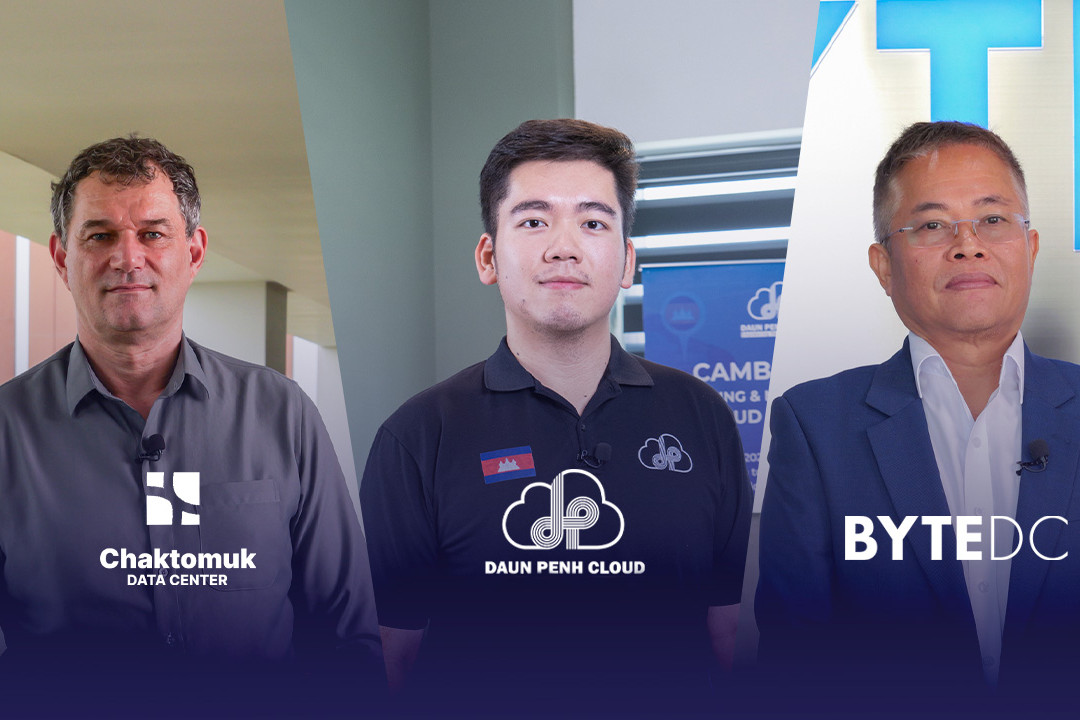
B2B Asia News sat down with representatives of three leading cloud and data centres – Daun Penh Cloud (DP Cloud), ByteDC and Chaktomuk Data Centre – to discuss the growth of the industry and how businesses are navigating the evolving data landscape.
Historically, Cambodian data has travelled across overseas submarine cables to regional hubs in Singapore or Hong Kong before routing back to local devices. Bringing that underlying infrastructure within national borders is fundamentally altering system performance, data security, and operational uptime across the Kingdom.
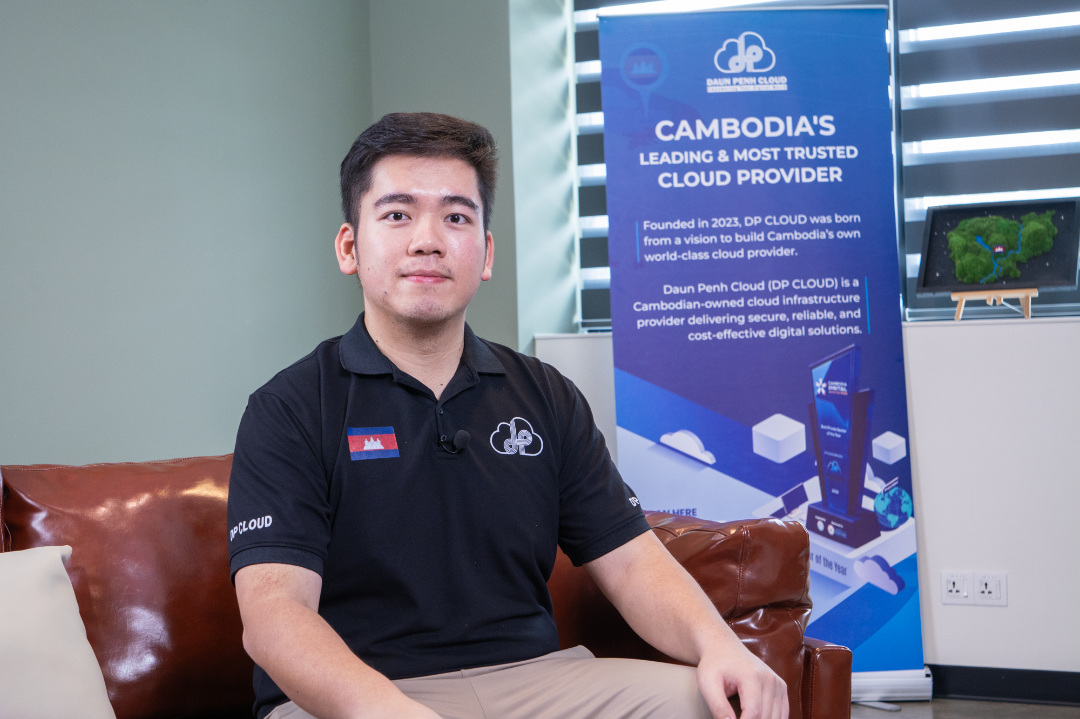
“Almost everything that everyone does on a daily basis interacts, in some way, with the cloud, even if you don't think that you or your business does,” explained Ing Seav Meng, Founder and CEO of Daun Penh Cloud (DP Cloud). “A lot of these interactions – from banking apps to online shopping – are hosted on cloud platforms, either internationally or locally.”
When transaction requests route through international hubs, network interruptions or latency can degrade the user experience. Localising data infrastructure addresses this failure point directly.
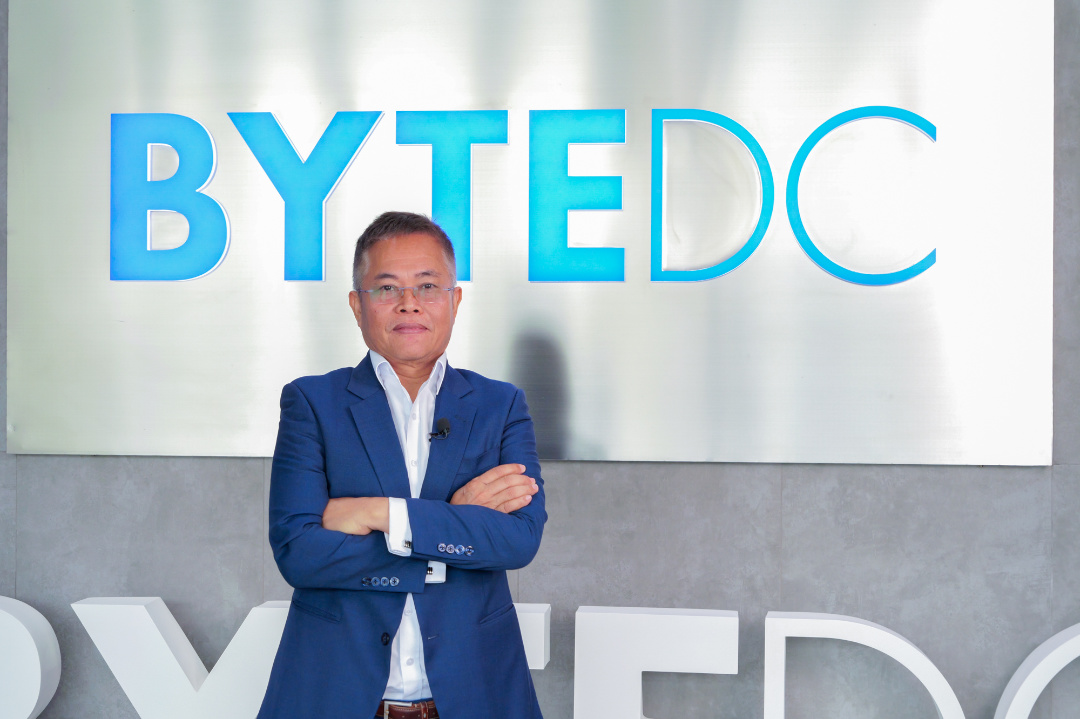
“When you perform QR transactions at a coffee shop or restaurant, if the bank uses an international data centre, authorisation travels outside the country before returning to the bank,” said Erya Houn Heng, COOof ByteDC Solutions Co., Ltd. “With local data centres and security hosted inside Cambodia, even during international internet disruptions, QR transactions perform smoothly with optimal experience.”
Data Sovereignty and the Regulatory Catalyst
As Cambodia accelerates its digital transformation, holding operational data within domestic boundaries has shifted from a convenience to an imperative. Rapid expansion in the financial sector, aligned with National Bank of Cambodia (NBC) regulatory guidelines and emerging personal data protection frameworks, has placed domestic infrastructure at the center of institutional strategy.
When DP Cloud began evaluating the market around 2021, the financial sector was already signalling readiness for structured data residency standards.
“There were already talks in the banking industry, one of the largest customers for cloud products, both nationally and internationally… that they were ready to push towards data residency as well as data protection laws within Cambodia, bringing us up to the same level as the rest of the world, in terms of regulations,” said Seav Meng.
He added:
That signalled to us that Cambodia, as a market, was worth looking at. We did our own market research and found that the total addressable market here in Cambodia was already in the hundreds of millions of dollars per year.
Geopolitical developments and cross-border regulatory risks have further accelerated demand for data sovereignty.
“Every country is focusing on data sovereignty because every country needs to be self-dependent,” emphasised Erya.
"[For example], when there's U.S. jurisdictional sanctions on a bank, the services and the customers of that bank are all impacted. ByteDC sees this as an opportunity… to provide hyperscaler services locally to help the country protect from those risks. ByteDC's vision is to build a national digital infrastructure empowered to grow in Cambodia.”
For organisations evaluating physical infrastructure options, colocation provides a dedicated physical footprint without the overhead of facility management.
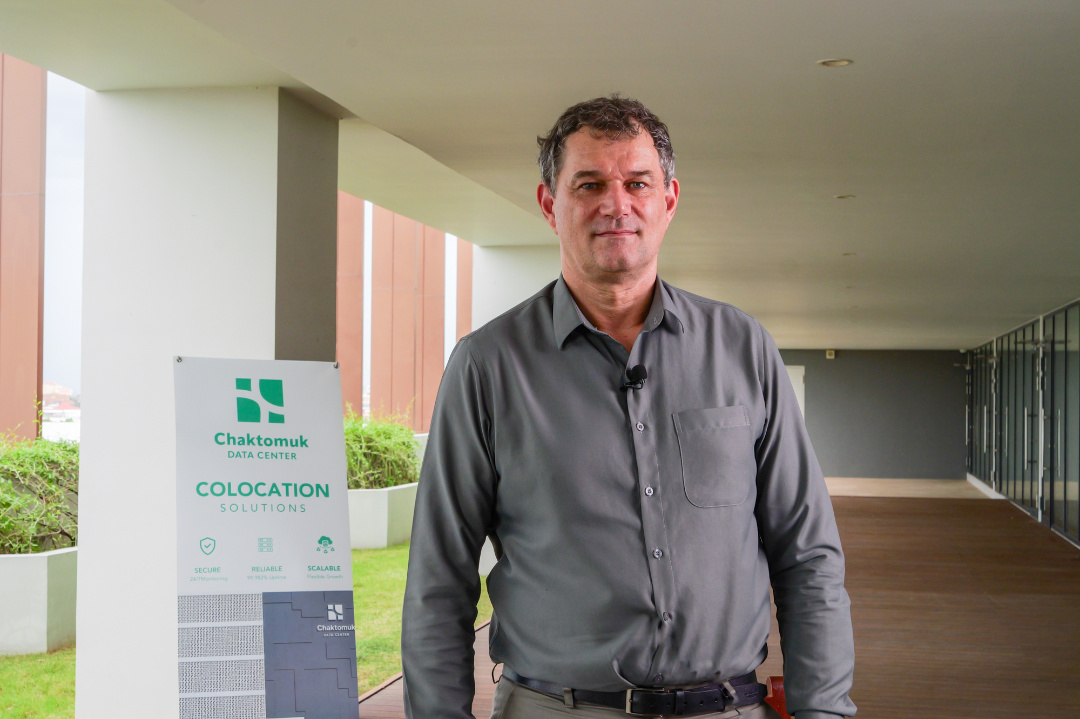
“Colocation is like a rental apartment,” explained Wilfrid Dutruel, COO of Chaktomuk Data Centre. “Basically, we provide everything which is surrounding, like the power, air conditioning, UPS (uninterruptible power supply), all the security… but you still own and manage your own equipment, you choose which equipment you want, this is your total responsibility.”
He added:
On the other hand, if you go for a shared product like AWS or Google, basically you are renting not only the space, you are also renting the equipment. You don't have a choice, but of course, at the end of the day, this is a question of cost, a question of sovereignty.
The Hybrid Model: Local Agility Meets Global Scale
Rather than competing head-to-head across every software segment with global hyperscalers like Amazon Web Services (AWS), Google Cloud, or Microsoft Azure, domestic providers are advancing a collaborative hybrid cloud framework. Local cloud operators focus on proximity, specialised service delivery, and direct on-site support while integrating with global platforms for international redundancy.
“AWS, Google or Azure offer over a hundred different software products on their cloud, and we're not looking to compete in every segment,” says Seav Meng. “We don't really see them as direct competitor. We want to be the cheaper, faster alternative for businesses that do business in Cambodia, and when they look to expand abroad, then, obviously, other international partners are what they would consider.”
He added:
Having Khmer IT support has been very useful, as well as the support that is usually given here is in person. Because when you log a ticket to AWS or Google, people will respond to you within 24 hours, but here, if there's anything that does go wrong, a lot of Cambodian customers appreciate being able to meet a technician in person to help them with whatever problem that they're facing.
This local footprint works in tandem with global platforms rather than displacing them.
“Even though ByteDC now has the capability of what a hyperscaler offers, we cannot replace them because some international companies need to put their data outside of country," said Erya. "Then we need to work with hyperscalers, so we work together as a total solutions provider.”
Maintaining Continuous Operational Reliability
Operating high-density server environments under high ambient tropical temperatures and power grid realities requires specialised facility design. To deliver strict 99.9 per cent uptime guarantees, local facilities adhere to global Tier III standards, continuous power monitoring, and strict Power Usage Effectiveness (PUE) benchmarks.
“When you are coming to Cambodia from outside, the first thing you look at is if you can find a facility that matches your goals, your criteria, whether it's ISO compliance or Tier III or Tier IV compliance… because this is a question of availability and performance guarantees. Major companies don't want to take the risk of having their site down, so they mitigate the risk by hosting in a Tier III or Tier IV facility," explained Dutruel.
He added:
We need to demonstrate and select equipment based on the maximum temperature within Cambodia. This way we know that, even with climate change and higher temperatures in the next 10 to 20 years, we are very confident in our design and that it continue to work.
Seav Meng also explained how energy consumption remains a central operational variable:
There's a very useful metric that we use internally: measurement of PUE. Anything that's, I think, under 1.8 would be considered an efficient data centre run that goes all the way up until 4+, and it's a scale that you measure your usage versus the amount of power that you draw down on. This was a main consideration in our design, because the cost constraint in utilities was one of the major factors when we did our business calculations. We've now moved from cooling an entire room, which is the traditional view of looking at cooling a data centre, to cooling specific racks that are under load. That has helped cut our power usage as well as reduce our need for cooling 24/7.
For highly regulated sectors such as banking, insurance, and healthcare, facilities must combine physical resilience with international compliance certifications. ByteDC’s platform, for instance, maintains Tier III certification alongside PCI-DSS, ISO 27001, ISO 27017, ISO 27701, SOC 2, and HIPAA compliance.
“Working with ByteDC is more convenient for smaller banks, for example, because to have an entire team [to manage their own data server] like we do is not possible for them,” said Erya. "They won't have professionals running or maintaining the data centre 24/7, and to be compliant, implement cybersecurity, etc. is a huge investment.”
Cultivating Domestic Engineering Talent
Sustaining world-class facilities over the long term requires building domestic technical capabilities in network engineering, virtualisation, and facility management. Industry leaders are addressing skill shortages through structured internal academies, university partnerships, and global vendor certifications.
“We made a very conscious effort when we first launched DP Cloud in 2024 to handpick the best [local] candidates," said Seav Meng. “Over the last two years, we've spent time training them in their individual roles to be the best that they are. I wouldn't say our approach is the best approach, but it has ensured that our talent pipeline is secure. ”We're able to almost start from scratch, and we've gone through the process of training someone straight out of university into a staff member that we can rely on either in cybersecurity, networking, systems engineering. In all of these key aspects, they're able to perform very well at their roles."
He added:
That's not to say international partners aren't important, and the way that they play a role, at least with DP Cloud, is through partnerships. Any gap that we see within our skills, we seek to partner with external companies in hopes to train our local staff to be able to reach the same level of skills.
“For the time being, we need to rely on foreign support," said Dutruel. Locally, there is basic knowledge, but the main issue is there are no proper courses on doing data centre maintenance in Cambodia. There are no maintenance engineers in Cambodia, they have to learn how to do it on site. We are providing regular training, we are helping our staff get certification of to demonstrate that they have got the skills. But there is no specific training on data centres available in Cambodia. We need to rely on the skills and ability of our staff to evolve and to learn new things on the job."
Vendor ecosystems also play a direct role in workforce development.
“In 30+ years in IT, it has always been a challenge regarding skillsets that cannot cope with technological change," said Erya. "ByteDC's strategy is to work with the best experts in the world, partnering with them. Currently, we partner with Huawei, Oracle, F5, Fortinet, CISA… Then we also offer internship programmes to train our young talents who only lack practical experience.”
Seav Meng added that this focus aligns with broader national initiatives aimed at graduating up to 1,000 IT engineers annually:
I think it's important, not just for the government, but for the private sector to have ready the jobs for these 1,000 graduating students every year, so that they have a clear path out of university, similar to what we did out of university through training our staff into industry-leading partners that companies and even government institutions can rely on. This pathway, for the medium-term, will be very important, and even more important in the long-term for Cambodia.
Defining Cambodia’s Maturation on the ASEAN Map
As Cambodia strengthens its position within the regional digital economy, the development of domestic cloud infrastructure represents a fundamental growth indicator. While financial institutions have led early adoption due to regulatory requirements, broader enterprise and SME onboarding will define the next expansion phase.
“Data centres cannot work without clients,” observed Dutruel. "Most of the data centres here, for the time being, have clients primarily from the financial sector, because they have already integrated risk management guidelines, with the support of NBC regulations. But for SMEs, there is not much industry services. When this matures, there will be more and more data centres in Cambodia because more enterprises will need to host their infrastructure locally.
For the time being, we are not there yet, it will take time. I think we are between 5–10 years late, but it will take time to build up the capacity of data centres within Cambodia.
Despite a smaller population relative to neighbouring regional markets, domestic operators maintain high ambitions for the Kingdom’s digital posture.
“Of course, Cambodia is a smaller country compared to its neighbours, and also in terms of economic advancement, because our population is smaller, but in terms of aspiration, we want to be one of the leaders, and we will employ all the best technology here to become one of the leading countries in the region," said Erya.
For Seav Meng, the ultimate metric of industry maturity lies in shifting market perception.
“We want our infrastructure, including talent infrastructure and consumption, to be on par with our neighbours, Vietnam, Thailand and Singapore," he said. "These are major IT powerhouses that have been driven upward through necessity, mostly the demand side, and they've adopted cutting-edge practices by partnering, like plan to do, with international global companies. You see AWS, Google – they've invested themselves into data centres within Southeast Asia, Malaysia, Indonesia, and that is the hope that I have in the long-term, as Cambodia steps up to the ASEAN playing field when it comes to the IT industry.
He concluded:
I think we'll know we've made it when, both nationally and internationally, when people do business in Cambodia, their first thought isn't to go buy AWS or to go buy Google Cloud or Azure – it's to find the best local cloud provider and work with them.