
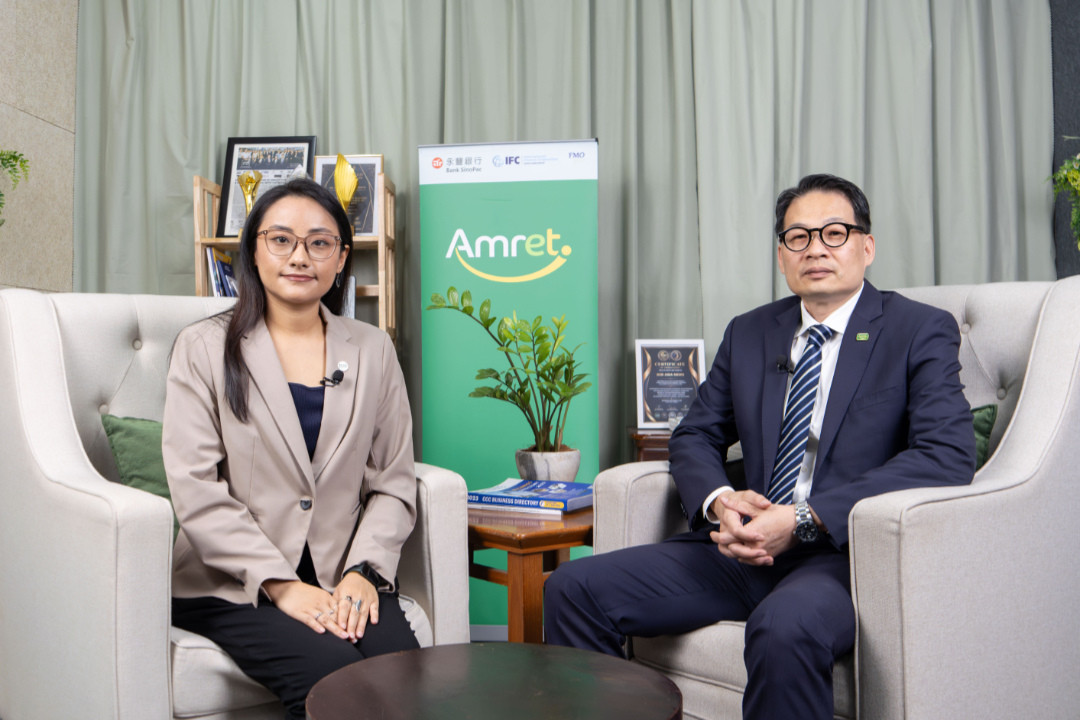
B2B Asia News sat down with Jonathan Kuo, Executive Director at Amret, to discuss Bank SinoPac’s entrance and presence in the Cambodian market, and how the Taiwanese bank’s majority acquisition of Amret in 2025 has helped transform the microfinance institution’s services for the better.
B2B Asia News: Bank SinoPac acquired a majority stake in Amret in January 2025, so has entered the market for over a year now. Can you tell us what specific macroeconomic factors made Cambodia and Amret an ideal location for Bank SinoPac's expansion in Asia?
Jonathan Kuo: “Going back to the beginning, in 2024, and even before COVID, we already saw the Cambodian market had opportunities. For example, we observed that the average age in Cambodia's population is so young, around 27. Another factor is that in this market, compared to Taipei in Taiwan, the average loan business margin is still very high, it's very good. We also saw that Amret’s service coverage ratio in Cambodia was so high, because they have 150 branches to serve all their customers.”
B2B Asia News: As one of Taiwan's leading banking groups, can you share what core capabilities Bank SinoPac has brought, or plans to bring, through Amret?
Jonathan Kuo: “We have strong parent bank support, funding support. We focus on stability. Everyone knows Amret has done business in Cambodia for over 35 years, which means it's quite stable. Another is safety. As a bank or financial institution, we need to let our customers feel safe while making transactions. This year, we have already upgraded our core banking system – T24 – to well-serve all customer needs, including daily 24 hour transactions. Another focus of ours is digital. Previously, we had some limitations, because we only had branch service, and after five o'clock, all the branches close. Now [through our digital systems] our customers can access Amret’s services for up to 24 hours. We have invested a lot in our core banking system and in our digital platform.”
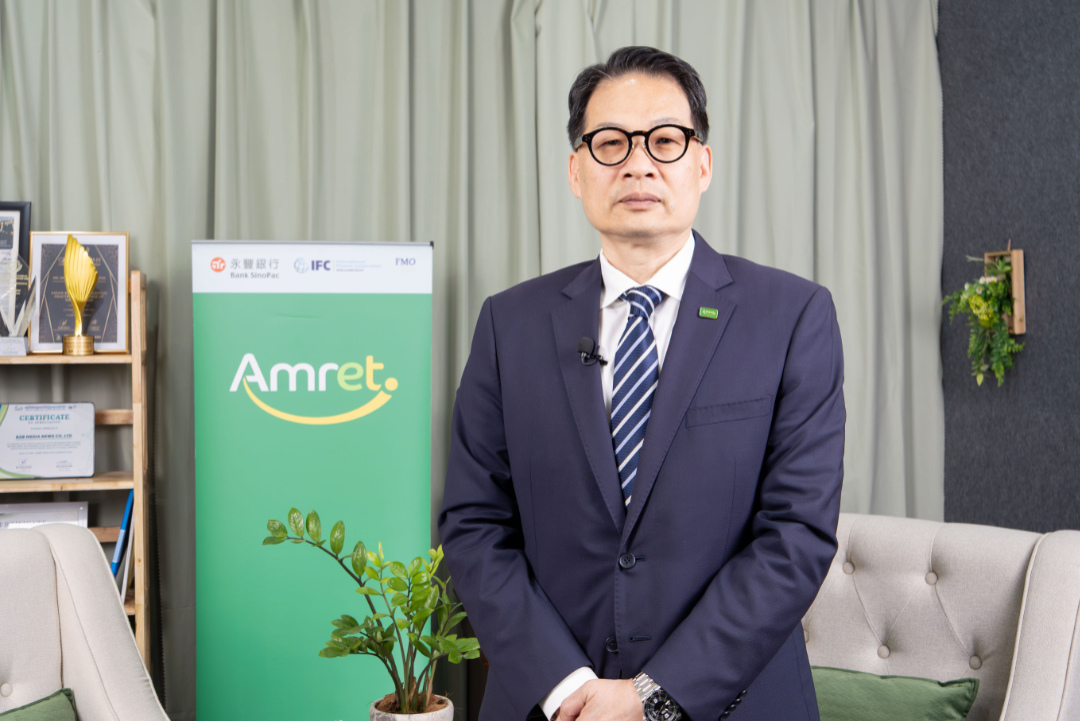
B2B Asia News: Can you share how Bank SinoPac's global network across Taiwan, Vietnam, China, and even the United States, might help to unlock new trade corridors or cross-border services for Amret's business here in Cambodia?
Jonathan Kuo: “Bank SinoPac’s customers in other countries have the opportunity to enter the Cambodian market through us [and vice versa]. We help people move outside in, and we also help Cambodian people move inside out. We open doors to service our customers so they can cross country borders.”
B2B Asia News: Amret has a history of serving rural microenterprises and MSMEs. How will Bank SinoPac ensure that the new modern banking capabilities being introduced will still preserve Amret's core mission of serving financial inclusion?
Jonathan Kuo: “At Amret, the loan business is also our KPI on the financial holding level. We set up a customer protection committee to let Amret strengthen governance and customer protection. It's good to have financial inclusion. Amret, for maybe 35 years, did business just face-to-face when reviewing customer profiles for loans. But actually, we need to use more digital solutions, for example, a credit scorecard, to identify the risk and the opportunity for customers.”
B2B Asia News: Looking at the broader Southeast Asian economy, what role does Bank SinoPac expect Amret to play in the development of Cambodia's financial sector over the next five to 10 years?
Jonathan Kuo: “I think in five years, we need to make Amret more strong, stable, and safe in this market. Then we can prepare to become a commercial bank. Also, because Bank SinoPac has serviced a lot of companies out of Taiwan, we have experience in the import/export trading business. So, maybe we can leverage Bank SinoPac's resources to give Cambodian companies the opportunity to join the global supply chain. Maybe in the future, we can see in five to 10 years, Amret becoming one of the tier-one banks in the Cambodian market.”