
World Bank Stresses Necessity of Higher Productivity Growth for Cambodia to Achieve Vision 2050 Goals
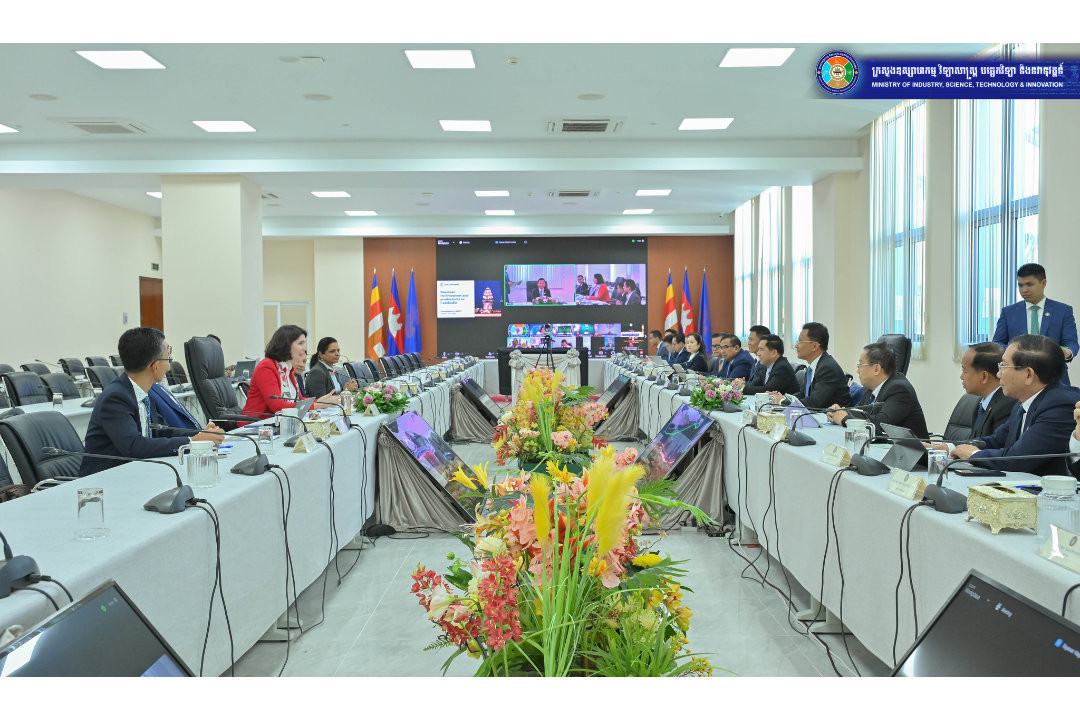
AKP Phnom Penh, January 12, 2026
The World Bank recently presented its latest analytical findings on Cambodia’s informal economy and business competitiveness to the Ministry of Industry, Science, Technology & Innovation (MISTI), as part of its efforts to support the government’s ongoing reform agenda.
During the meeting, Tania Meyer, World Bank Country Manager for Cambodia, reaffirmed the Bank’s support for the Cambodian government, and underscored the importance of improving the business environment and developing the informal sector. She noted that the Bank had deliberately placed special focus on the informal economy in its surveys for Cambodia.
The Bank’s senior economist, Faya Hayati, said, “As a knowledge bank, our role is to support the reform agenda the government is leading through evidence-based analysis.”
Hayati stressed that productivity growth is critical for Cambodia to achieve its ‘Vision 2050’ of becoming a high-income country. He noted that Cambodia’s productivity growth currently stands at around 0.8 per cent, while achieving Vision 2050 would require sustaining productivity growth of over two per cent annually for the next 25 years, a feat previously achieved only by South Korea.
WATCH: World Bank: Cambodia Needs Productivity Growth of Over 2% to Achieve Vision 2050
The discussion also highlighted findings from a special World Bank informal economy survey, which classifies informal firms into survivalist enterprises (41 per cent), potentially viable enterprises (44 per cent), and high performers (15 per cent).
The reports stressed that reforms must be carefully targeted, combining social protection for vulnerable groups with stronger incentives, streamlined registration, and a more enabling business environment to help viable and high-performing informal firms transition into the formal economy.
H.E. Hem Vanndy, Minister of Industry, Science, Technology & Innovation, invited the World Bank to develop concrete policy recommendations to support further discussions on actionable reforms.
“MISTI will relate this analytical work with our policy portfolio, including the draft MSME Development Strategy,” the Minister affirmed.
He also encouraged the Bank to align its next Development Policy Operation (DPO) with the government’s reform agenda, particularly in supporting MISTI’s mandate, including the implementation of the MSME Development Strategy, and targeted measures to support the informal economy.