Third British Education Summit Highlights Growing Investment Into Cambodia’s Education Sector Reflecting Pivot to Transnational Education
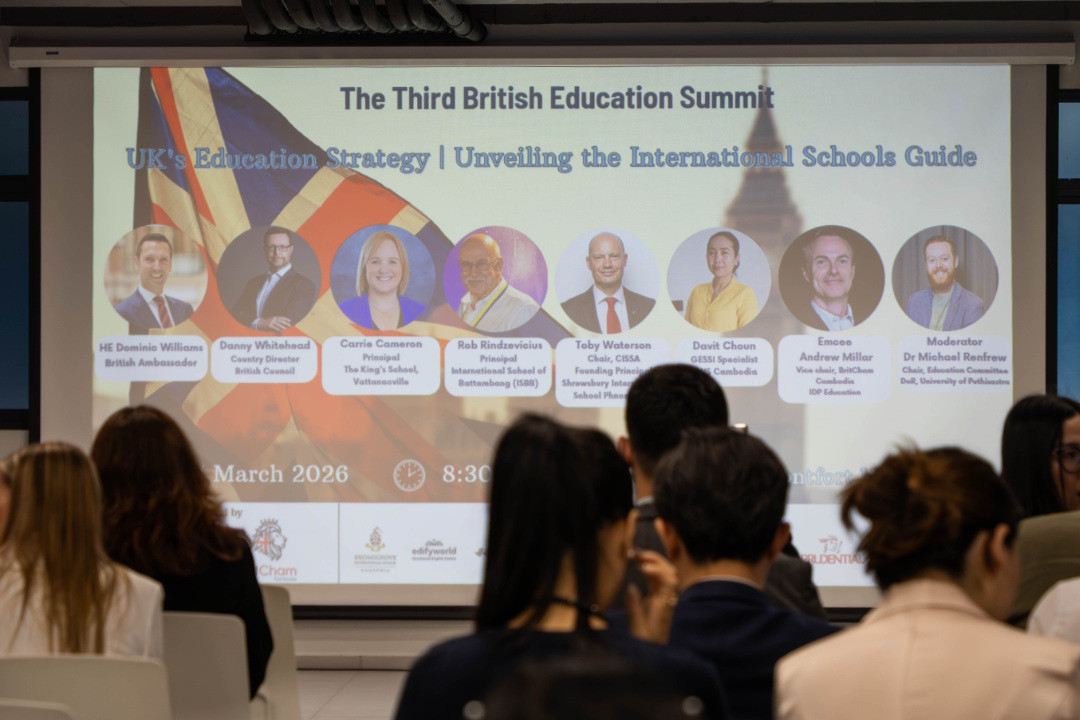
The Third British Education Summit was hosted by the British Chamber of Commerce (BritCham) in Cambodia on March 17, 2026, bringing together policymakers, educators, school leaders, investors, and industry stakeholders to explore the future of international education in Cambodia and beyond.
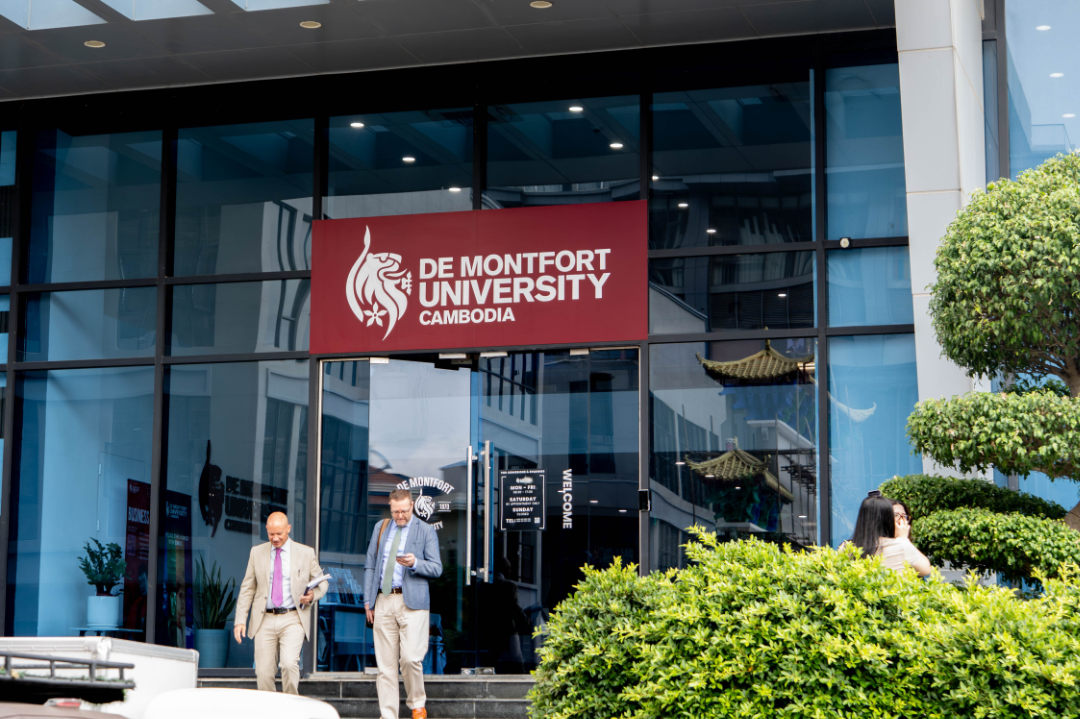
Held at De Montfort University (DMU) Cambodia, this year’s summit highlighted the United Kingdom's global leadership in education, as well as the UK's new International Education Strategy, which places stronger focus on transnational education, i.e. the delivery of UK courses and UK qualifications in other countries.
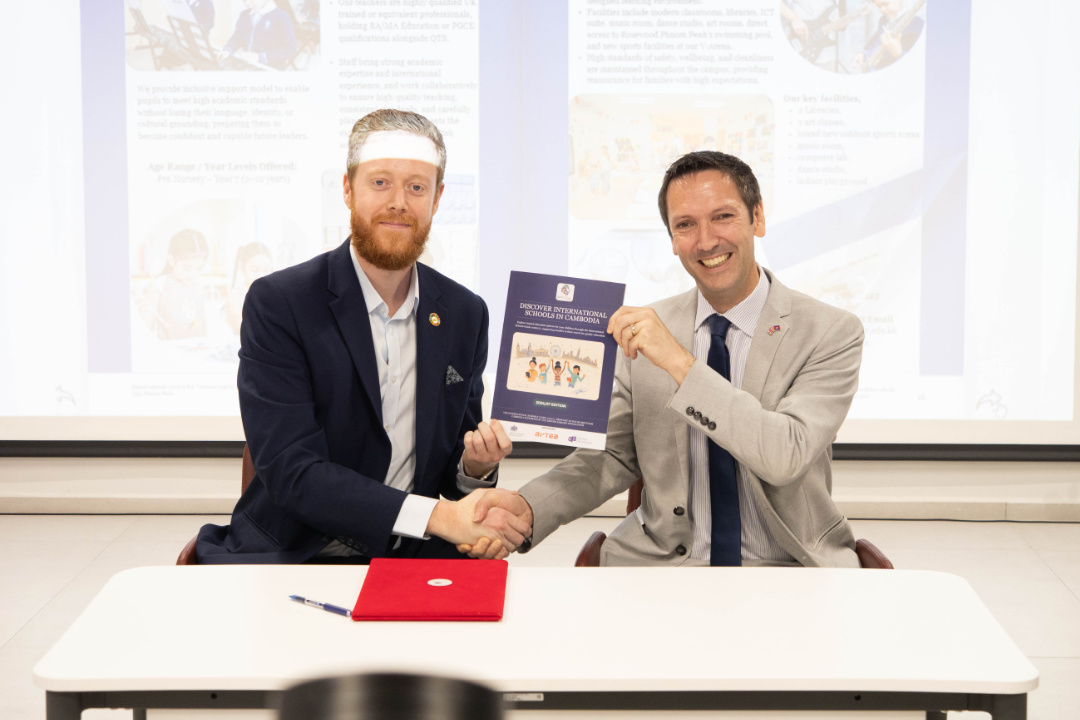
BritCham Cambodia also unveiled the chamber's first-ever ‘International Schools Guide’ during the summit, which provides valuable insights for parents, students, and education stakeholders navigating Cambodia's growing international education landscape.
Growing UK Investment in Cambodia's Education Sector
The UK is evolving from a traditional study destination into a strategic development partner for Cambodia. With the launch of the new International Schools Guide, a clear investment trend is emerging: a shift from primary education towards higher education and technical and vocational education and training (TVET). This shift aligns with Cambodia’s goals for graduating from Least Developed Country (LDC) status.
Danny Whitehead, Country Director of the British Council for Cambodia, Thailand, and Laos, told B2B Asia News that the UK’s international education strategy is pivoting, with more focus now placed on transnational education and TVET over student mobility.
“In the coming years, there's going to be much more stronger focus on encouraging investment in UK technical vocational education and training, in UK transnational education partnerships, and particularly in branch campuses across the region for UK higher education institutions," said Whitehead.
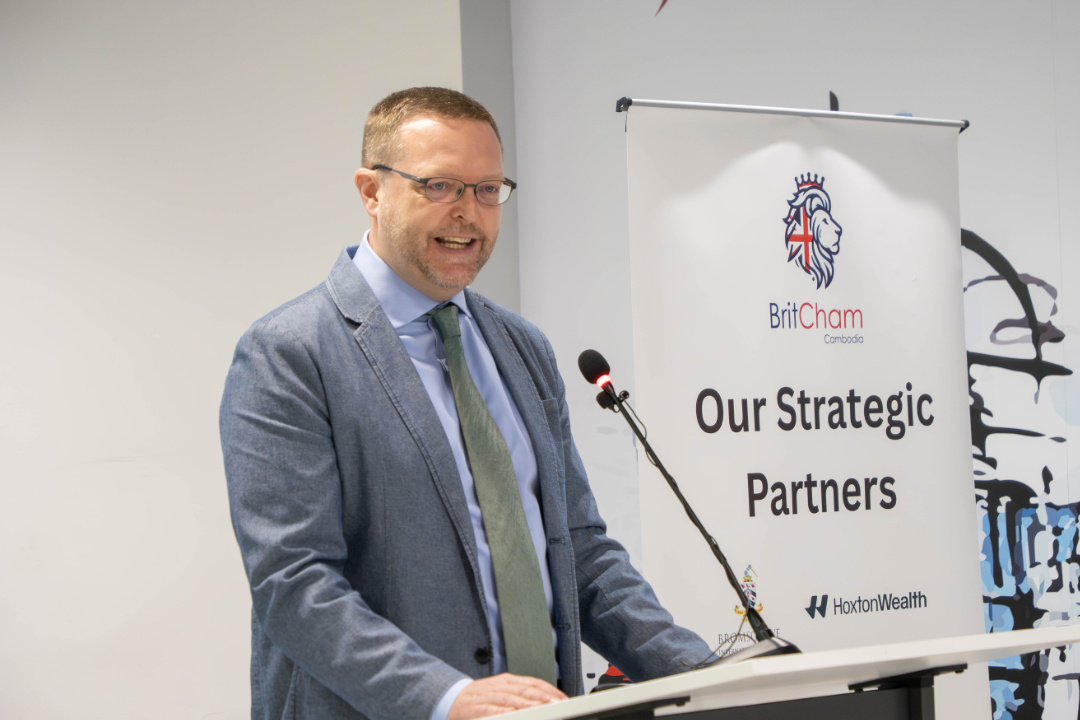
During his presentation, Whitehead highlighted three prominent trends he's observed in international education: the race to integrate artificial intelligence (AI) in higher education, a downturn in enrollments and student mobility to the United States, and a great increase in intra-regional mobility.
He added:
Students from East Asia are choosing not to go to traditional markets like the UK, the US or Australia, but are instead staying within East Asia. That's driven by a number of factors, including the increase in the quality of higher education institutions in Asia, the great increase in the number of transnational education offers, such as what DMU offers [in Cambodia], including lower costs and geographic proximity, as well as the general sense that some of the traditional markets are less welcoming than they were previously.
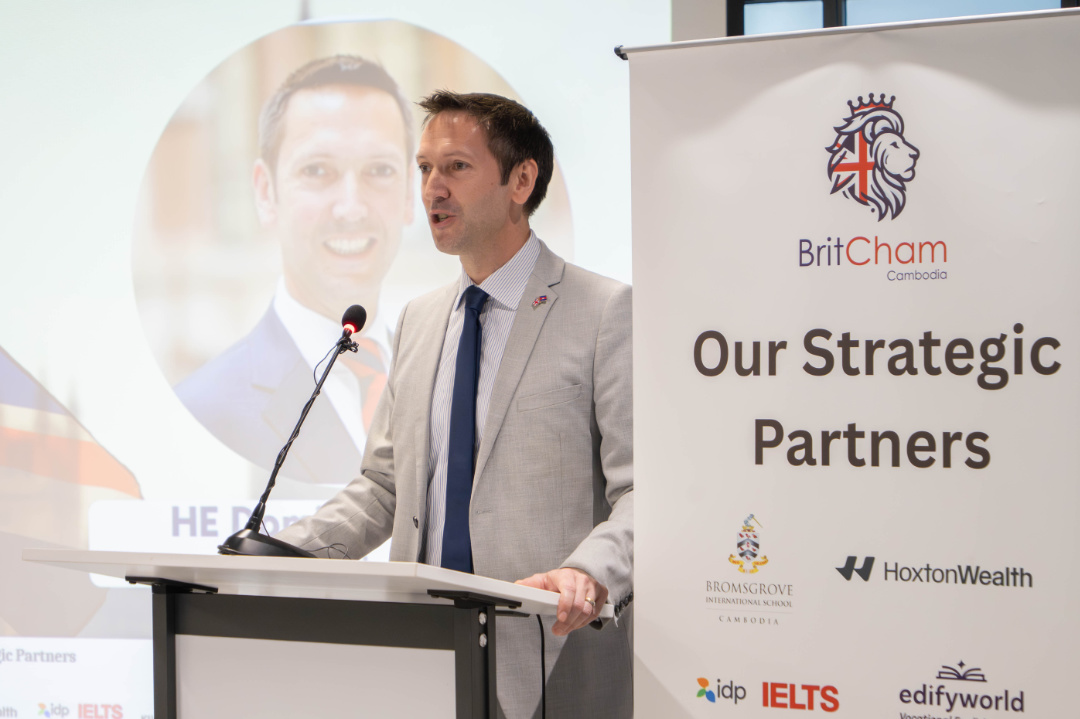
H.E. Dominic Williams, British Ambassador to Cambodia, noted the significant growth of British education in the Kingdom. He highlighted that two new universities have announced intentions to form transnational partnerships with Cambodia, bringing the total to four British universities operating in the country.
Furthermore, the British Embassy just launched a new TVET partnership with the Cambodian Ministry of Labour and Vocational Training (MLVT), during the Cambodia-UK Skills and TVET Forum on March 10, 2026.
Trends and Challenges in Cambodia's Education Sector
The summit also featured a panel discussion exploring current trends and challenges in the education sector, as well as the current level of access, standards, and the evolving needs of students and families.
Rob Rindzevicius, Principal of the International School of Battambang (ISBB ), shared that he is proud to be the inaugural principal of this new international school located in Battambang province, which opened five years ago. ISBB is licensed by the Ministry of Education to offer both the national curriculum alongside the comprehensive Cambridge curriculum.
“While 97 per cent of our students are Khmer, we are proud to bring world-class international standards to our town,” said Rindzevicius. “Notably, just two years after opening, ISBB became the first school outside of Phnom Penh or Siem Reap to be officially registered as a Cambridge International School.”
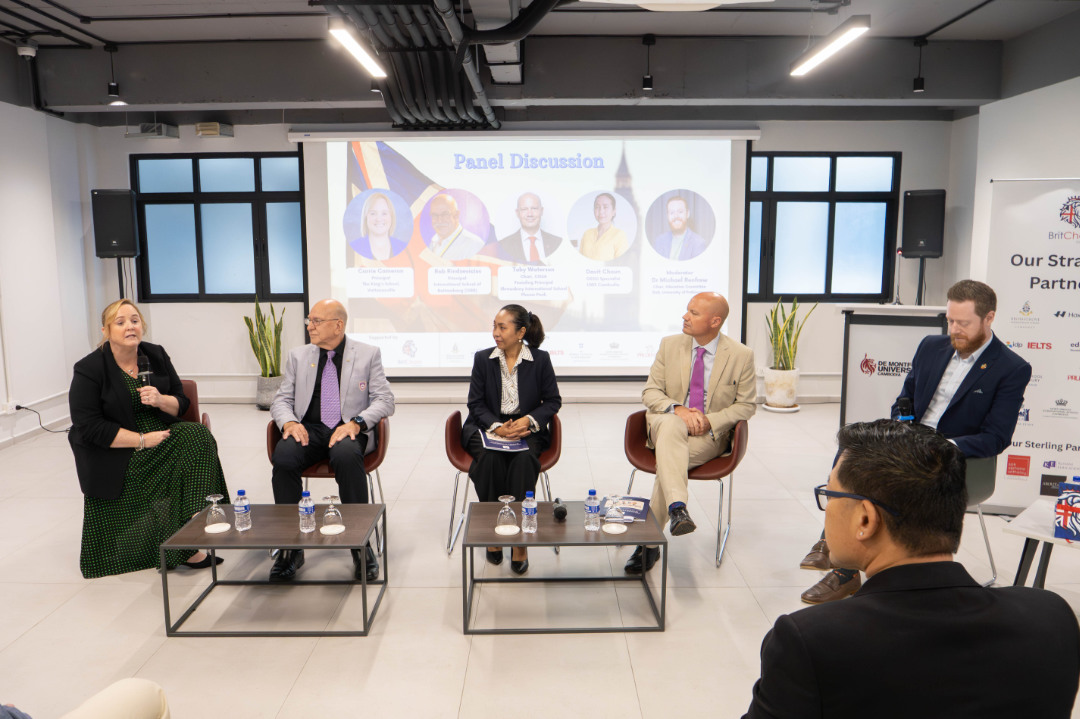
Davit Choun, GESSI Specialist at UWS Camboda, shared that UWS has built 137 schools in Cambodia’s most remote areas, expanding across seven northeastern provinces and supporting over 40,000 students, including approximately 19,000 girls and marginalized children. She added that the mission of these schools remains focused on providing quality education to indigenous and underserved communities throughout the region.
Toby Waterson, Chair of the Cambodia International Schools Safeguarding Association (CISSA) and Founding Principal of Shrewsbury International School Phnom Penh, spoke about the importance of child safeguarding and the need for schools in Cambodia to work together to ensure that standardised safety processes are followed.
“There is a big challenge here in Cambodia because the external frameworks, partners and government agencies, although their capacity, knowledge, understanding [of child safeguarding] are growing, they are not, perhaps, what people who have come from schools, in the UK or Australia are used to,” said Waterson.
He added:
The first thing, I think, is to recognise that this doesn't mean that Cambodia doesn't have aspirations to meet the high standards set by, for example, the United Nations Convention for the Rights of the Child. Cambodia is a signatory to that. … The challenge is making sure that we develop Cambodia's capacity to meet child safeguarding standards … And, I think, for parents, it's those accrediting bodies, such as CIS, such as COBIS, who are able to provide that solid stamp of approval.
Carrie Cameron, Principal of The King's School, Vattanacville, the only COBIS (Council of British International Schools) accredited school in Cambodia, spoke further on how accreditations like COBIS provide parents with the reassurance that the highest levels of safeguarding are being followed.
“COBIS accreditation is a really rigorous process, and we do shout it from the rooftops, because it matters that our children come into school every day and are safeguarded to the highest level,” said Cameron. “It's a very collaborative process that really looks to the finer details, I mean down to the tags on fire extinguishers, and all the little details that go into ensuring our school, our children, are safe.”
She added that the King's School is developing its educational side to reflect a stronger team teaching model, with both a Khmer and expat teacher working together in every classroom, all the while ensuring safeguarding always remains at the core of all school activities.