Strong Policy Action Key to Protecting Cambodia's Jobs and Livelihoods Amid Shocks – World Bank Cambodia Economic Update

While rising fuel costs are pressuring Cambodian businesses and households, the World Bank's latest economic update shows the economy is proving resilient, supported by surging foreign investment and buoyant exports.
The World Bank Cambodia Economic Update for June 2026, Navigating Shocks, details how conflict in the Middle East has transmitted an oil price shock to the Kingdom, leading to higher transport and production costs for firms and limiting their ability to sustain employment.
This comes as the economy navigates a property sector downturn and a contraction in remittances following the return of nearly one million migrant workers. Headline inflation surged to 5.8 per cent in April 2026, disproportionately affecting low-income households. A 10 per cent increase in fuel prices is estimated to raise the poverty rate by 1.4 percentage points.
Against these challenges, foreign direct investment (FDI) reached USD 5.1 billion in 2025, helping to create an estimated 400,000 formal jobs while offering critical employment opportunities for workers moving from agriculture and returning migrants. Goods exports also remain strong, growing by 17.7 per cent in the first quarter of 2026. Real GDP growth is projected to moderate to 3.9 per cent in 2026 before recovering to 4.9 per cent in 2027.

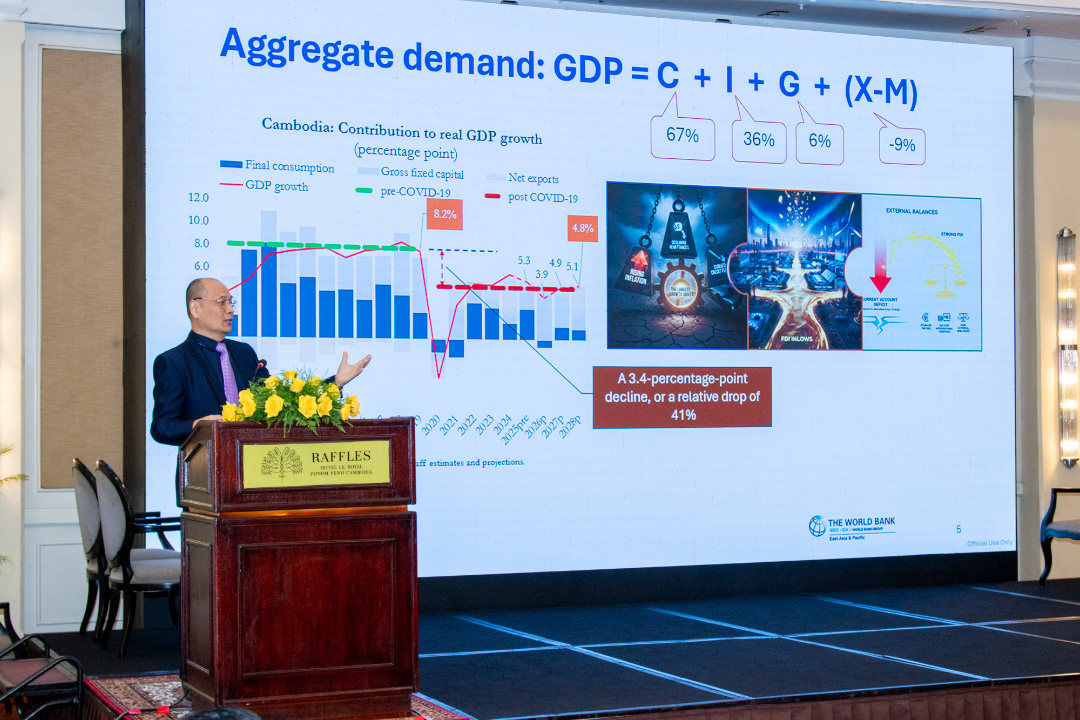
"Cambodia's economy is holding in the face of simultaneous shocks, demonstrating a resilience that can be sustained through targeted policy action to protect jobs and livelihoods," said Tania Meyer, World Bank Country Manager for Cambodia. "With the working-age population share projected to peak around 2043, the next 15 to 20 years are decisive for Cambodia's future. Investing in people — in education, in jobs, in new engines of growth — is what will turn Cambodia's demographic window into its greatest competitive advantage."
The report recommends a multi-pronged policy response focused on protecting livelihoods and supporting job creation while pursuing structural reforms that strengthen competitiveness and productivity. In the short term, it suggests targeted, time-bound cash transfers to vulnerable households rather than broad fuel-tax relief. It also emphasises mobilising domestic revenue to sustain and expand essential investments in health, education, and social protection. To ease pressure on rural jobs, fast-tracking fertilizer imports and promoting fuel-efficient farming would help farmers maintain productivity and incomes.
A special focus chapter on Cambodia's Demographic Transition and the Road to Vision 2050 underscores the urgency of creating quality jobs as the demographic window narrows. Building human capital, boosting productivity, and supporting sectors with strong employment potential remain key priorities while formalisation of the care economy and strategic labour migration policies would unlock more female labour force participation and connect Cambodian workers with regional job opportunities.
The Cambodia Economic Update is a biannual report by the World Bank.
This press release was supplied.