
OPINION: Buying the Future – How Battery Giants Quietly Set the Price of Your Car
Views and opinions expressed in guest writer opinion pieces are those of the author(s) and do not necessarily reflect the official position(s) of B2B Asia News.
Somewhere out of sight, the price you will one day pay for an electric car is already being decided. It is not decided by carmakers, and not at a dealership. It is decided in long-term contracts between battery makers and the companies that supply their raw materials.
One of these was reported recently: USD 17.2 billion, with little explanation of what it actually was. It is worth understanding, because deals of this kind now shape the cost of nearly every electric car on the road, and almost nobody outside the industry has ever heard of them.
This is the deal that prompted this article. It is a long-term supply agreement, known in the commodities world as an offtake agreement: a promise, signed years in advance, that one company will buy a fixed quantity of something from another over a set period, at terms both sides agree to now.
CATL, Contemporary Amperex Technology Co., Limited, is a Chinese company and the largest maker of electric-vehicle batteries in the world. It has promised to buy 3.05 million tonnes of cathode material from a supplier called Ronbay, between early 2026 and 2031. That works out to just over 500,000 tonnes a year, every year, for six years. The total value is put at USD 17.2 billion, though Ronbay itself has since said the figure was only an estimate.
In plain terms, CATL gives up the freedom to shop around each month, and in exchange it gets a guaranteed seat at the table for six years.
Why a Company Would Tie Itself Down Like This
The natural question is why a business would want to give up its own flexibility. The answer is that raw material markets are volatile, and the thing CATL is buying sits at the heart of every battery it makes.
Cathode material is built around lithium, and lithium prices swing wildly. Battery-grade lithium carbonate rose by roughly 56 per cent over the course of 2025, and by mid-January 2026 the most actively traded lithium futures contract in Guangzhou had climbed more than 160 per cent from its low point earlier in 2025. A manufacturer that buys everything on the open market lives at the mercy of swings like that. One quarter the batteries are cheap to build; the next quarter the same battery costs far more, and there is nothing the company can do except pass the cost on or absorb it. Neither is comfortable when you are trying to sell millions of identical products at a predictable price.
An offtake agreement takes that uncertainty off the table. By fixing volumes and agreeing pricing in advance, CATL can plan its costs years ahead. It knows the material will arrive, and roughly what it will pay for it. It can promise its own customers, the carmakers, stable prices and reliable delivery, because it has stabilised the thing underneath. In an industry where the battery is the single most expensive part of an electric car, controlling that cost is close to controlling the business.
There is a second, sharper reason, and it is the one that makes this deal interesting. CATL signed while lithium prices were near their peak, which sounds like the worst possible moment to commit. Most buyers would wait for prices to fall. CATL did the opposite, deliberately. When prices are high and everyone is scrambling for material, suppliers grow nervous about the future and become willing to offer long-term certainty in exchange for a guaranteed buyer. That is exactly when a large player can negotiate a price below the going rate, because it is offering something suppliers value: six years of guaranteed demand. It sounds counter-intuitive, but it is the logic of a company big enough to think in decades rather than quarters.
What the Supplier Gets Out of It
The risk sits mostly on Ronbay's side, so why would it take this on? Ronbay is the supplier, and until recently it was not even in this business. It made a different kind of cathode material, the nickel-based, or ternary, chemistry used in premium batteries. As the market shifted towards the cheaper iron-phosphate chemistry known as LFP, it changed direction, formally entering the LFP business in 2025 and buying a stake in another company, Guizhou Xinren, which already had some LFP production capacity. The CATL contract is the reward for that gamble. A guaranteed buyer for six years gives Ronbay something priceless: the confidence to invest.
This is the key dynamic behind every offtake agreement. A supplier will not spend billions building new mines, refineries and factories on the hope that someone might eventually buy the output. The sums are too large and the risk too great. But a signed contract from a buyer the size of CATL changes the calculation entirely. With guaranteed demand in hand, Ronbay can go to its banks, raise money, and build the capacity needed to deliver its side of the bargain. The contract secures supply for CATL, and it funds the creation of that supply in the first place.
That is also where the danger sits. Ronbay currently produces only a fraction of what it has promised, and it has committed to scaling up enormously while posting a loss for 2025, after a profit the year before. The Shanghai Stock Exchange took one look at the announcement and formally asked the company to explain how it could possibly deliver; Ronbay's own answer was that the headline figure was an estimate, not a guarantee. High reward comes with high risk, and a supplier that over-promises and under-delivers can unravel a deal like this. The contract is a promise, and promises can break.
Why This Is Not Just a Big Number
It would be easy to file this under large companies signing a large contract and move on. It is worth understanding because the contract is a signal about how the whole industry now works. For most of the modern commodities era, battery makers bought materials the way you might buy petrol: as needed, at whatever the price was that day, through short agreements tied to market indices. That suited a smaller industry. It does not suit one building batteries by the gigawatt-hour for a world switching to electric cars and grid storage at speed. When you need material on that scale, buying it piecemeal leaves you exposed, and rivals who have locked theirs in will out-compete you on cost and reliability.
So the leading players have started treating supply as strategic infrastructure, signing multi-year, multi-billion-dollar agreements to secure the material they need before anyone else can reach it. CATL's deal with Ronbay is the largest example so far, but it will not be the last. Every time a giant removes six years of demand from the open market, the companies still buying at the gate face a tighter, pricier market. The rational response is to sign a long-term deal of your own, which tightens the market further still.
The knock-on effects reach the cars people actually buy. LFP, the chemistry CATL is stockpiling, is the cheap and durable one that makes affordable electric cars possible, which is good news for buyers. But the same deals concentrate power in a small number of hands. When one or two companies control both the batteries and the materials behind them, the carmakers that depend on them become price-takers; they no longer control the most expensive part of their own product. A brand that has secured its supply can price an affordable electric car with confidence. A brand that has not is exposed to every swing in the lithium market.
That is also import for the Cambodian market. The local electric car market is small but growing fast: registrations were up 136 per cent in the first half of 2026 alone. The price of every one of those cars is set upstream by exactly this kind of deal, long before the vehicle reaches a dealership in Phnom Penh. Understanding who controls the batteries is understanding who will be able to sell an affordable electric car, anywhere in the world, including here.
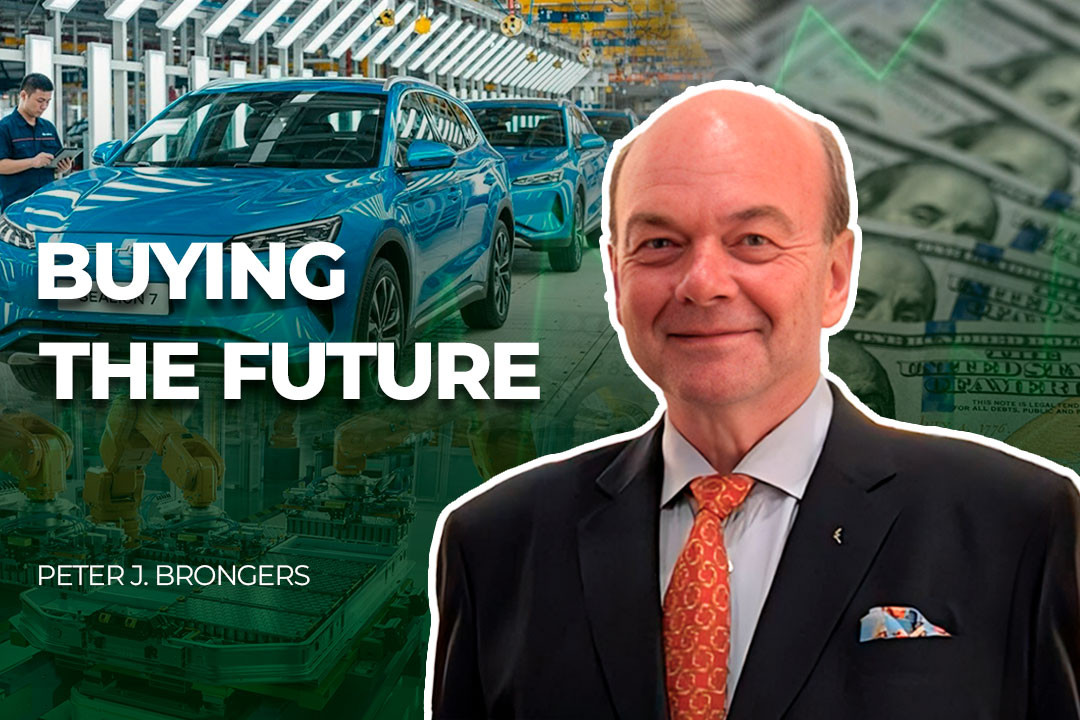
About the Author: Peter Brongers has spent his career on both sides of the story this piece describes. He is the former Country Manager of BMW Cambodia, and served for eight years as Chairman and President of the Cambodian Automotive Industry Federation, working at the point where the motor trade meets policy and market development. He is currently an independent director of Lithium Sciences Ltd, and is pursuing a PhD at Paragon University in Phnom Penh.