
Navigating Deforestation-Free Value Chains: EuroCham Cambodia Hosts Workshop on EU Due Diligence Requirements
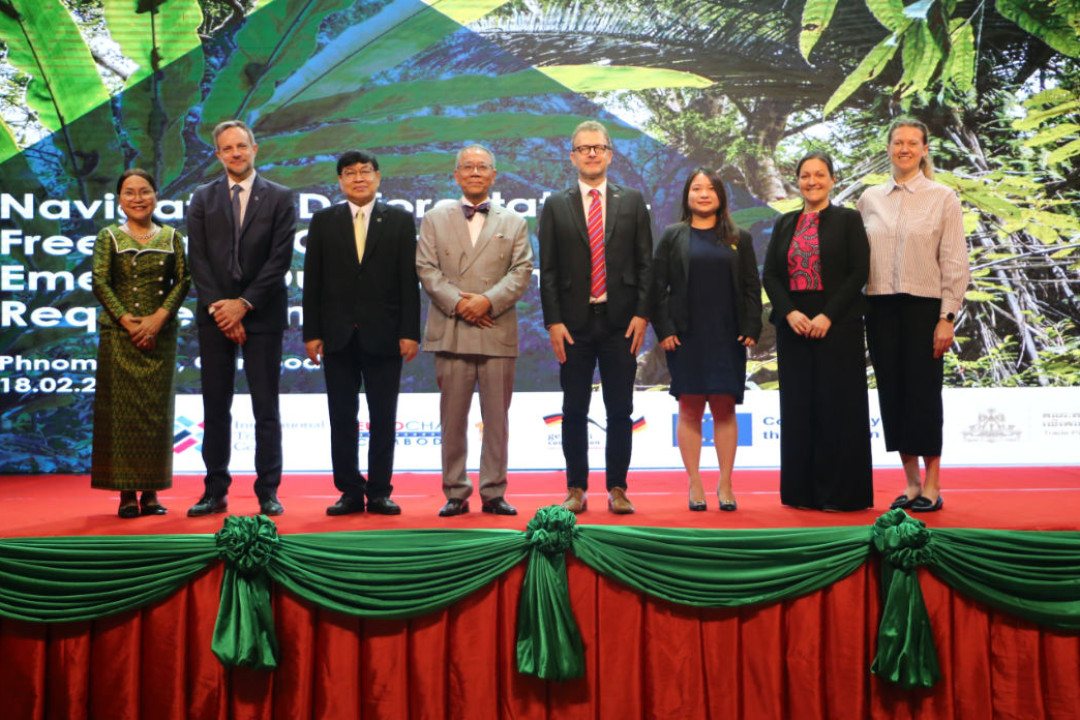
The International Trade Centre (ITC) and EuroCham Cambodia jointly hosted a full-day workshop on “Navigating Deforestation-Free Value Chains and Emerging Due Diligence Requirements” at the SUN & MOON Riverside Hotel in Phnom Penh on February 18, 2026.
The event was organised in close coordination with the European Union Delegation to Cambodia, and formed part of the broader FIT for FAIR knowledge exchange (2025–2026) initiative.
The workshop brought together representatives from the Cambodian government, EU Delegation, GIZ, development partners, private sector companies, cooperatives, NGOs, and certification bodies. It aimed to raise awareness on deforestation-free agricultural value chains, international market requirements, and emerging due diligence frameworks, including the EU Deforestation Regulation (EUDR) and the Corporate Sustainability Due Diligence Directive (CSDDD).
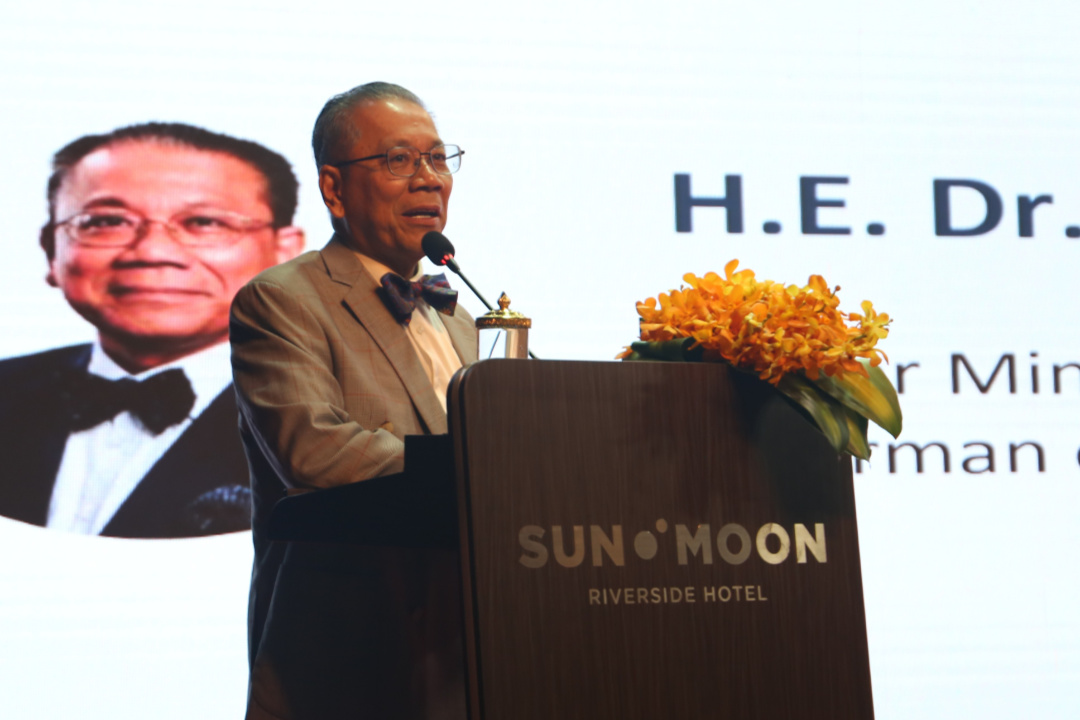
Following a welcome from Koen Everaert, Deputy Head of Cooperation at the European Union Delegation to Cambodia, opening remarks were delivered by H.E. Dr. Sok Siphana, Senior Minister in charge of Special Missions and Chairman of the Trade Policy Advisory Board.
“We have to make sure our rubber is deforestation-free, we have to make sure we don't make money on one side and lose it on the other side at the expense of our biodiversity and climate,” said H.E. Dr. Sok Siphana. "Cambodia has the opportunity to demonstrate that sustainable production and export competitiveness can go hand in hand. Now, it's the time to roll up our sleeves and get to work!"
Everaert noted that Cambodia’s transition towards deforestation-free value chains should be seen as both a challenge and an opportunity, with the European Union Deforestation Regulations bringing new requirements, but also creating incentives for higher standards, stronger traceability and greater competitiveness.
“Under the EU’s Global Gateway strategy, we are deepening our partnership with the private sector by mobilising technical assistance, capacity building and improved traceability systems,” he said. "Our objective is to ensure that Cambodian businesses are fully equipped to meet evolving due diligence expectations from European consumers and are better integrated into sustainable global supply chains.”
“Deforestation-free value chains are not merely a regulatory obligation; they represent a strategic opportunity for Cambodian producers to strengthen their position in international markets,” Jorne Nooij, Advocacy Specialist at EuroCham Cambodia, further added. “Today’s discussions reinforced the importance of coordinated action between the private sector, policymakers, and international partners to ensure that Cambodian exporters remain aligned with emerging global standards.”
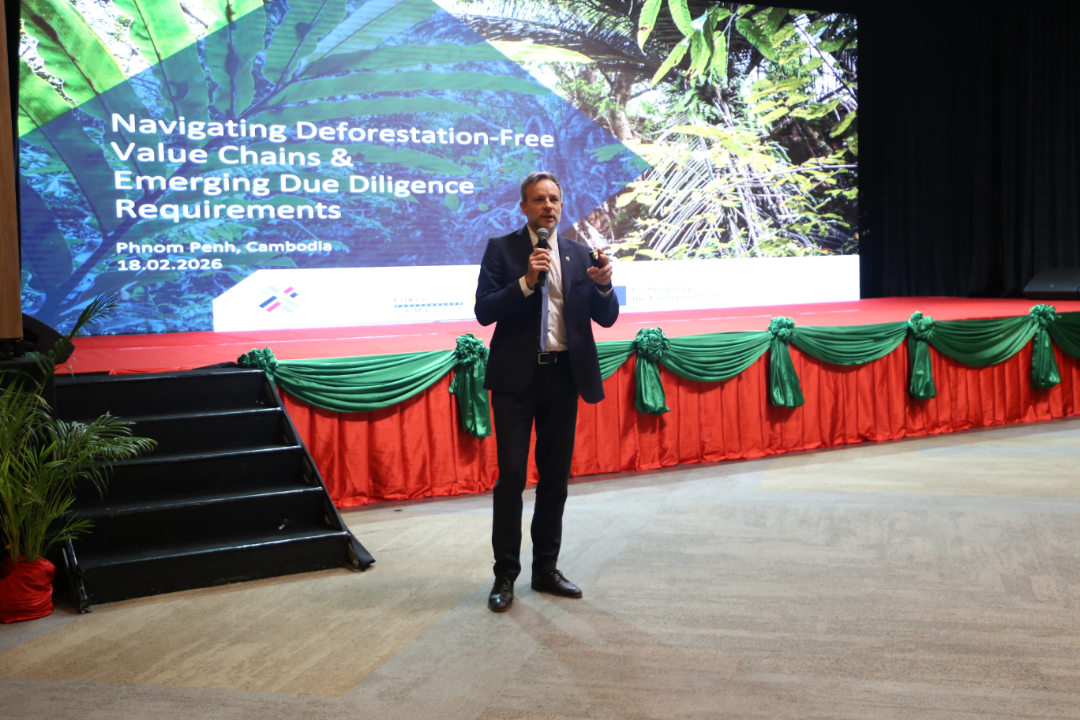
Keynote remarks were delivered by Annalena Podzun, Adviser for the FIT for FAIR Programme at GIZ, who introduced the objectives of the programme and the workshop. She highlighted the importance of cross-sector collaboration, knowledge sharing, and practical approaches to align Cambodian supply chains with international expectations. This was followed by Mathieu Lamolle, Senior Adviser at ITC, who provided a detailed overview of the EUDR, explaining its objectives, scope, and timeline, as well as the key due diligence obligations for operators and traders, and the implications for Cambodian exporters and supply chain actors.
Participants then explored practical steps for EUDR readiness, with Lamolle guiding a step-by-step review of implementation requirements. This included legality and compliance documentation, traceability and geolocation data requirements, and due diligence risk assessment and mitigation strategies. The session concluded with a Q&A segment, allowing participants to clarify specific operational challenges.
The morning session concluded with private sector insights, where Evelyne Bocquet, Sustainability and Communications Manager at Socfin KCD, and Phanith Chou, Consultant at INSUCO, shared experiences implementing deforestation-free practices in business operations and supply chains. They highlighted cashew production practices and social impact assessments, providing concrete examples of how Cambodian companies are meeting EUDR requirements.
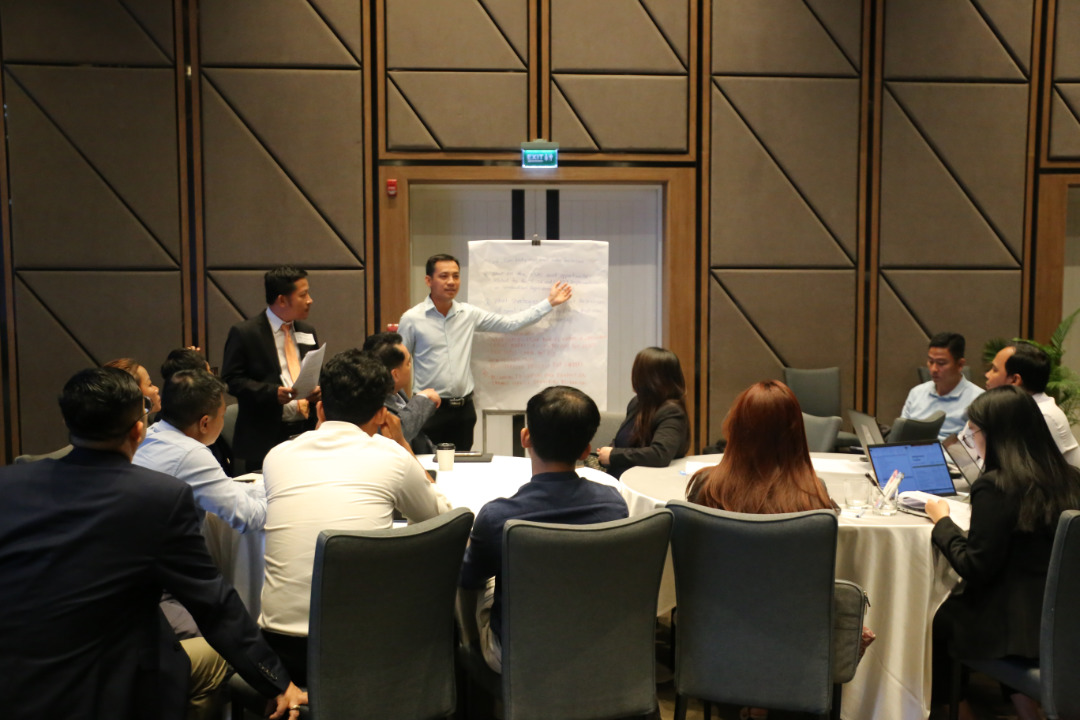
The afternoon focused on technical exchanges and stakeholder dialogue on EUDR and CSDDD. Roundtable discussions facilitated by ITC, FIT for FAIR, and introduced by Nooij, addressed traceability and geolocation systems, legality verification, due diligence and risk management, cost feasibility, smallholder inclusion, and market demand and pricing implications. Facilitators rotated among tables to guide discussions and synthesise key insights from participants, encouraging an interactive and practical approach.
The workshop concluded with reflections and next steps, where Nooij and fellow facilitators summarised thematic insights from the discussions and highlighted implications for businesses, policymakers, and support actors. The event strengthened dialogue between the private sector, government institutions, and development partners, and informed future technical assistance and policy recommendations under the FIT for FAIR initiative.
By providing Cambodian stakeholders with practical tools, knowledge, and peer experiences, the workshop marked an important step in supporting private sector actors in forest-risk commodity sectors, including timber products, coffee, rubber, and cashew, in meeting international market expectations and advancing sustainable, deforestation-free supply chains.
This press release was supplied.