
Multilateral Trade Forum 2026: Exploring Forward-Looking Strategies to Enhance Cambodia's Trade Competitiveness and Resilience
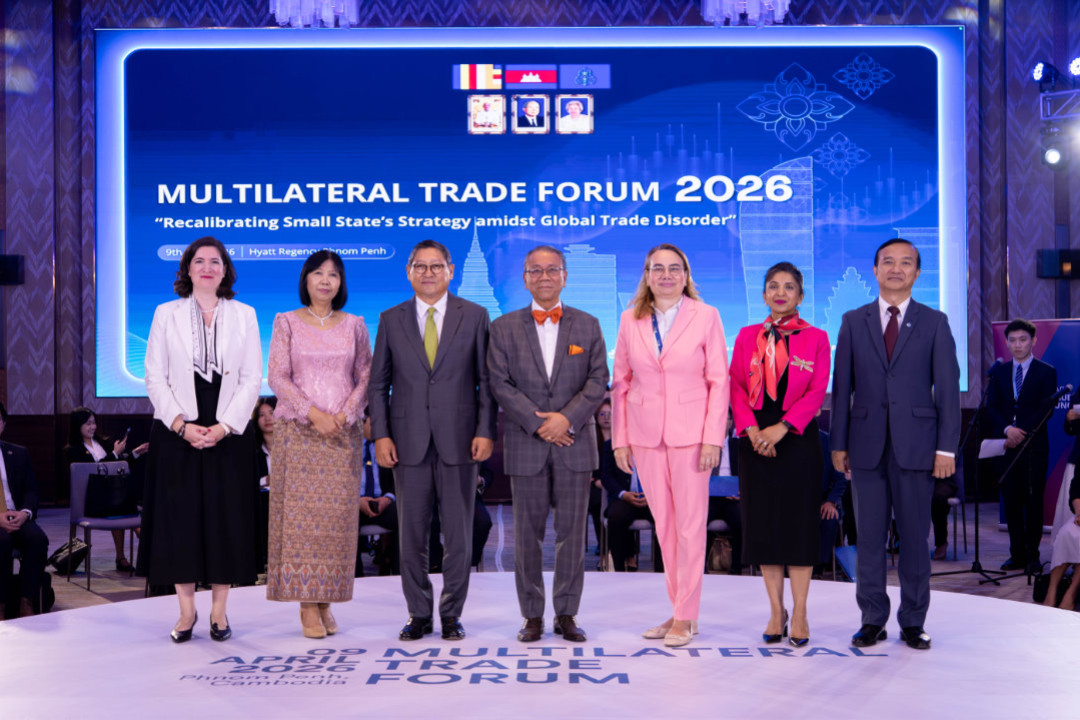
On April 9, 2026, the Trade Policy Advisory Board (TPAB), the Economic Society of Cambodia (ESC), and Konrad-Adenauer-Stiftung (KAS Cambodia) co-organised, for the first time, the Multilateral Trade Forum 2026 under the theme “Recalibrating Small States' Strategies Amidst Global Trade Disorder”.
The Forum aimed to assess the deepening fragmentation of the global trading system, explore forward-looking strategies to enhance Cambodia's trade competitiveness and resilience, and address the structural challenges associated with the country's forthcoming graduation from Least Developed Country (LDC) status.
The event convened a distinguished assembly of high-level representatives from the Royal Government of Cambodia, including H.E. Sok Chenda Sophea, Deputy Prime Minister, and H.E. Eat Sophea, Acting Minister of Foreign Affairs and International Cooperation. They were joined by senior officials from key institutions, notably from the Office of the Prime Minister; Office of the Council of Ministers; Ministry of Foreign Affairs and International Cooperation; Ministry of Economy and Finance; Ministry of Information; Ministry of Labour and Vocational Training; Ministry of Public Works and Transport; Ministry of Industry, Science, Technology and Innovation; Ministry of Mines and Energy; Ministry of Environment; Port Authority of Sihanoukville; General Department of Taxation; General Department of Custom and Excise; Council of Jurists; the Legal Reform Committee; and the Economic, Social, and Cultural Council, as well as from the Senate and National Assembly.
Members of diplomatic corps in Phnom Penh were also represented, with the presence of Ambassadors including H.E. Pengiran Kasmirhan Bin Pengiran Haji Tahir of Brunei; H.E. Christian DesRoches of Canada; H.E. Sonexay Vannaxay of Laos; H.E. Kyaw Soe Min of Myanmar; H.E. Shaharuddin Onn of Malaysia; and H.E. Steven Pang Chee Wee of Singapore. They were also joined by representatives from the embassies of Australia, the United States, and Vietnam, as well as the Delegation of the European Union.
From the private sectors were leading firms and business associations, including Amru Rice, Cambodian Investment Management Holdings, and the European Chamber of Commerce in Cambodia, among others. Development partners and research institutions – including GIZ Cambodia, the Cambodia Australia Partnership for Resilient Economic Development, EnergyLab Cambodia, and the Cambodian Centre for Regional Studies – participated at the event. The Forum further welcomed the active participation of students and emerging scholars from the Institute of International Studies and Public Policy, the National University of Management, Paragon International University, and the American University of Phnom Penh.
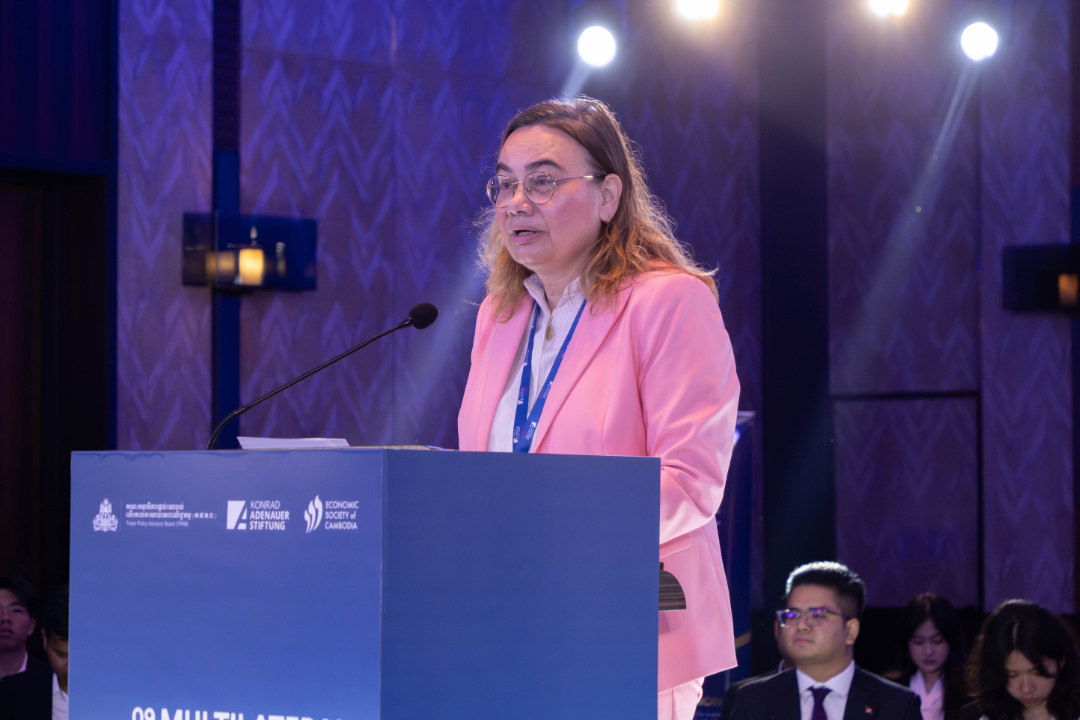
At the event, Natalie Russmann, Country Representative of KAS Cambodia and Malaysia, delivered the welcoming remarks, reaffirming KAS's longstanding commitment to supporting Cambodia's democratic governance, economic innovation, and multilateral engagement since its establishment in the country in 1994.
She underscored the growing urgency for small and developing states to collectively rethink their trade strategies in the face of mounting global uncertainties. The Multilateral Trade Forum 2026 holds particular significance as one of KAS Cambodia's final engagements in the country, as the organisation is set to conclude its operations in Cambodia by the end of 2026, after 32 years of presence and partnership.
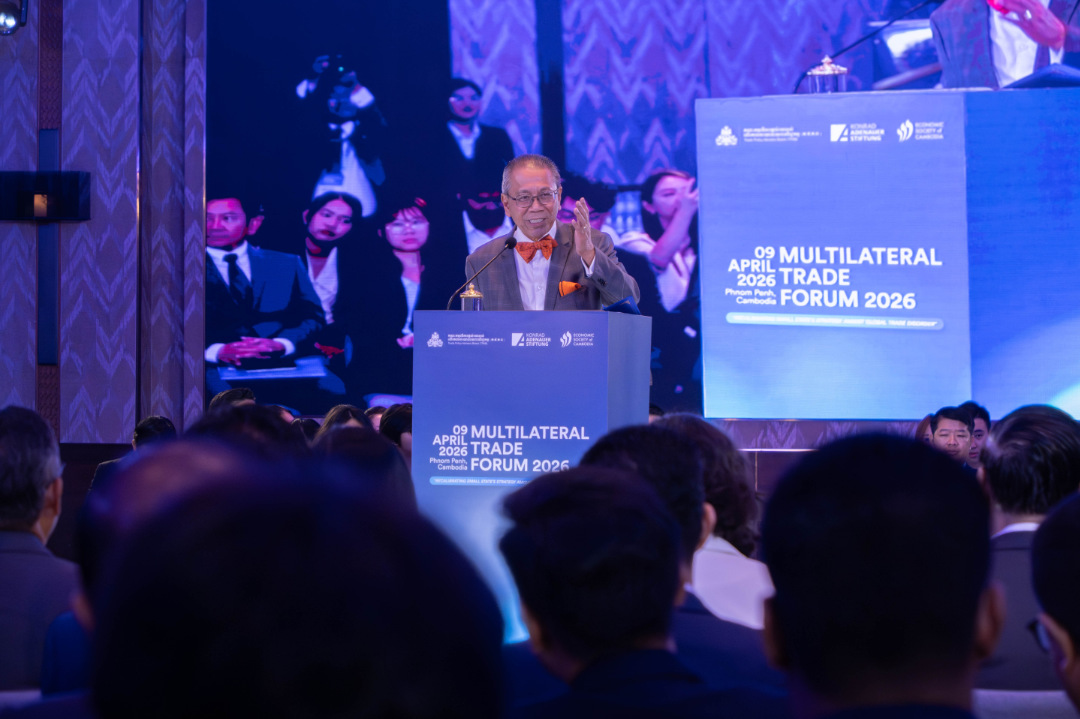
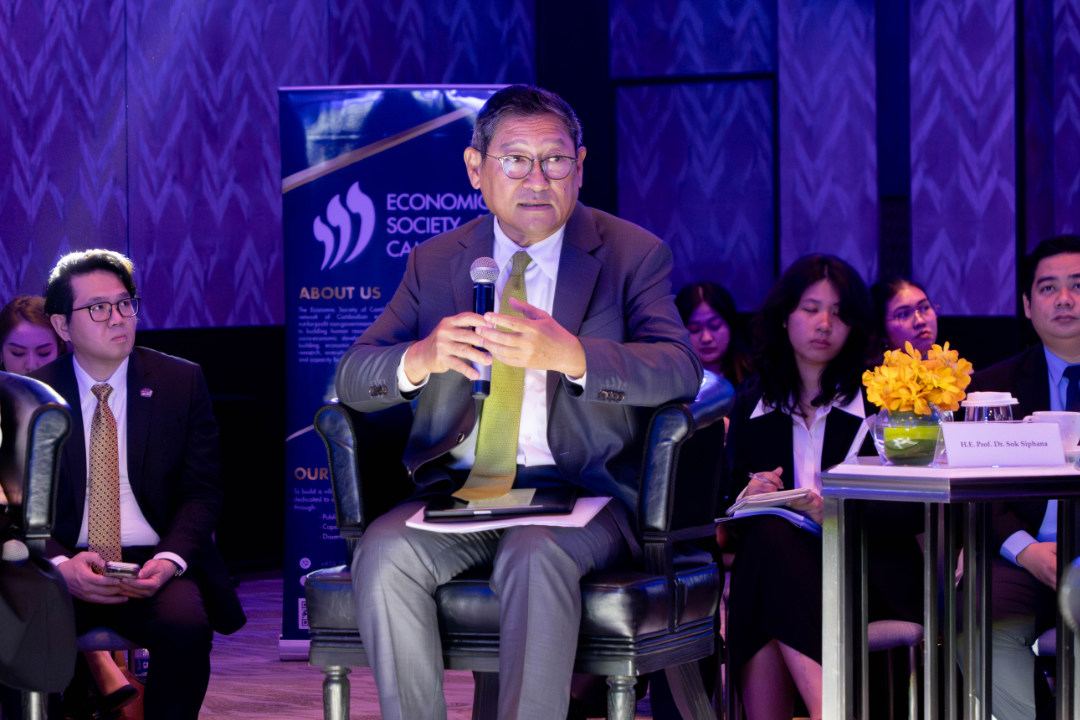
H.E. Dr. Sok Siphana, Senior Minister in Charge of Multilateral Trade and Economic Affairs, Chairman of TPAB, and Founding Chairman of ESC, then delivered the opening remarks, offering a comprehensive assessment of the deteriorating multilateral trading landscape. He referred, in particular, to the 14 per cent WTO Ministerial Conference, which concluded without a ministerial declaration, as a stark illustration of the systemic dysfunction affecting global trade governance.
Against this backdrop, he urged Cambodia to treat the current disorder not as a constraint, but as a catalyst for strategic recalibration-by diversifying market exposure, deepening regional partnerships, and investing in domestic industrial capacity with clarity, resilience, and resolve.
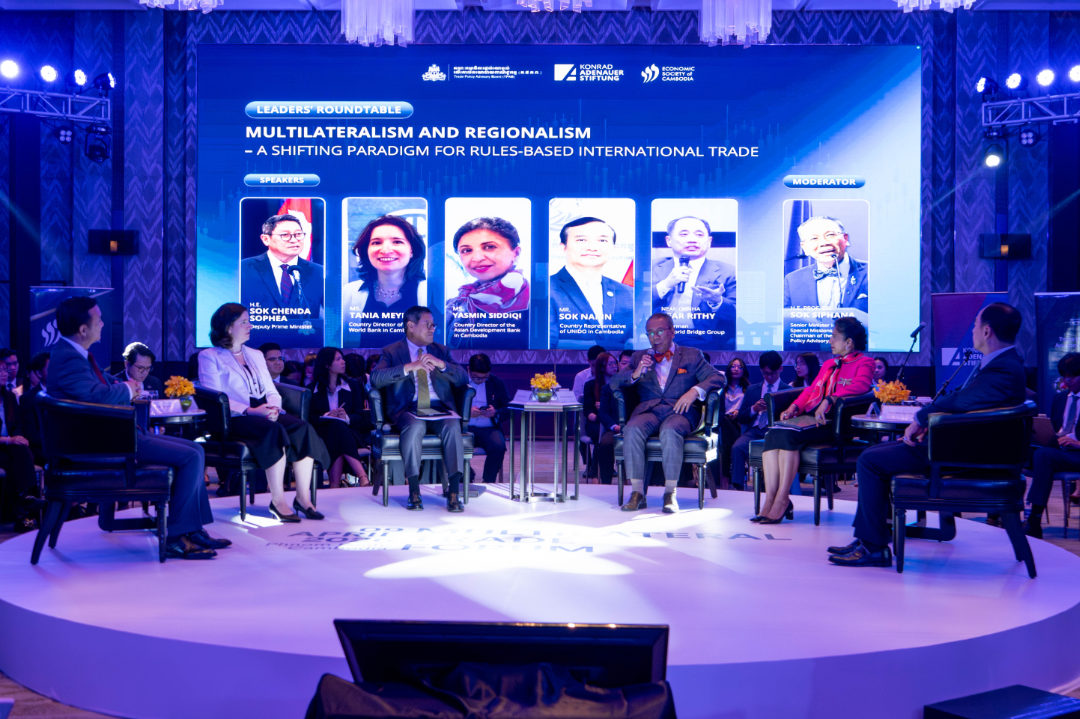
The Forum's programme comprised three substantive sessions. The Leaders' Roundtable on "Multilateralism and Regionalism: A Shifting Paradigm for Rules-Based International Trade", moderated by Senior Minister Dr. Sok, brought together H.E. Sok Chenda Sophea; Tania Meyer, Country Director of the World Bank in Cambodia; Yasmin Siddiqi, Country Director of the Asian Development Bank (ADB) in Cambodia; Sok Narin, Country Representative of the United Nations Industrial Development Organisation (UNIDO) in Cambodia; and Neak Okha Sear Rithy, Chairman of World Bridge Group and Member of TPAB, to discuss Cambodia's Pentagonal Strategy and Vision 2050 path, with LDC graduation posing challenges, including the loss of EU zero-tariff access for garments and other key exports, alongside human capital gaps, high logistics costs, and Thailand's border closure that disrupts bilateral trade.
The Leaders called for urgent structural reforms in productivity, skills development, and energy transition, leveraging Cambodia's renewable electricity advantage, as well as deeper private sector dialogue to build resilience and seize the country's demographic potential.
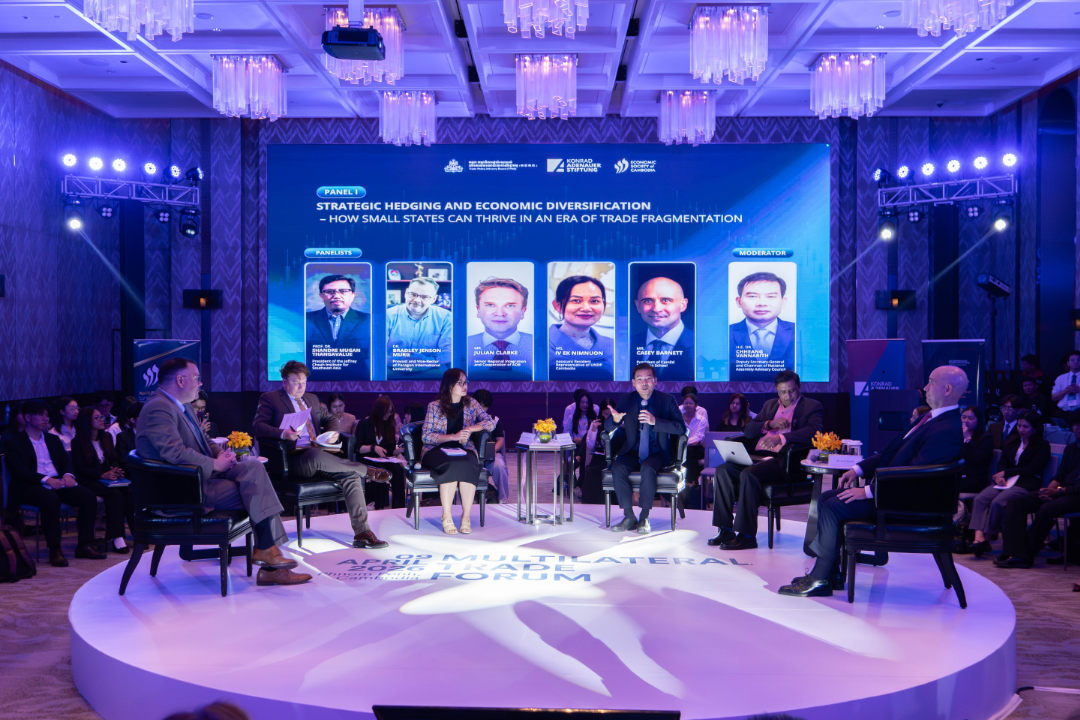
Panel I on "Strategic Hedging and Economic Diversification: How Small States Can Thrive in an Ena of Trade Fragmentation", moderated by H.E. Dr. Chhang Vannarith, Deputy Secretary-General and Chairman of the National Assembly's Advisory Council, featured Dr. Shandre Mugan Thangavelu, President of the Jeffrey Cheah Institute for Southeast Asia; Dr. Bradley Jenson Murg,
Provost and Vice-Rector of Paragon International University; Julian Clarke, Senior Regional Integration and Cooperation Specialist at ADB; Iv Ek Nimnuon, Assistant Resident Representative of UNDP Cambodia; and Casey Barnett, President of CamEd Business School.
Discussions examined strategic hedging through diversification of markets, investment, key industries, and human capital. The panel identified Cambodia's US market dependence, institutional gaps, and regulatory barriers as key vulnerabilities, urging utilisation of ASEAN/RCEP frameworks, domestic development beyond major cities, and industrial policy for digital and green growth ahead of LDC graduation.
Panel II on "Cambodia's Multilateral Diplomacy as a Tool of Economic Diversification", moderated by Dr. Eng Netra, Executive Director of the Cambodian Development Resource Institute (CDRI), featured H.E. Dr. Cheunboran Chanborey, Under Secretary of State and Spokesperson of MFAIC; H.E. Dr. Sar Senera, Deputy Secretary-General of the Cambodian Investment Board, Council for the Development of Cambodia (CDC); Dr. Ken Loo, Secretary-General of the Textile, Apparel, Footwear and Travel Goods Association in Cambodia (TAFTAC); and Dr. Oum Sothea, Senior Policy Advisor for the Cambodia Australia Partnership for Resilient Economic Development (CAPRED).
The Panel explored Cambodia's use of multilateral diplomacy for economic diversification through the Regional Comprehensive Economic Partnership (RCEP) and the Comprehensive and Progressive Agreement for Trans-Pacific Partnership (CP-TPP) market access, FDI attraction to electronics and agro-processing, and garment value chain localisation. The panel called for institutional reforms embodying authority, autonomy, accountability, and agility, alongside skills development to build resilience amid eroding multilateral norms.
The Forum concluded with a strong collective affirmation that Cambodia's path forward lies in recalibration and adaptation, not retreat. It called for continued cross-sectoral collaboration to ensure that Cambodia's trade and economic policies remain forward-looking and resilient.
This press release was supplied.