GGGI Unveils Cambodia's First Building-Sector Carbon Benchmarks, Pointing to $10 Million in Energy Savings
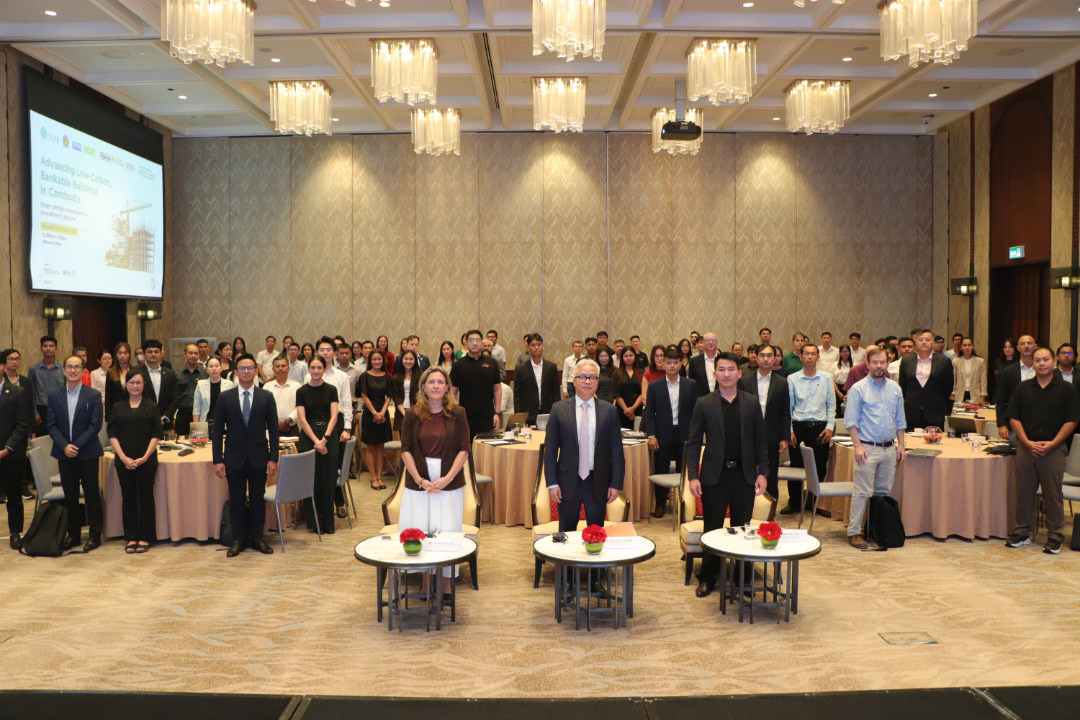
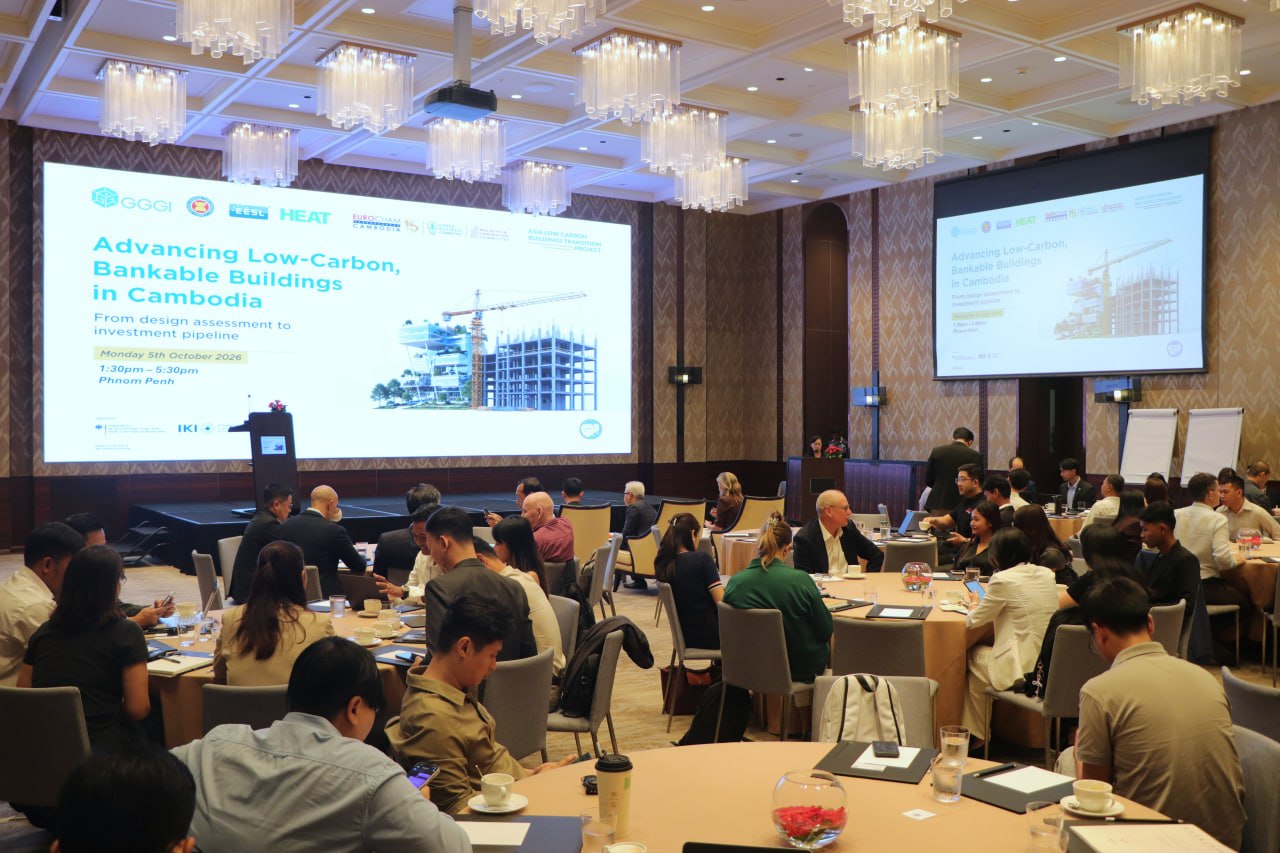
The Global Green Growth Institute (GGGI) and the European Chamber of Commerce in Cambodia (EuroCham) convened developers, financial institutions and government officials at the Hyatt Regency Phnom Penh for the workshop, “Advancing Low-Carbon, Bankable Buildings in Cambodia: From Design Assessment to Investment Pipeline”, on October 5, 2026.
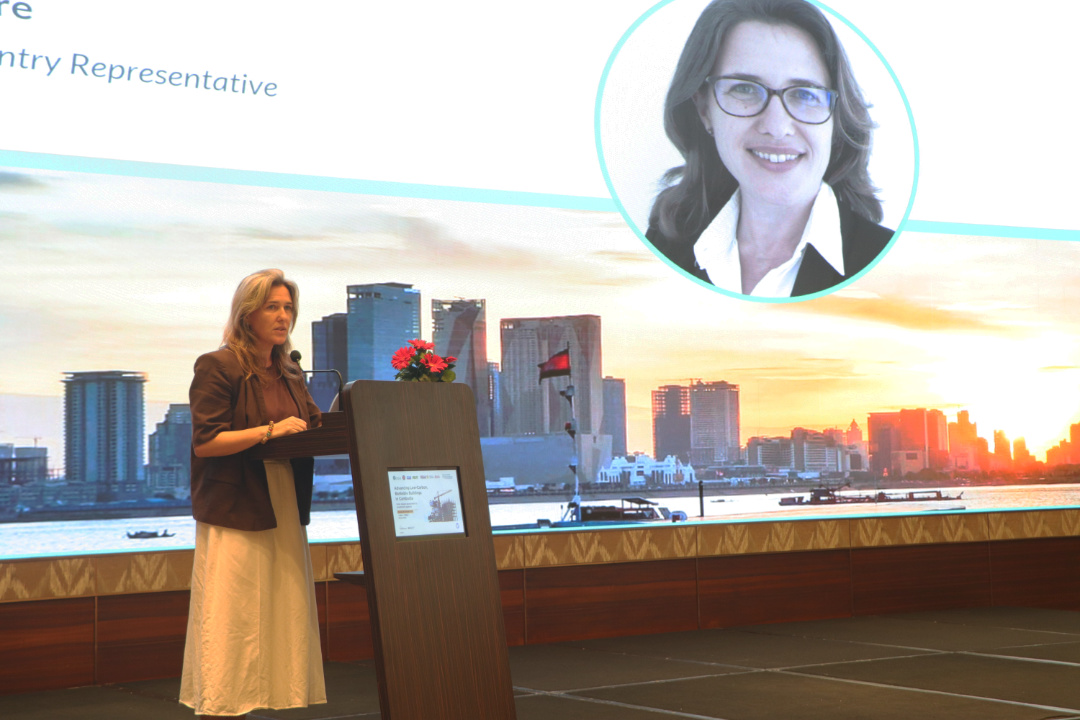
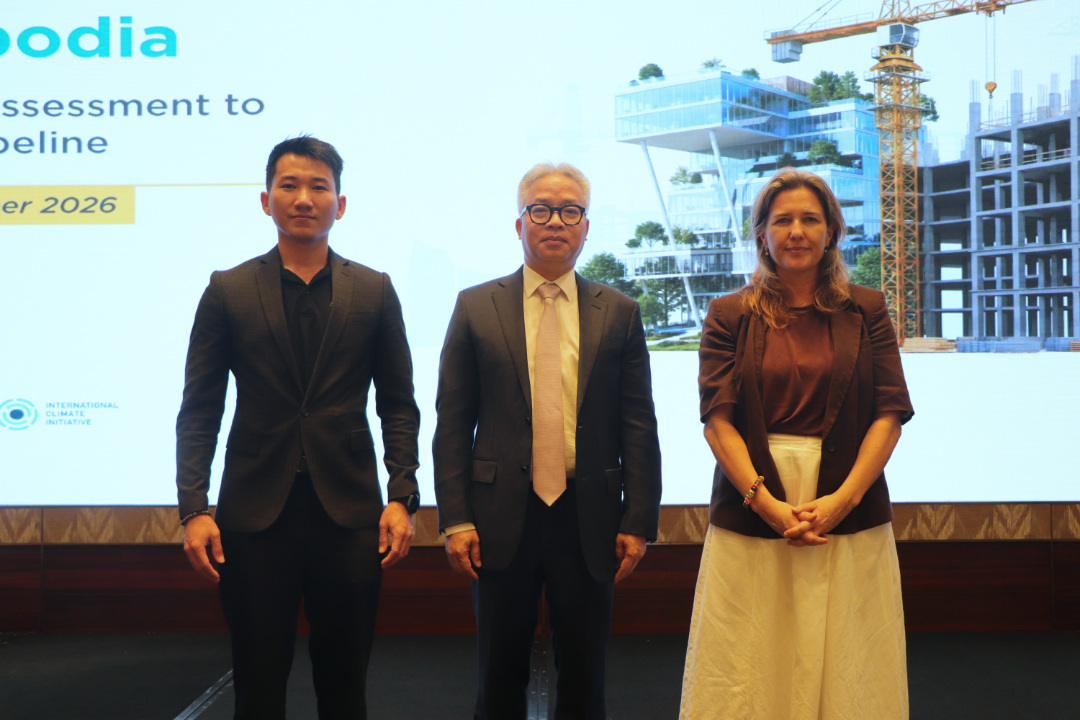
The event presented the country's first building-sector energy and carbon benchmarks, alongside new green finance options aimed at turning the data into an investment pipeline for low-carbon buildings. Nearly 100 participants from EuroCham's Real Estate & Construction and Green Business Committees, building owners, architects, energy service companies and banks attended. The afternoon sessions opened with welcome remarks by Nathalie Andre, GGGI Cambodia Country Representative; Kimsea Chea, Chairperson of EuroCham's Real Estate and Construction Committee; and H.E. Dr. Sorphal Chhan, Director General of Construction at the Ministry of Land Management, Urban Planning and Construction (MLMUPC).
“In Cambodia, the building sector accounts for more than 50 per cent of total final energy consumption,” said Nathalie Andre. “We are honoured to partner with EuroCham in supporting MLMUPC to inform key private sector players on baseline data already collected, tools, and policy underway to support impactful new investments in this space.”
New National Benchmarks from 250 Buildings
The event marked the public release of findings from the Asia Low Carbon Buildings Transition (ALCBT) project, a five-year initiative funded by Germany's Federal Ministry for Economic Affairs and Climate Action through the International Climate Initiative. The project was implemented in Cambodia by GGGI alongside HEAT International, the ASEAN Centre for Energy (ACE), and Energy Efficiency Services Limited, in partnership with MLMUPC.
Over the past year, the project developed Cambodia's first national building registry, now covering 1,235 buildings, and completed deep-dive energy assessments of 250 buildings across Phnom Penh and Kandal province, spanning residential, retail, hospitality, education, healthcare and office spaces. The resulting Energy Performance Index places retail at the top of the energy-usage scale at 205.5 kWh/m2/year, followed by hospitality (171.0) and commercial offices (131.6), with education (64.6) and industrial warehouses (61.0) being the most efficient. Cambodia's office sector compares favourably with regional peers, benchmarking below Singapore (143) and Thailand (225).
From the assessments, the project identified 12 energy conservation measures already available on the local market, varying significantly in their scale and cost. For example, increasing the temperature on air conditioning units by three degrees can deliver energy savings of 10 per cent at zero cost and with immediate impacts. Alternatively, LED lighting retrofits can cut energy use by up to 50 per cent and pay for themselves in roughly 1.5 years, while inverter air-conditioning retrofits can save up to 40 per cent with the more significant necessary investment recouped in around 3 years.
Upgrading fan systems, utilising occupancy sensors, sun-control window film, cooling paint, and installing photo-voltaic rooftop solar systems were among other potential conservation measures listed.
Across the 250 buildings sampled, GGGI estimates more than USD 10 million in identified investment potential, though researchers flagged limited financing access, high borrowing costs and unfamiliarity among commercial banks with lending against energy-efficiency gains as the main barriers to implementation.
Taxonomy and Finance Take Centre Stage
A second session turned to the finance architecture needed to unlock that investment. Lanh Dalong, Deputy Division Chief of the National Bank of Cambodia (NBC), presented the Sustainable Finance Taxonomy for the Cambodian Banking Sector. Launched April 27, the framework classifies activities in energy, transport and buildings as green (on a credible path to net zero by 2050), amber (transitioning, with a defined timeline or sunset date), or red (not aligned with Cambodia's climate plans, though still eligible for normal unpenalised bank financing). Ngovveng Chheng, National Consultant of HEAT International, shared a complementary Building Taxonomy currently in development offering banks more detailed technical guidance.
The afternoon's final session highlighted two commercial financing options now available to Cambodian businesses. Moniroth Chuon of Mekong Strategic Capital presented the Cambodia Climate Finance Facility (CCFF), Asia's first national domestic climate finance vehicle backed by the Green Climate Fund, offering loans of USD 1 million to USD 10 million over periods of up to 12 years for qualified energy-efficiency and green building projects. Sophear Bith of Foreign Trade Bank (FTB) outlined the bank's Energy Efficiency Financing Scheme, offering loans from USD 50,000 to USD 1 million at 5.5 per cent interest to upgrade eligible equipment, including LED lighting, high-efficiency HVAC sytems, agriculture and processing machinery, and cold storage.
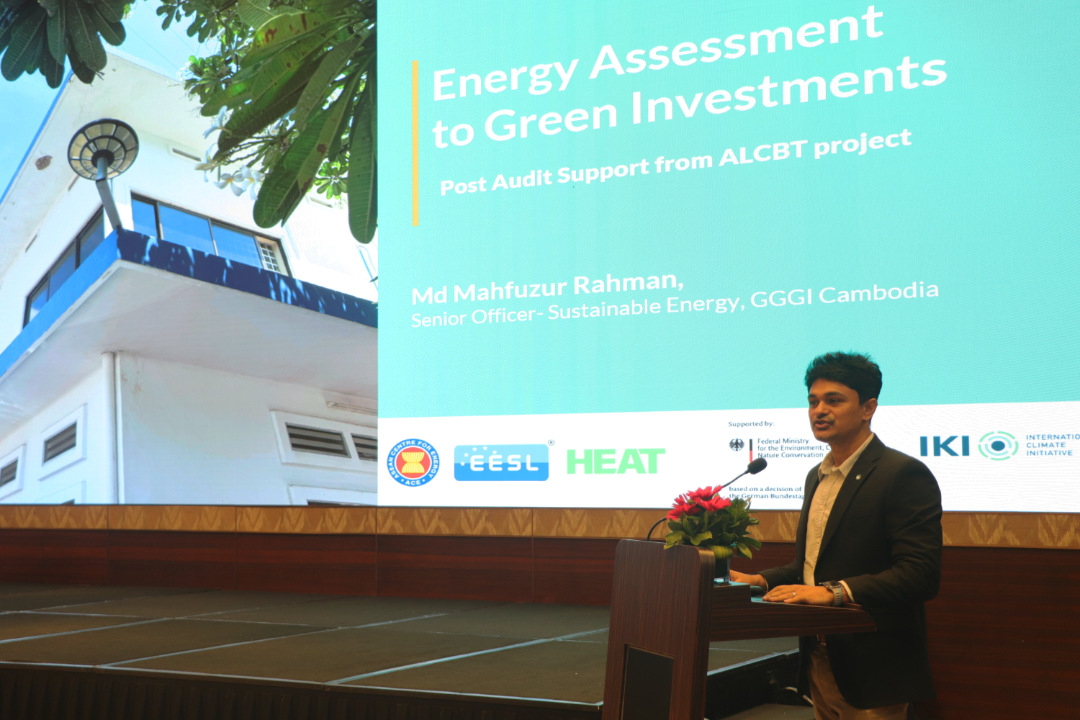
GGGI's Md. Mahfuzur Rahman closed the technical programme by outlining the no-cost support ALCBT offers building owners to become finance-ready, including investment- grade energy audits, financial modelling support and direct introductions to banks and energy service providers.
The event concluded with remarks from Mark Selby, Director of Climate Finance at Mekong Strategic Capital and Chairperson of EuroCham's Green Business Committee, on the next steps for the partnership between ALCBT and EuroCham and the development of the sector.
“The assessments of 250 buildings show that the technical case is made,” said Selby. “The measures are available on the local market, and most pay back in under four years. The gap that remains is between a good audit and a loan application that a bank can approve. The Cambodia Climate Finance Facility is built to help close that gap, and the National Bank of Cambodia's taxonomy gives banks and borrowers a common definition of green.”
He added:
The frameworks and the financing are in place. For businesses, efficient buildings mean lower running costs and a stronger bottom line, and support is available to get there.
This press release was supplied.