
EuroCham HR Forum 2026 Brings Together Top Education, Business, Tech and Public Leaders to Reimagine HR in the Age of AI
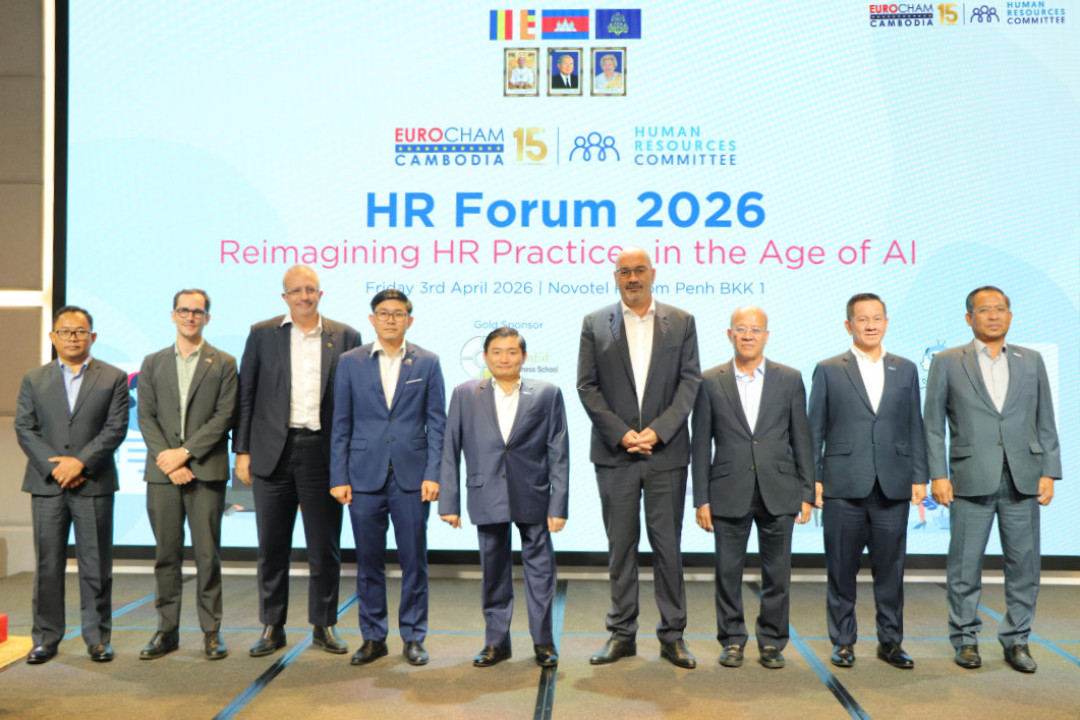
EuroCham Cambodia hosted its flagship HR Forum 2026 on April 3 at the Novotel Phnom Penh BKK1. Held under the theme, “Reimagining HR Practices in the Age of AI”, the forum convened high-level stakeholders from government, academia, business, and the technology sector to address the evolving challenges of human capital development, artificial intelligence (AI), and workforce readiness in Cambodia.
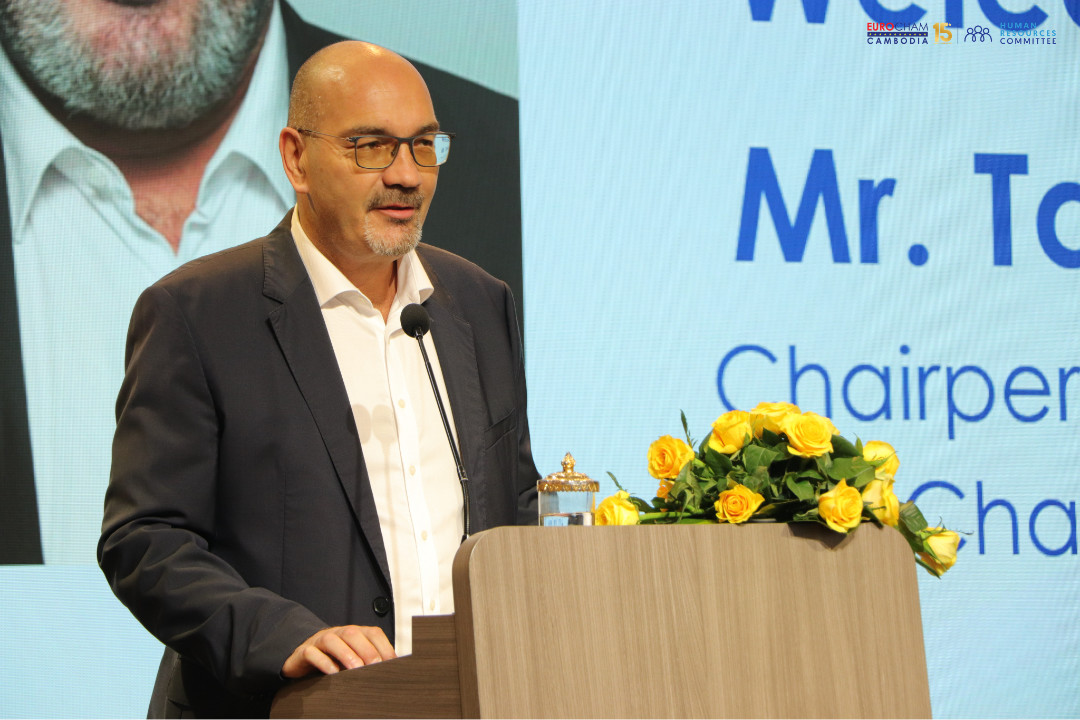
Opening the forum, Tassilo Brinzer, Chairperson of EuroCham Cambodia, emphasised the critical role of human resource leaders in navigating rapid digital transformation while strengthening skills development and compliance. He noted that collaboration across sectors is essential to ensure Cambodia’s workforce remains competitive, adaptable, and inclusive.
The morning session featured a keynote speech from H.E. Heng Sour, Minister of Labour and Vocational Training, who highlighted current priorities in labour policy and skills development, as Cambodia adapts to technological change. This was followed by a detailed presentation from H.E. Som Chamnan, Secretary of State at the Ministry of Labour and Vocational Training (MLVT), outlining upcoming regulatory developments relevant to employers.
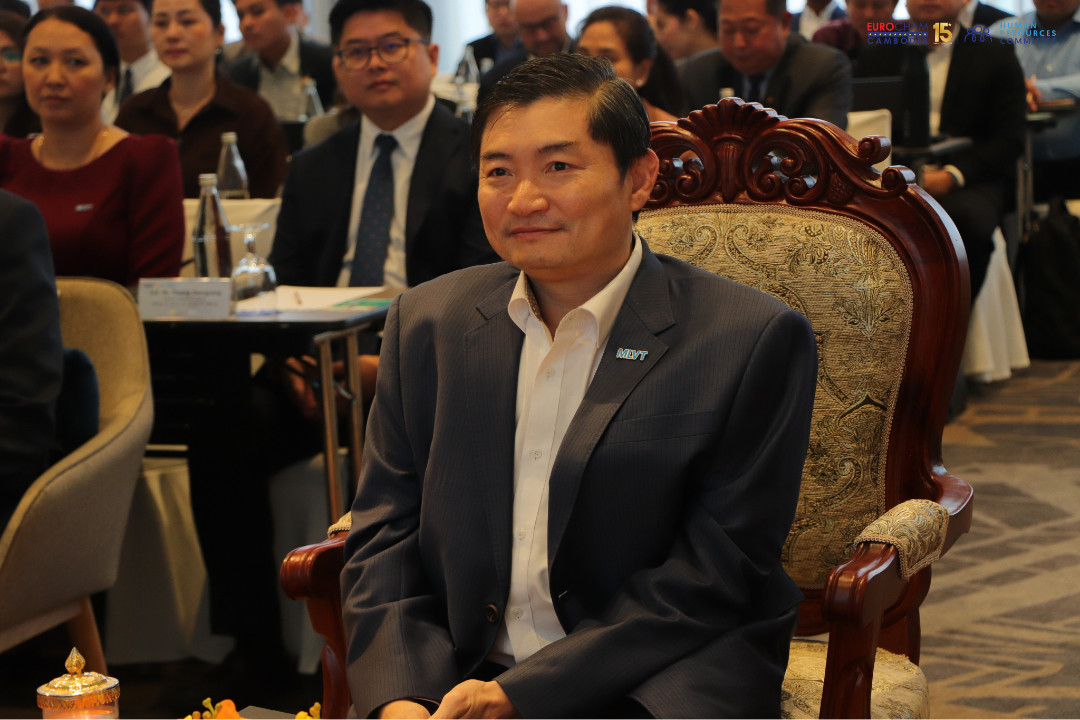
Discussions then turned to talent pipelines and education‐industry collaboration. Dr. Riccardo Corrado, EuroCham Board Member, Vice-Chairperson of the EuroCham HR Committee, and Associate Professor at CamEd Business School, shared insights on implementing structured apprenticeships in Cambodia, stressing the importance of stronger partnerships between universities and companies to bridge the skills gap.
“AI should not be seen as a threat, as it is actually a tool that can significantly enhance operational efficiency and effectiveness. However, if it is not properly understood, it may be feared,” said Dr. Corrado. “The fear of job loss should not be the focus; rather, we need to recognise that the way we live and work is changing at an increasingly fast pace due to technology, and we must adapt accordingly. In this context, the HR Committee and its Education Working Group play a vital role in connecting all sides, ensuring that all parties are informed and effectively linked.”
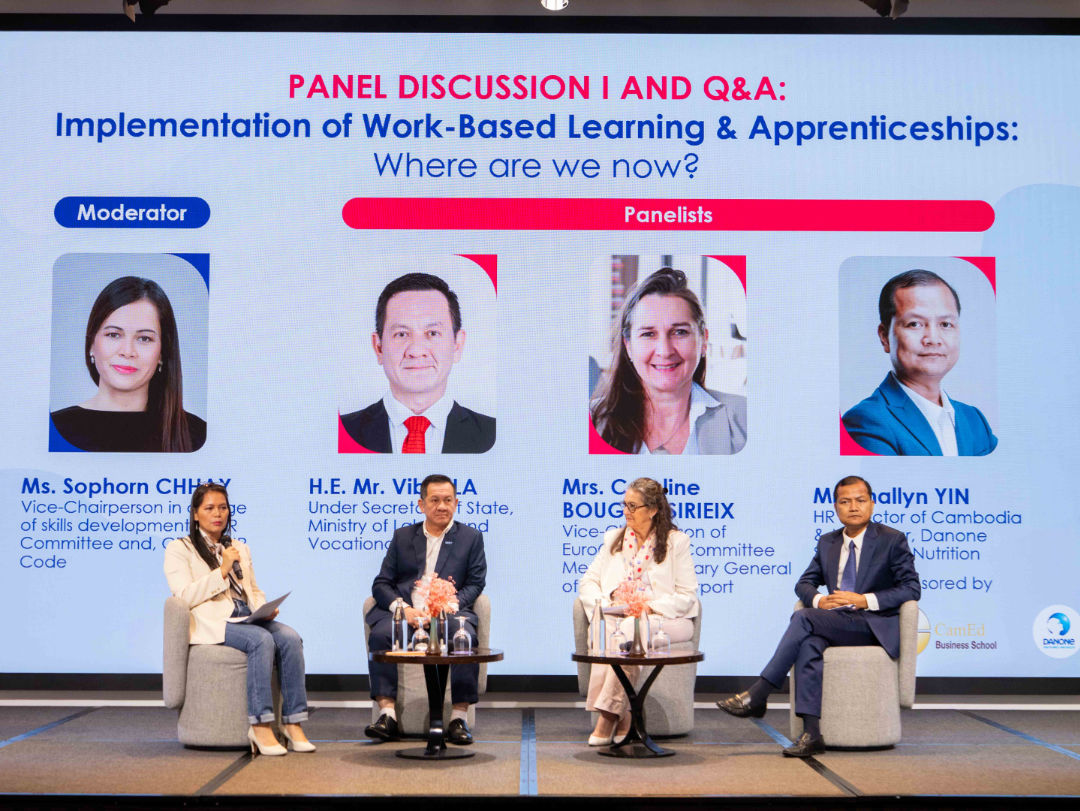
The forum featured two high-level panel discussions that anchored the day’s dialogue in practical realities. The morning panel examined the current state of work-based learning and apprenticeships in Cambodia, focusing on how universities and employers can better collaborate to prepare graduates with in-demand skills. Bringing together public and private sector perspectives, the discussion highlighted progress to date, persistent structural challenges, and opportunities to scale apprenticeships more systematically.
In the afternoon, a second panel explored how artificial intelligence is disrupting the HR function, from recruitment and skills assessment to workforce management. Panellists shared real-world experiences, emphasising the need to balance efficiency gains from AI with human judgment, ethical considerations, and the ability to identify genuine talent in an increasingly automated environment.
Concluding the forum, Narath Chheav, Chairperson of the EuroCham HR Committee, highlighted the need for balanced adoption of AI by leveraging efficiency gains while preserving human judgment, critical thinking, and ethical decision-making.
“The EuroCham HR Forum 2026 reminded us that work-based learning and apprenticeships are powerful tools to better connect education with the realities of business," said Narath. “They give young people practical experience and relevant skills, while helping employers develop talent that is better prepared for the workplace.”
He added:
We also saw that AI can bring real benefits to HR and education by making work faster and more efficient, but there are still important concerns around data privacy, ethics, and the limited understanding of how to use these tools correctly. That is why closer collaboration between the private sector, education institutions, MLVT, and other public stakeholders is so important to align our efforts and build the workforce of the future.
Narath further reaffirmed EuroCham’s commitment to facilitating dialogue and collaboration between public institutions, universities, and the private sector.
The EuroCham HR Forum 2026 reinforced the urgent need for work-based learning, structured apprenticeships, and thoughtful AI adoption to prepare Cambodia’s workforce for the future. The strong turnout and high level of engagement reflected growing interest among employers, policymakers, and educators in shaping HR practices that support sustainable economic growth.
This press release was supplied.