
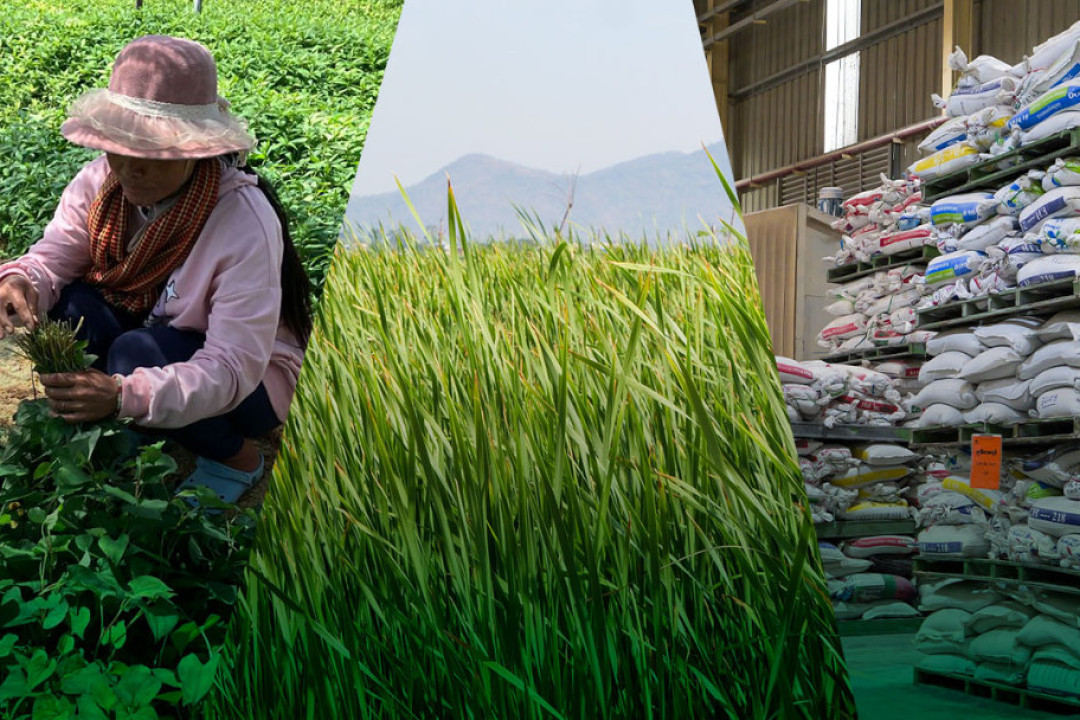
Agriculture has long been one of the core pillars of Cambodia's economy, driving growth through exports of products like rice, cassava and cashew nuts, and employing roughly one-third of the total workforce. The growth and continued resilience of this sector is key to the achievement of Cambodia's 2030 and 2050 development goals.
Two examples of building agricultural resilience at two very distinct scales were highlighted during a press tour organised by the Asian Development Bank (ADB) Cambodia Resident Mission (CARM) in February 2026: a large-scale private sector partnership with De Heus TMH to secure the animal protein supply chain; and through the community-led Farmers Livelihood Improvement Association (FLIA), to safeguard smallholder stability.
Securing Local Supply Chains and Reducing Dependence on Animal Feed Imports
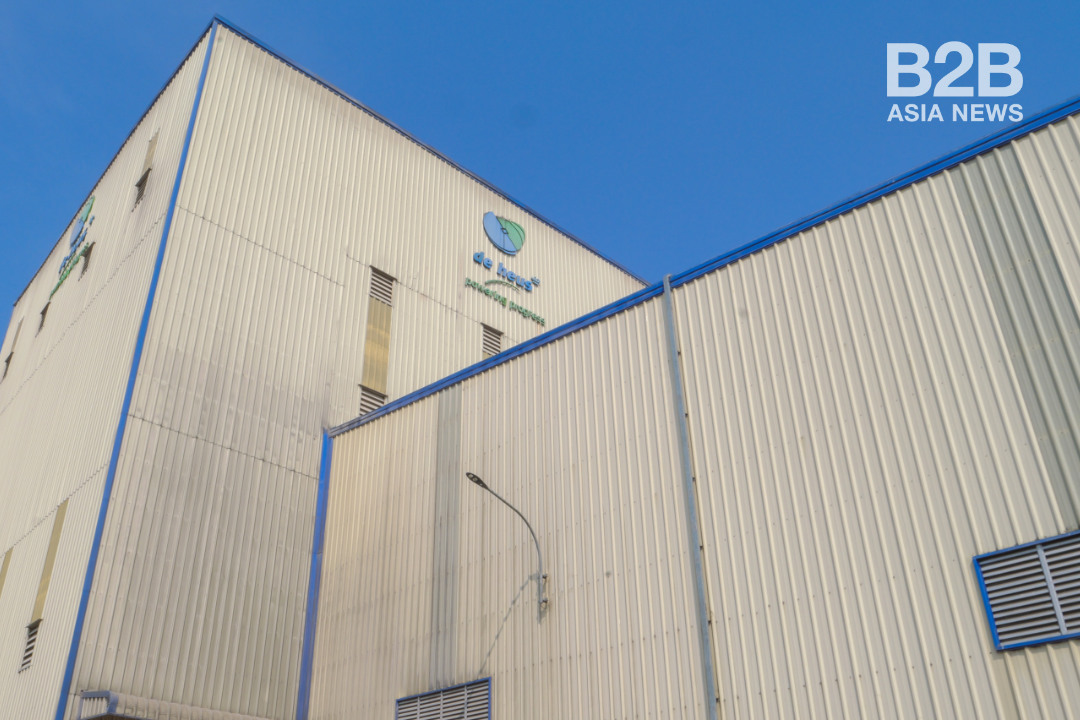
In Kampong Speu, the ADB has facilitated a USD 15 million loan to De Heus TMH Co., Ltd., a move designed to reduce Cambodia’s historical dependence on imported animal feed, further ensuring that domestic animal protein production remains stable even when global markets fluctuate. This private sector investment has enabled the expansion of storage and processing facilities, allowing the company to source raw materials such as maize, rice, and cassava directly from Cambodian farmers. All feed produced – spanning the poultry, pig, ruminant, and fish sectors — is sold exclusively within the Cambodian market.
“It is great to see in Cambodia that we have this brilliant example of how the private sector can really catalyse the agriculture sector in the country,” said Yasmin Siddiqi, ADB Country Director for Cambodia. “[Supplying feed for] poultry and aquaculture are great opportunities for not only improving livelihoods, but also from a nutritious food context, for both the country's food security and household food security.”
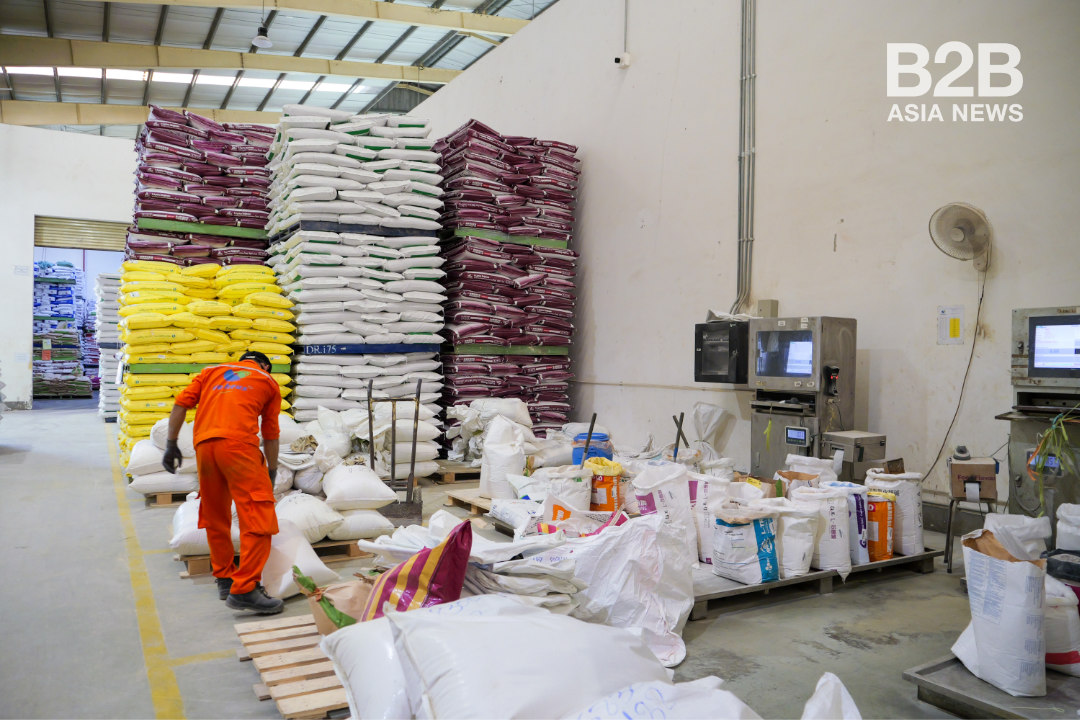
In addition to the funding provided to develop the physical animal feed facility, a technical assistance programme has trained 4,000 farmers in climate-resilient practices. The results have been immediate, with the ADB noting that in some cases, farmers have been able to double their income from poultry through implementing more climate-resilient practices that also result in more sustainable production and profitability.
“If you look to the core of our business, it is to make sure that farmers get the most produce with the least input. So a big part of [reducing] the environmental footprint is… by making sure that the quality of raw materials is right, by providing the technical assistance to farmers to improve, their farming techniques and reduce the usage of feed compared to the output,” said Harry Schimmel, General Director of De Heus TMH.
Siddiqi further added:
Cambodia is one of the countries that's facing major challenges through climate impacts, particularly around increased temperatures and changes in rainfall patterns. What we also understand is that the majority of the labour force is engaged in agriculture, so the risks posed to agricultural communities, farmers and their families is very high… Ultimately, what we're talking about here is farmers learning about the new normal and adapting into that change. So under this partnership with De Heus, in being able to demonstrate best practices, farmers can really learn more about how to do agricultural work in efficient ways.
Protecting Smallholder Assets Through the Livelihood Protection Fund
While the De Heus partnership addresses the industrial supply side, the Farmers Livelihood Improvement Association (FLIA) in Battambang provides a critical social and financial safety net for the individual smallholder. FLIA has grown into Cambodia’s largest farmer-led organisation, managing over USD 20 million in capital and supporting 1,906 Livelihood Improvement Groups (LIGs)
“In household numbers, in the first phase, around 30,000 households joined these livelihood improvement groups, and in the second phase, more than 13,000 households joined," shared H.E. Ny Kimsan, Deputy Head of the National Committee for Sub National Democratic Development (NCDD) and TSSD Project Director. "Among this group, around 12,000 households are headed by women.”
Central to the success of the FLIA is the Livelihood Protection Fund, a community-managed micro-life insurance scheme launched in early 2025 to protect families from the financial shocks that often follow the loss of a primary breadwinner. This model serves as a non-debt alternative to traditional microfinance, which can often lead to asset liquidation in times of crisis.
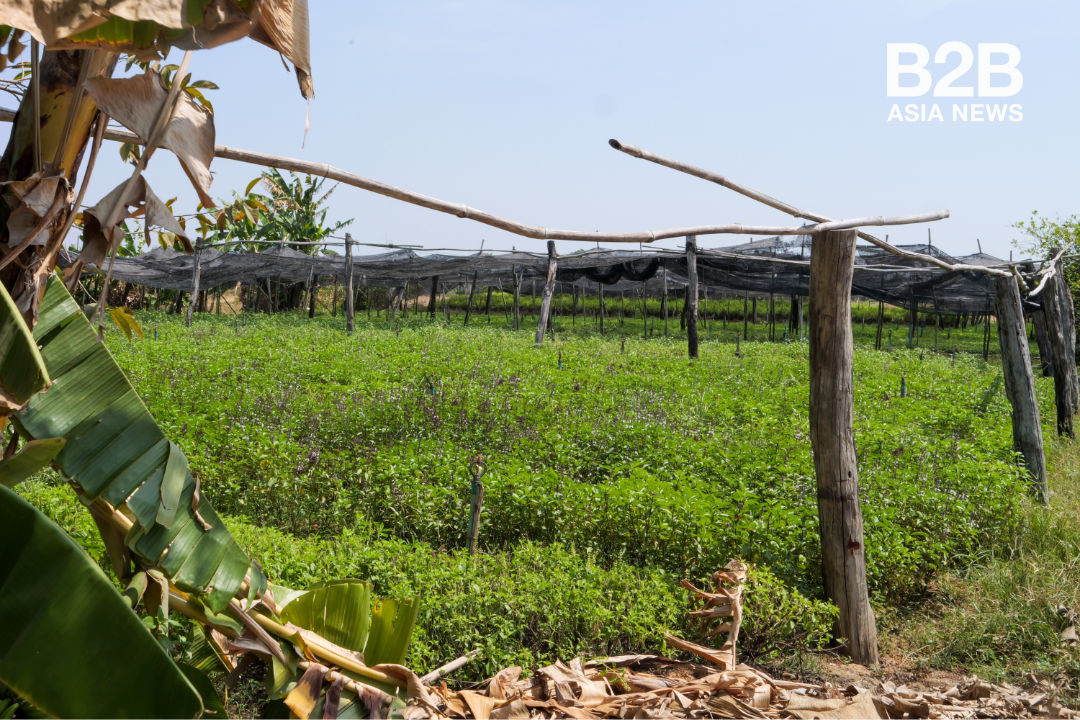
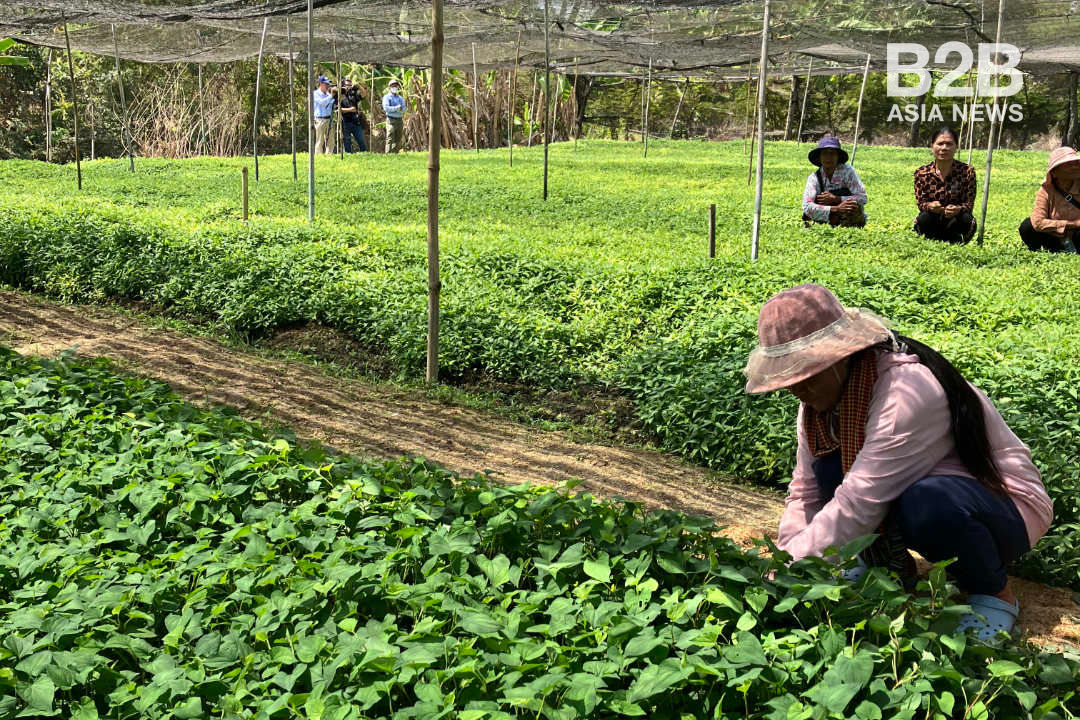
The ADB highlighted that the fund focuses on "risk protection, not credit, addressing lifecycle risks, especially the death of a household head that often cause defaults, asset sales, school dropout, and distress migration."
For a nominal premium of approximately USD 5, member families receive a USD 500 payout, allowing them to maintain their farming operations without the burden of repayment. As of late 2025, the fund had enrolled 24,957 members and compensated 188 families, proving that small-scale, community-led financial tools are essential for maintaining the gains made in poverty reduction, which has already seen a 39 per cent decrease among FLIA members.
“We see the positive results of this project, we see the benefits it provides to low-income households, and importantly, not just the impact it makes on that individual, but the propagation of that result into the future generations,” said Siddiqi. “We have an upcoming project for next year, which will be scaling up the work from this project and expanding it to more villages. But not just expanding, I believe this project provides us a great opportunity to learn, evaluate and look at what additional elements we can build into the future project. For instance, skills enhancement beyond just agricultural skills, focusing towards more productive sources of financing.”
Synchronised Development for Long-Term Sector Stability
Industrial investment creates the necessary market infrastructure, while community-led protection ensures that the individual farmer remains resilient enough to participate in that market. Strengthening the mid-stream feed processing sector and the downstream financial security of smallholders both contribute to a more robust and self-sufficient agricultural economy.
The cumulative effect of such projects is a more stable environment for agribusiness investment, and a more secure livelihood for the millions of Cambodians who remain the backbone of the nation’s economy.