ASEAN–India Women Scientists Conclave 2026 Focuses on Building Inclusive STI Communities
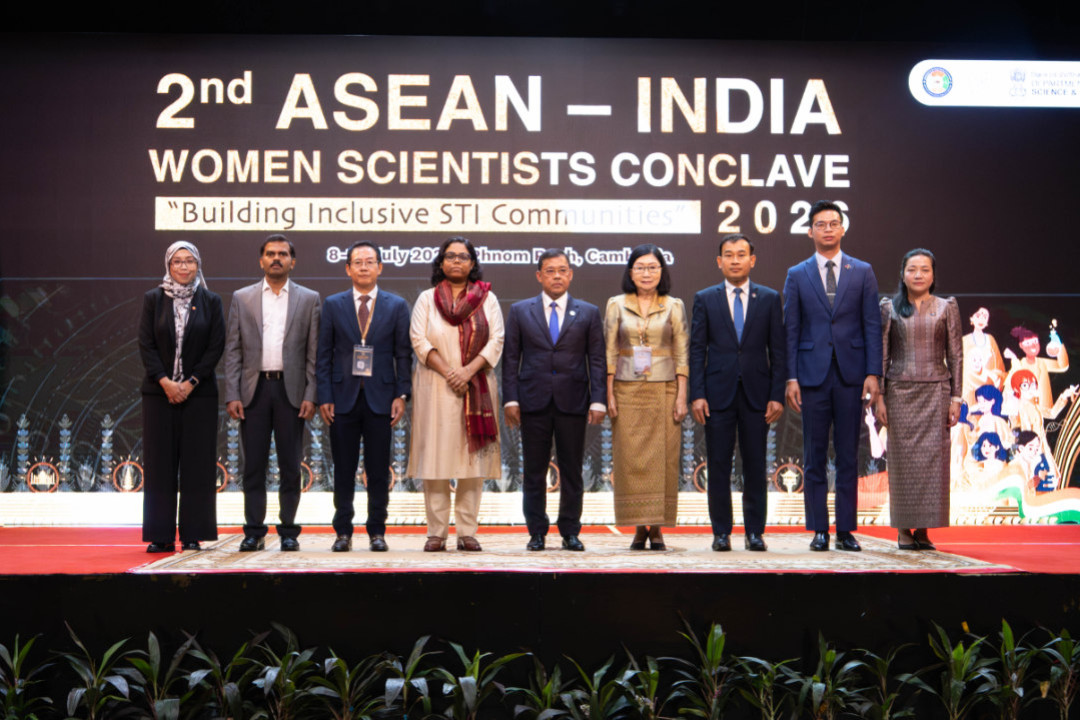
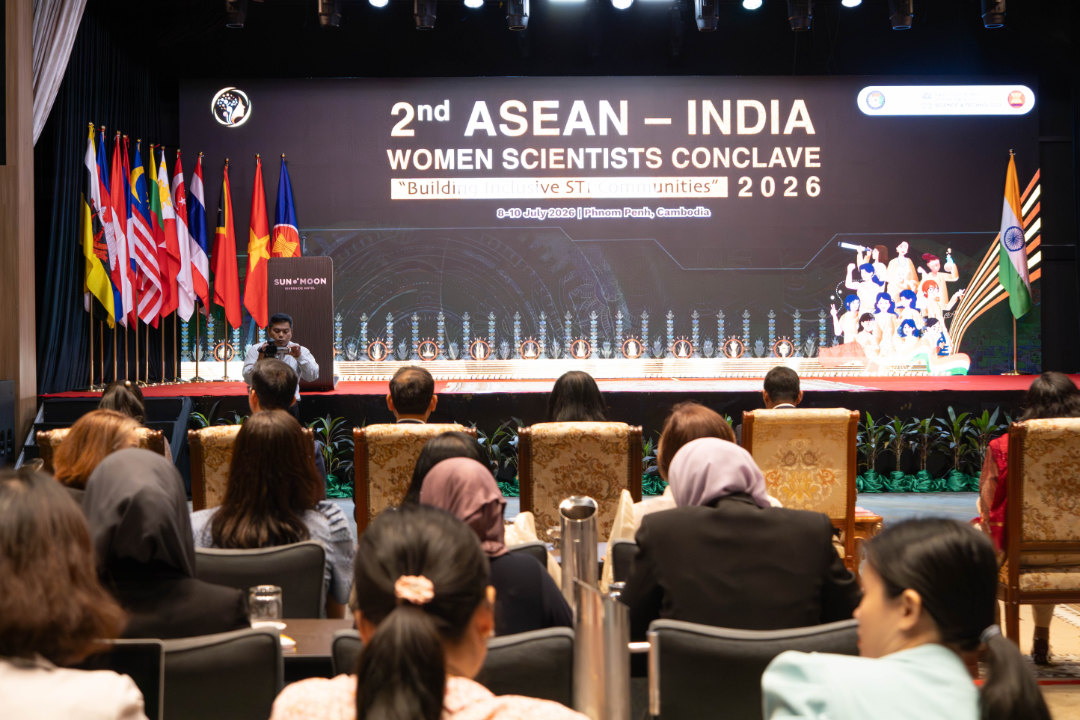
The 2nd ASEAN–India Women Scientists Conclave kicked off in Phnom Penh on July 8, 2026, with a focus on promoting women’s leadership and addressing key barriers faced by women in STEM fields.
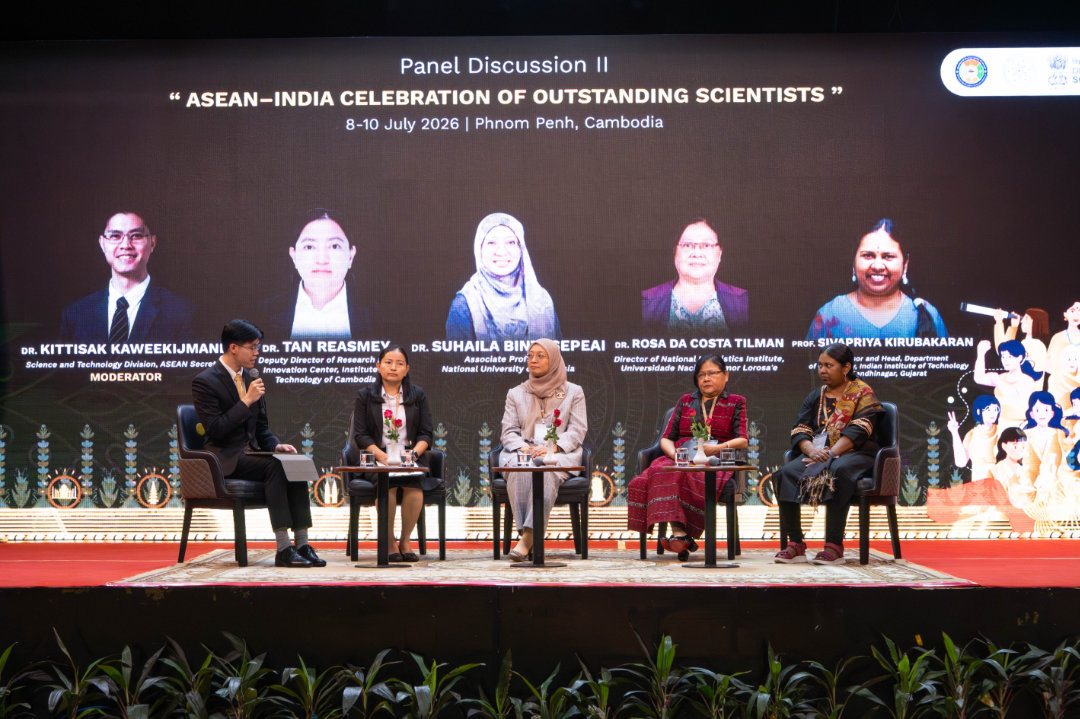
Held under the theme “Building Inclusive STI Communities”, the three-day conclave gathers around 135 leading women scientists, researchers and innovators from India and ASEAN member countries to exchange experiences, ideas, discuss common challenges, build professional networks, and identify new collaborative partners and opportunities.
The conclave is co-organised by the Cambodian Ministry of Industry, Science, Technology and Innovation (MISTI) and the Indian Institute of Technology Gandhinagar, with support from the ASEAN-India Science and Technology Development Fund (AISTDF).
The three-day conference will also feature a series of side events, including 10 multilateral roundtables and an innovation idea competition where researchers will present their scientific and technological solutions under four focus areas: Food Security, Emerging/Trending Technology, Sustainable Energy Solutions and Equitable Access to Education. These events aim to contribute to accelerating the transformation of research results into commercial products and strengthen collaboration between universities, industry and SMEs across the region.
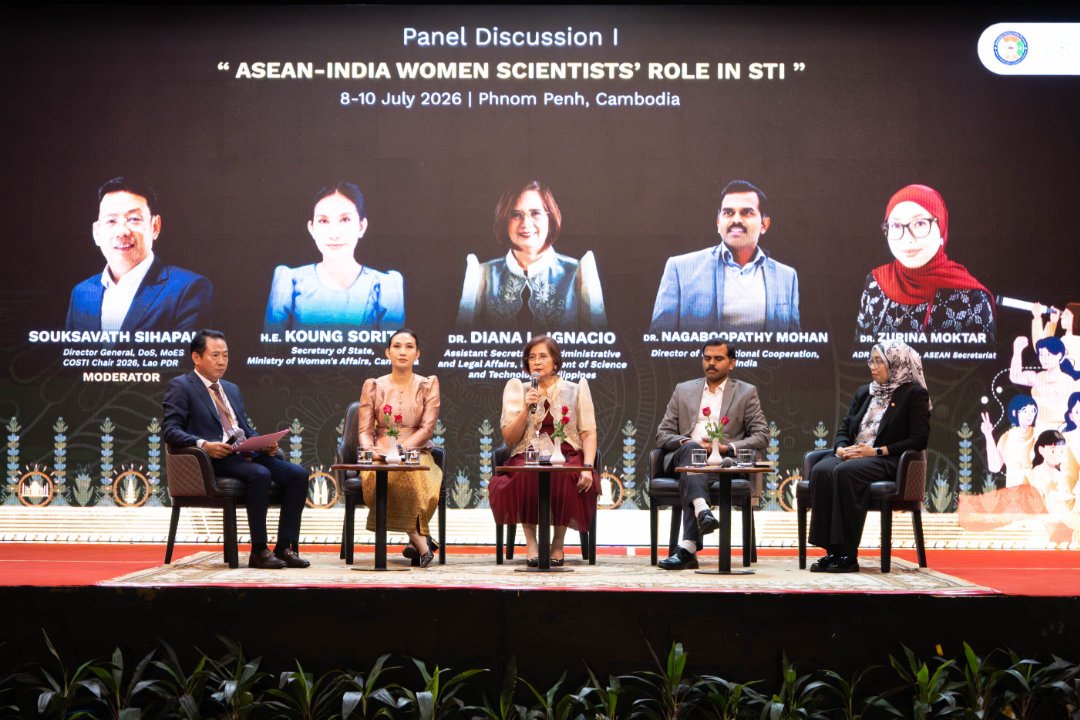
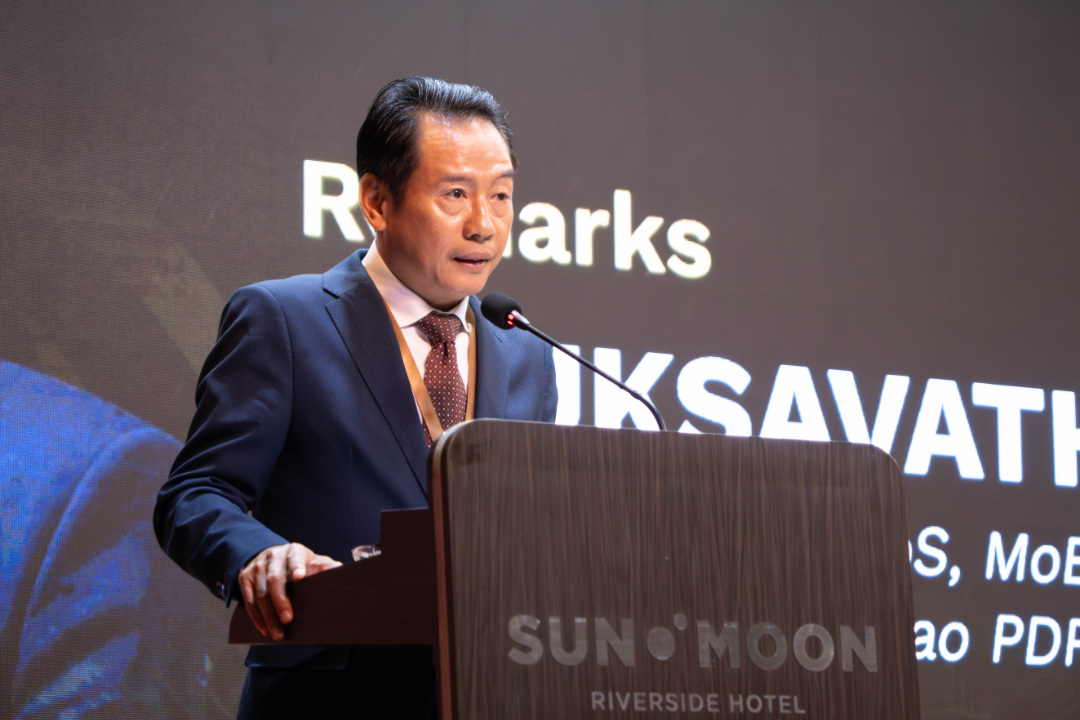
H.E. Souksavath Sihapanya, Director General of the Department of Science of the Lao People’s Democratic Republic (Lao PDR) and Chair of the ASEAN Committee on Science, Technology and Innovation (ASEAN COSTI), emphasised that the conclave supports the implementation of the ASEAN Plan of Action on Science, Technology and Innovation (APASTI) 2026-2030 by promoting women’s participation in the regional innovation system.
“I am confident that our exchanges here will inspire new collaborations, strengthen ASEAN‑India partnerships, and contribute meaningfully to the advancement of APASTI 2026‑2030,” said H.E. Souksavath Sihapanya.
Speaking via a video message, H.E. Prof. Umesh Waghmare, Secretary at the Department of Science and Technology of the Republic of India, said that cooperation in science and technology between India and ASEAN has a long history, and further highlighted the importance of building a resilient innovation ecosystem for the region.
“We firmly believe that the future of science and innovation must be inclusive. Women scientists, innovators, and entrepreneurs are making extraordinary contributions across every field of science and technology, yet they continue to encounter challenges that require greater institutional support, stronger professional networks, and more opportunities for collaboration,” said Prof. Waghmare.
He added:
It's a pleasure to see you all gathered together today in Phnom Penh for the 2nd ASEAN-India Women Scientists Conclave. Over the next 3 days, I am sure each one of you will engage wholeheartedly in discussions, share your experiences openly, exchange ideas, identify common challenges, and explore new opportunities for collaboration.
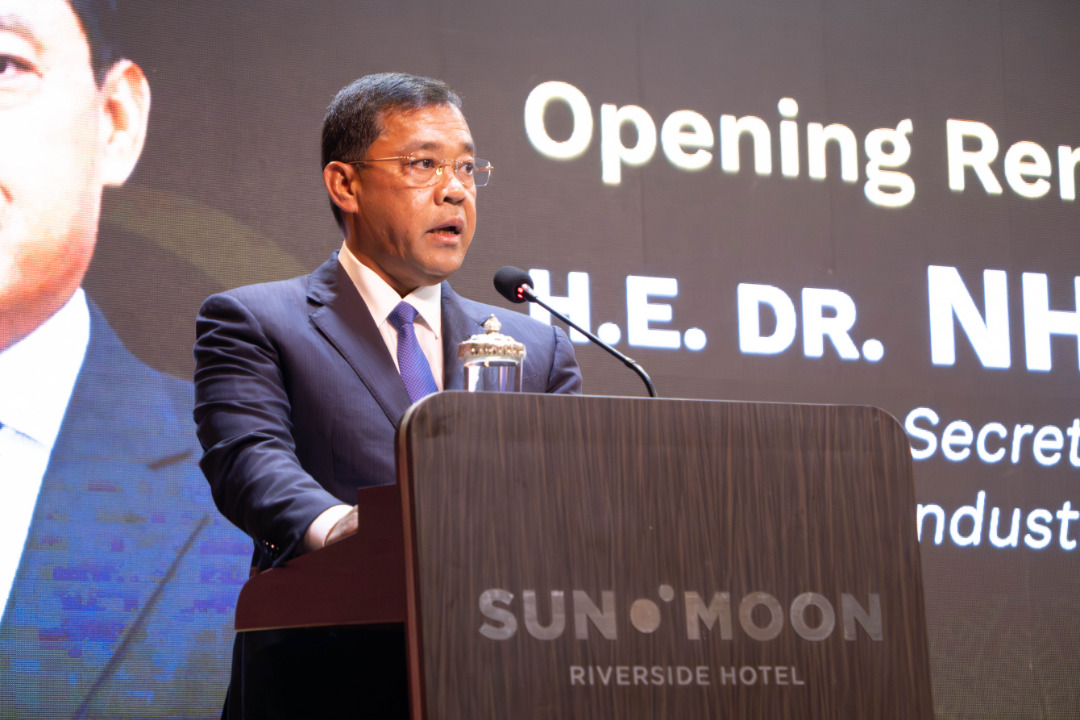
H.E. Dr Nhim Khemara, Permanent Secretary of State at MISTI, emphasised that science, technology and innovation are rapidly changing the world and the Cambodian government has considered this sector a key pillar of its long-term development strategy.
“Science, technology, and innovation are transforming our world at an unprecedented pace. They hold the keys to solving the most pressing challenges confronting our societies today from mitigating climate change and safeguarding public health to ensuring food security, promoting environmental sustainability, and driving digital transformation,” said Dr Nhim Khemara. “However, to fully harness these breakthrough opportunities, we must confront a fundamental truth; a nation cannot innovate effectively while leaving its talent behind, particularly the women.”
The Permanent Secretary of State reaffirmed Cambodia’s commitment to building a knowledge-based economy under the Pentagonal Strategy – Phase 1 and the Science, Technology and Innovation (STI) Roadmap 2030, which strives to ensure that at least 50 per cent of STEM graduates in Cambodia are women.
He stated:
Women scientists bring unique perspectives, profound creativity, and a depth of expertise that enriches research and strengthens entire innovation ecosystems. Yet, despite remarkable progress globally, women remain starkly underrepresented in advanced scientific disciplines and senior leadership positions. This Conclave serves as a vital platform to dismantle those barriers, strengthen professional networks, and exchange transformative ideas.
The 2nd ASEAN–India Women Scientists Conclave reflects a shared commitment to strengthening ASEAN-India cooperation through science, technology, innovation, and inclusive development, to build a future where women scientists are empowered and fully supported to realise their full potential for the benefit of the whole region and world.