
FPCS Cambodia Explained 2026: Complete Guide for Foreigners and Landlords – Realestate.com.kh Editorial
Realestate.com.kh Phnom Penh, February 27, 2026.
Whether you are a Cambodian or foreign property owner, it’s important to stay informed about current laws and regulations to ensure you meet your legal responsibilities in Cambodia.
If you are a foreigner living in Cambodia or a landlord renting property to foreign tenants, you may have heard of FPCS. While it may sound complicated at first, the system is actually straightforward once you understand how it works and why it exists.
In this guide, Realestate.com.kh will explain what FPCS is, why it matters, and how to register step by step, both for foreigners and landlords.
What Is FPCS in Cambodia?
FPCS stands for Foreigners’ Presence Control System. It is an online registration system managed by the Cambodian National Police.
The purpose of FPCS is to:
- Track where foreigners are staying in Cambodia
- Improve national security and public safety
- Ensure foreigners are legally residing at registered addresses
Under Cambodian law, any property where foreigners stay must be registered, along with the foreigners living there. This applies to apartments, condominiums, borey houses, villas, guesthouses, rental homes, as well as property for both short-term and long-term stay.
In short, whether you’re a landlord or a tenant, you must remember that
- Landlords are responsible for registering foreign tenants
- Foreigners should ensure they are registered at their current address

Why Is FPCS Registration Important?
FPCS registration is not optional. Failure to register can actually lead to:
- Fines for landlords (KHR 30,000 charged per foreign tenant)
- Problems with visa extensions
- Issues when changing address or employment
- Complications with immigration or police checks
Being properly registered helps avoid unnecessary legal trouble and shows compliance with Cambodian regulations.
How to Register for FPCS?
There are two main parties involved in FPCS registration, which are the landlord and the foreigner, or here referred to as the tenant.
1. FPCS Registration for Landlords
Landlords are legally responsible for registering foreign tenants staying on their property.
Step 1: Prepare Required Information
Landlords need:
- Property details (address, type of property)
- Landlord’s ID or passport
- Information of foreign tenants, including:
- Full name
- Nationality
- Passport number
- Visa type and visa expiry date
Step 2: Go to the Local Commune Police Station (optional)
Landlords must visit the commune or sangkat police station where the property is located.
You can also register online, but if you're not sure about the online registration process, it would be better to do an in-person submission, especially for first-time registration.
Step 3: Register the Property
If the property has never been registered before, the police will:
- Create a property profile in the FPCS system
- Link the landlord to the property
Step 4: Register Foreign Tenants
Once the property is registered, the landlord must:
- Add each foreign tenant to the system
- Update the system when tenants move in or move out
Step 5: Keep Records Updated
Landlords must update FPCS when:
- A foreign tenant changes address
- A tenant leaves the property
- A new foreign tenant moves in
How to Register Online for the FPCS Application?
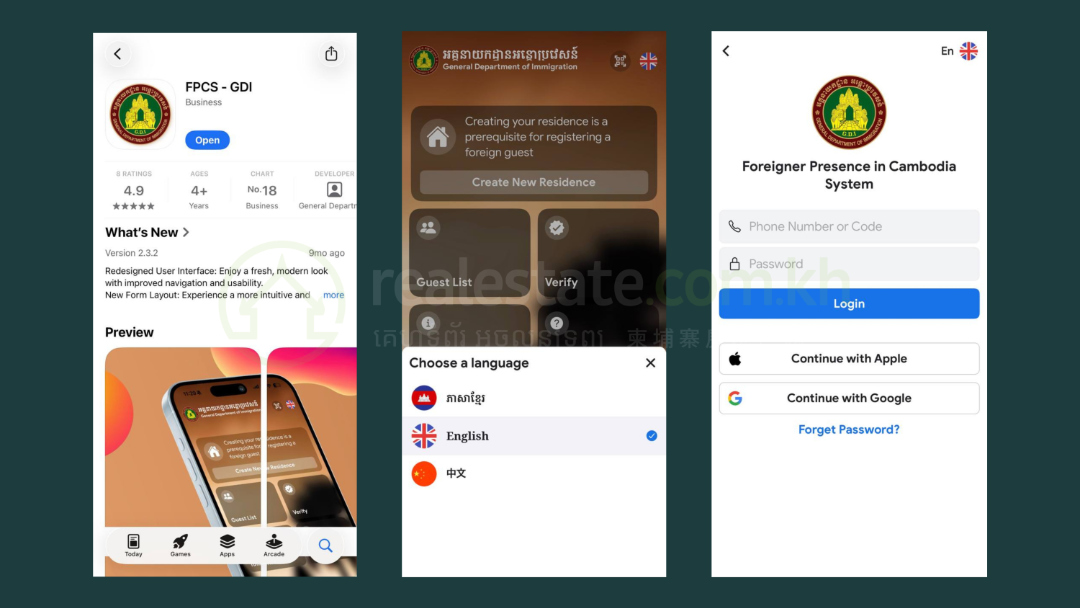
Step 1: Download the FPCS App
- Open the Apple App Store (iOS) or Google Play Store (Android)
- Search for “FPCS (Foreigners Present in Cambodia System)”
- Download and install the application
Step 2: Switch the Language
- Open the app and tap the Cambodian flag icon at the top-right corner
- Select English to change the system language
Step 3: Create an Account
- Click “Create New Residence”
- Log in using an Apple ID or Google email account
Step 4: Register Landlord and Property Information
- Select “Create New Residence”
- Scan your passport or national ID as instructed; the system will auto-fill your details
- Upload a profile photo and enter contact information
- Review all details and click “Next”
- Select or manually enter property information to complete registration
Step 5: Register Tenant Information
- Go to the Foreign Residents List
- Scan the foreign tenant’s passport information page
- Enter required details like check-in and check-out dates, room number, visa expiry date, and visa number

2. FPCS Registration for Foreigners (Tenants)
Foreigners are not usually the ones who submit the registration, but you are responsible for making sure it is done.
Step 1: Provide Documents to Your Landlord
Foreign tenants should give their landlord:
- Passport (photo page)
- Valid visa page
- Entry stamp (if requested)
Step 2: Confirm Registration
Before and after moving in, ask your landlord:
- If the property is registered under FPCS
- If your name has been added correctly
- This is especially important if you plan to extend your visa, change your address, or relocate to a new location.
Step 3: Re-register When You Move
Remember, each time you change accommodation:
- Your new landlord must register you again
- FPCS registration does not automatically transfer from one address to another
Common Mistakes to Avoid
Many people run into issues simply because of misunderstandings. Here are common mistakes to watch out for:
- Assuming hotels or landlords automatically register you
- Not updating FPCS after moving to a new address
- Using an expired visa or incorrect passport details
- Waiting until the visa extension time to check registration status
FPCS is a key part of living and renting property legally in Cambodia. While the process is mainly handled by landlords, foreigners should always stay informed and proactive.
If you are a landlord, registering your foreign tenants protects you from fines and legal issues.
If you are a foreign resident, making sure you are registered helps ensure a smooth stay in Cambodia.
When in doubt, your local commune police station is the official place to get accurate guidance and complete registration. Staying compliant is simple, and it saves you from unnecessary trouble later on.
If you're not sure about the process and want professional advice or guidance on this matter, contact Realestate.com.kh today, the number 1 real estate agency and portal in Cambodia!
This editorial was originally published by Realestate.com.kh.