
Business Pulse Singapore: Record Inflows, JS-SEZ Investments, and Shifting Export Demand
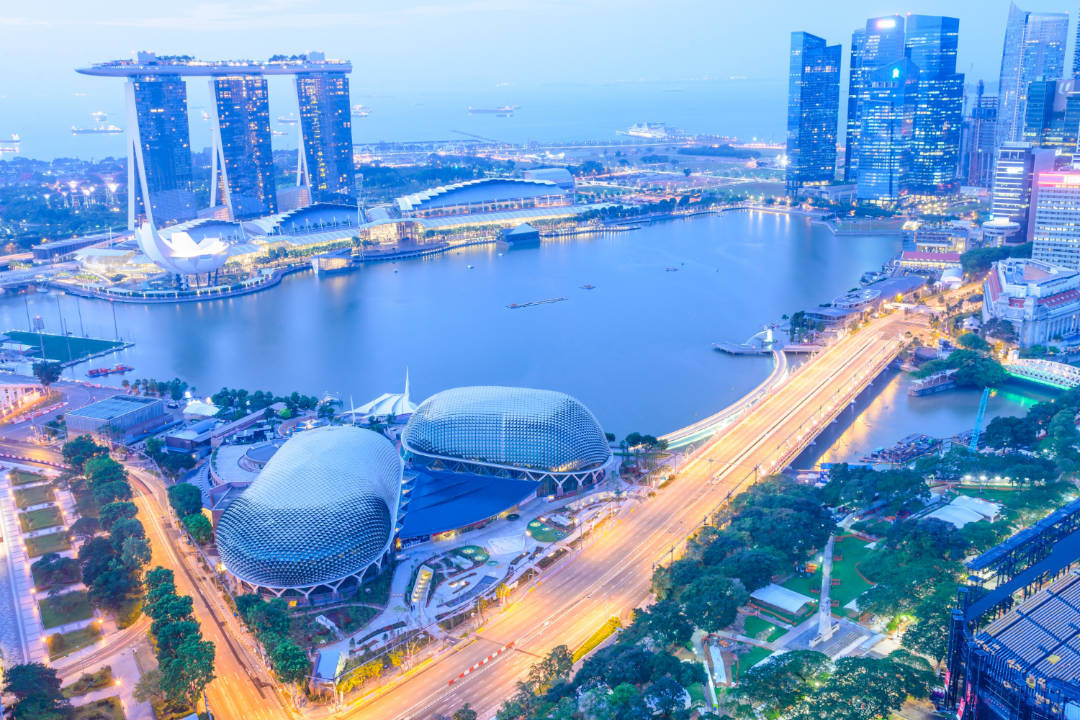
B2B Asia News Business Pulse provides a weekly overview of the main business developments, industrial shifts and regulatory updates defining the current economic landscape in key markets driving regional growth.
Looking at the main business stories in Singapore this week, the city-state is fortifying its financial infrastructure and regional integration while navigating a cooling labour market and evolving export dynamics.
This Week in Finance: Fund Launches and SGX Boost
GFTN Establishes USD 200 Million Fund to Bridge Growth-Stage FinTech Gap
The Global Finance & Technology Network Limited (GFTN) has announced plans to deploy a USD 200 million capital fund aimed at FinTech firms that have outgrown early-stage funding but remain premature for public markets. Established by the Monetary Authority of Singapore (MAS) in 2024, GFTN intends to target the persistent "growth gap" in financing.
According to Neil Parekh, Deputy Chairman at GFTN, the fund will prioritise companies with proven commercial traction and operational scale that are seeking to expand into new markets or diversify product offerings.
JPMorgan Asset Management Debuts Singapore and Asia Equity Fund
JPMorgan Asset Management (JPMAM) has launched the JPMorgan Singapore & Asia Equity Income Fund, following regulatory approval under the MAS Equity Market Development Programme (EQDP). The fund adopts a balanced allocation strategy, split evenly between Singapore equities—covering large, mid, and small-cap stocks—and Asia ex-Japan equities.
Pauline Ng, Head of the ASEAN Equity Team at JPMAM, noted that the strategy seeks to leverage Singapore’s high-yielding stocks alongside broader Asian dividends and options premiums to deliver total returns and lower volatility for investors.
Record Retail Inflows and ETF growth at SGX
Singapore-listed exchange-traded funds (ETFs) recorded a robust performance in 2025, with net inflows reaching SGD 2.4 billion. Data from the Singapore Exchange (SGX) indicates that total allocations via the Central Provident Fund (CPF) and Supplementary Retirement Scheme (SRS) hit SGD 1.2 billion—representing nearly 400 per cent growth since 2020.
Retail investors showed particular confidence in the domestic market, contributing SGD 2.62 billion in net inflows to Singapore stocks in 2025, a five-year high. SGX market strategist Geoff Howie highlighted that this brings total net retail inflows over the past six years to SGD 17 billion.
New Guild Launched to Enhance Corporate Governance
To further strengthen market integrity, the Singapore Institute of Directors (SID) has launched a new guild for chairpersons of SGX-listed boards. Supported by the SGX and MAS, the guild serves as a community of practice, providing access to expert insights and peer support to ensure high standards of corporate governance across the exchange.
Regional Integration: Johor-Singapore SEZ Gains Momentum
The Johor-Singapore Special Economic Zone (JS-SEZ) is on track to secure a major "queen bee" investor, a development expected to elevate southern Malaysia into the country's third semiconductor hub. According to Invest Johor, a multinational advanced manufacturing firm has already selected a site in Iskandar Puteri, with permitting and approvals currently in progress. This high-profile investment is viewed as a significant "stress test" for the zone, shifting the focus from policy announcements to the successful execution of large-scale industrial projects.
Spanning more than 3,500 square kilometres—over four times the size of Singapore—the JS-SEZ is increasingly serving as a critical "pressure valve" for Singapore-based firms. Small and medium-sized enterprises (SMEs) and high-tech industries are exploring the zone to relocate manufacturing and downstream operations while maintaining their headquarters and innovation hubs in the Republic. This symbiotic relationship allows companies to navigate Singapore’s high land costs and space constraints while staying anchored to its financial ecosystem.
To drive further interest, Malaysia has unveiled a suite of fiscal incentives, including a preferential corporate tax rate of 5 per cent for up to 15 years for targeted sectors such as AI, aerospace, and medical devices. Additionally, a special 15 per cent income tax rate is being offered to "knowledge workers" to attract global talent.
Labour Market: Job Postings Continue Three-Year Decline
Singapore’s labour market showed signs of further cooling as job postings fell by 15.8 per cent in 2025. According to an Indeed report, December marked the ninth consecutive monthly decline, extending a three-year downward trend.
While total volume remains 33 per cent above pre-pandemic levels, certain sectors, including IT systems, childcare, and beauty, have now dipped below those baselines. Conversely, demand remains resilient in hospitality, tourism, and healthcare, with these sectors continuing to exceed pre-pandemic hiring levels.
Trade: Export Growth Eases to 6.1 Per Cent Amid Global Headwinds
Singapore’s key exports outperformed official forecasts for the full year of 2025, despite momentum slowing in December. Non-oil domestic exports (NODX) rose 6.1 per cent year-on-year in December, a moderation from the double-digit expansion seen in previous months and below the 10.1 per cent consensus estimate.
For the full year, NODX grew by 4.8 per cent, surpassing the official forecast of 2.5 per cent. The electronics sector remained a primary driver, surging 24.9 per cent year-on-year in December, led by integrated circuits (32.1 per cent) and telecommunications equipment (81.4 per cent).
Looking ahead to 2026, economists warn of a more challenging environment. Factors such as the cessation of front-loading shipments ahead of U.S. tariffs, geopolitical tensions, and a potential softening in global AI-driven demand are expected to weigh on growth. However, Singapore’s status as a premier transhipment hub is expected to provide a critical buffer against these global volatilities.